
Make sure you check out the Giraffe Center! We spent the first day of our Road Scholar group tour (prior to the safari) sight-seeing in Nairobi, with interesting and colorful visits to the Giraffe Center, the National Museum of Kenya and Kobe Tough beads workshop.
The non-profit Giraffe Center was founded in 1979 with a mission of protecting Rothschild giraffes and reversing their plummeting numbers, estimated as only ~130 left in East Africa at that time. In the years since, more than 40 animals have been birthed at the Center and successfully released into the wild. Total population of Rothschild giraffes in Kenya is now estimated to be more than 400. A slow recovery but headed in the right direction.
A visit to the Giraffe Center is a ‘must do’ for tourists in Nairobi. There’s an educational component involved, of course, and it’s also fun. A raised viewing platform allows visitors to cozy up to the friendly giraffes just looking for a snack. As you can see, one woman was a little taken aback by the experience. (She wasn’t part of our group.)
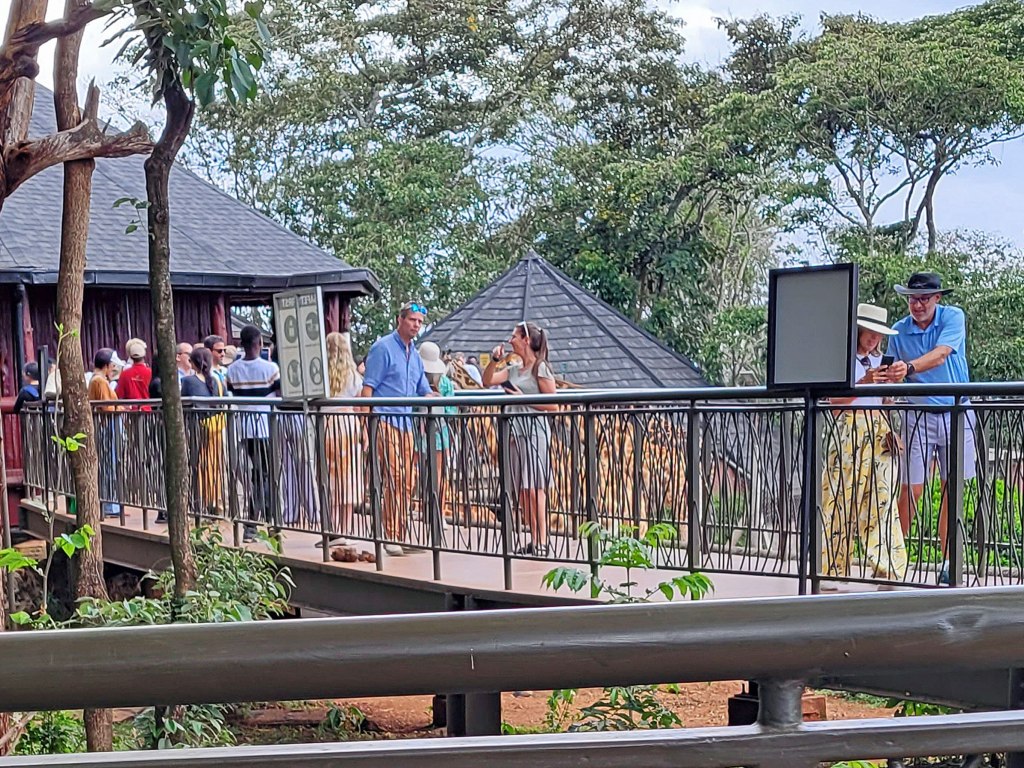

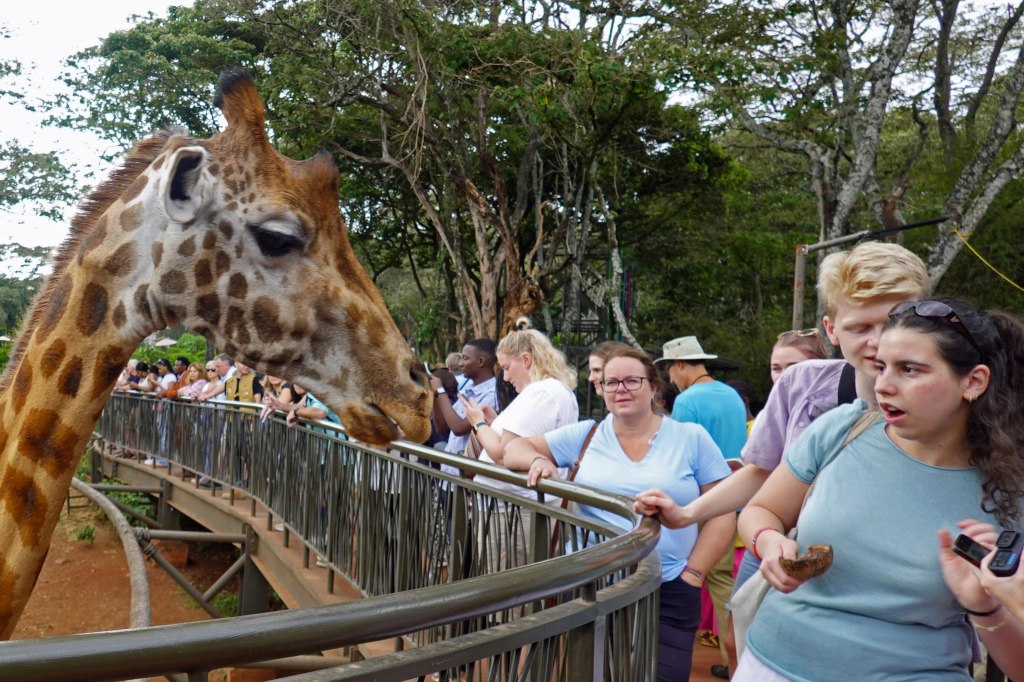

The Center sits on 60 acres – room to roam for the 10 current residents.
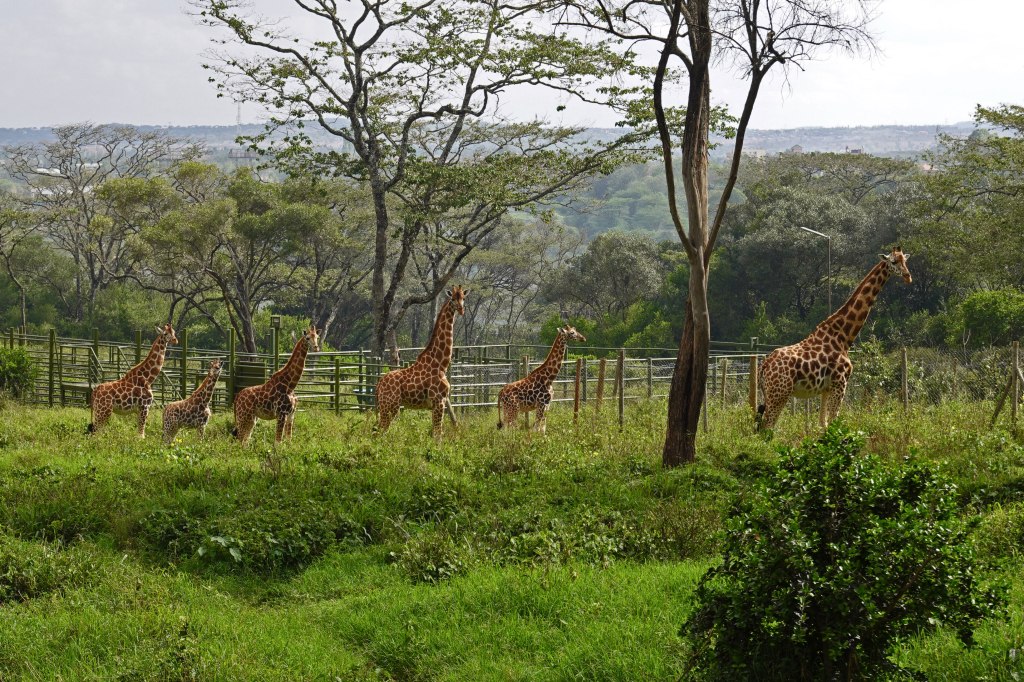
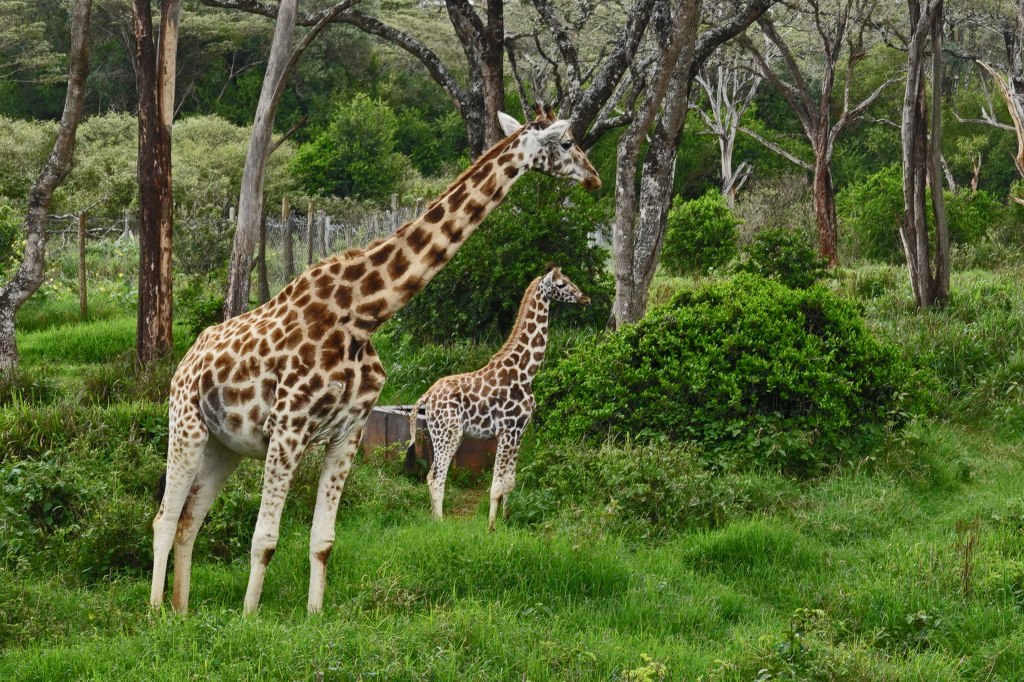
Kenya has three species of giraffes: 1) Maasai giraffes in southern Kenya (most numerous at ~12,000), 2) Reticulated giraffes in northeastern Kenya (~9,000 individuals), and 3) very small, isolated groups of Rothschild giraffes, also known as Nubian giraffes, in central Kenya.
If you want a one-of-a-kind giraffe experience, book a stay at Giraffe Manor, where the animals will join you for breakfast and pretty much any other time of day. Built in 1932, it sits on land adjacent to the Center. Once a private home, the manor has been converted to a luxury property.
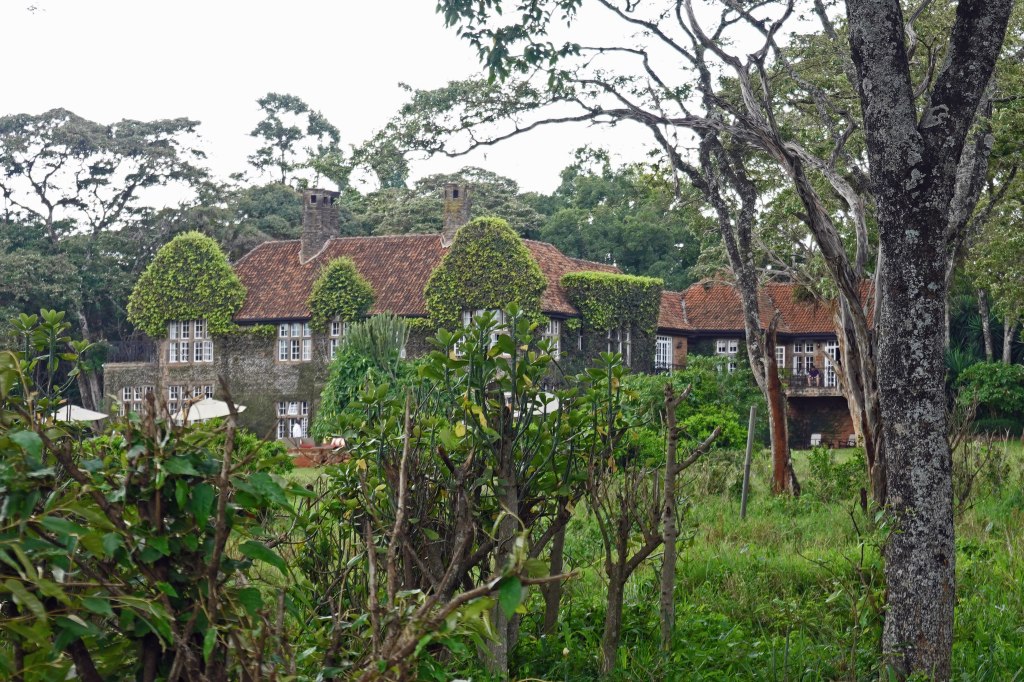
But plan ahead (bookings can be as much as 2 years out), and bring plenty of money. Room rates start at $1,000 per night per person!
National Museum of Kenya
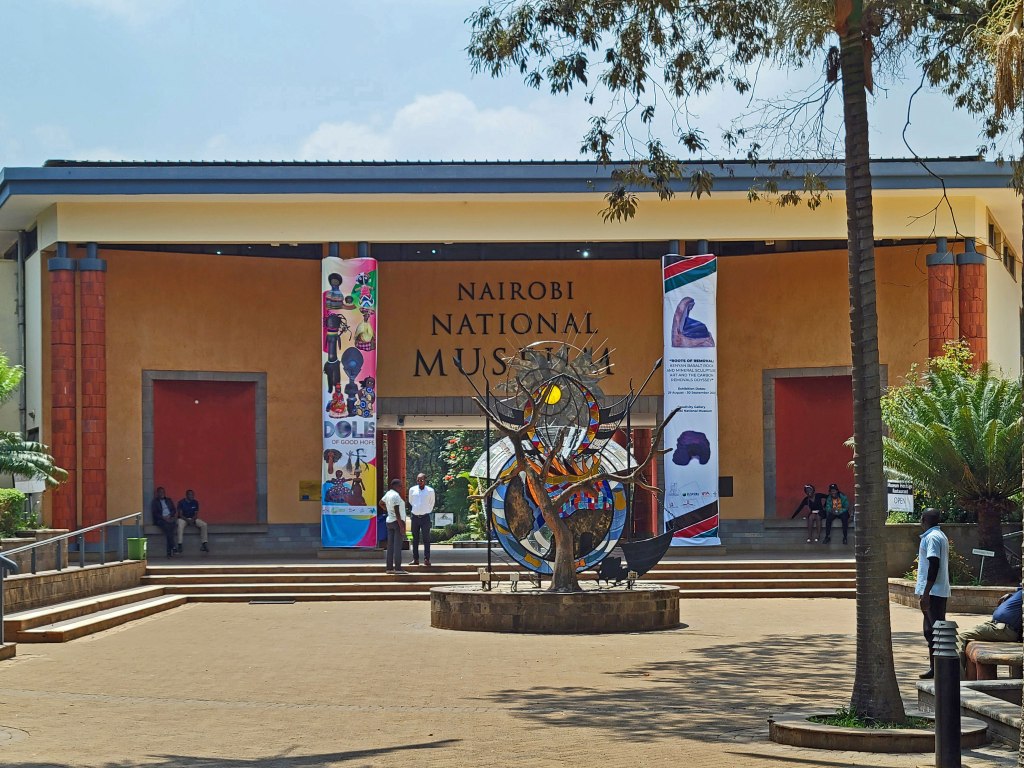
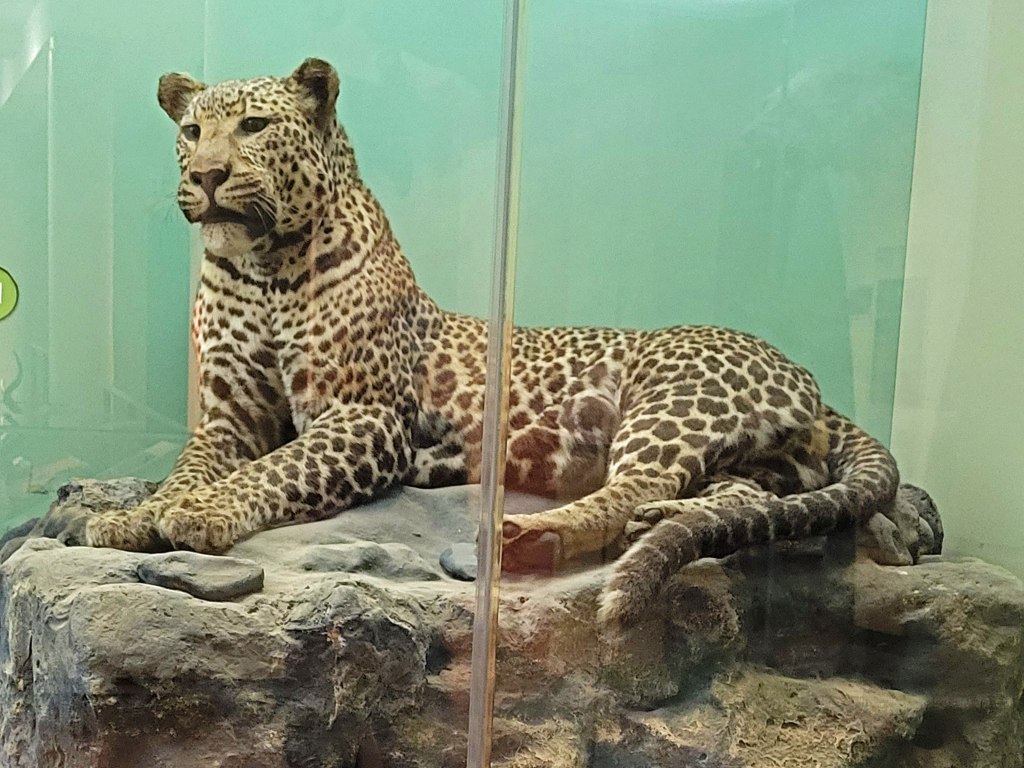
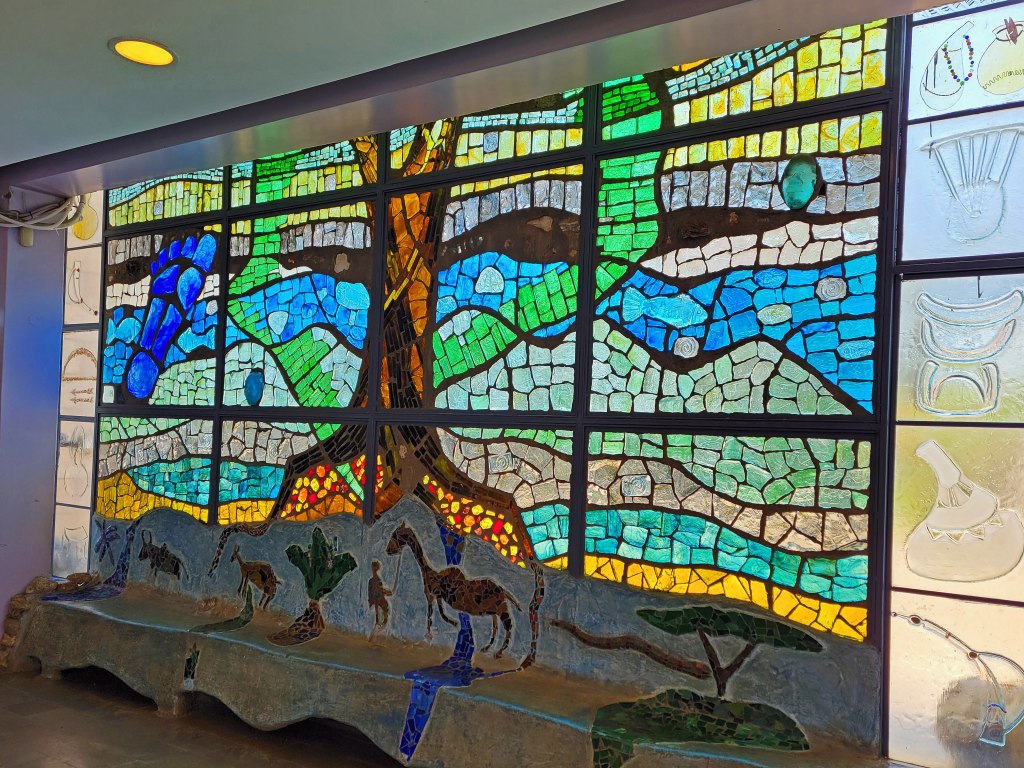
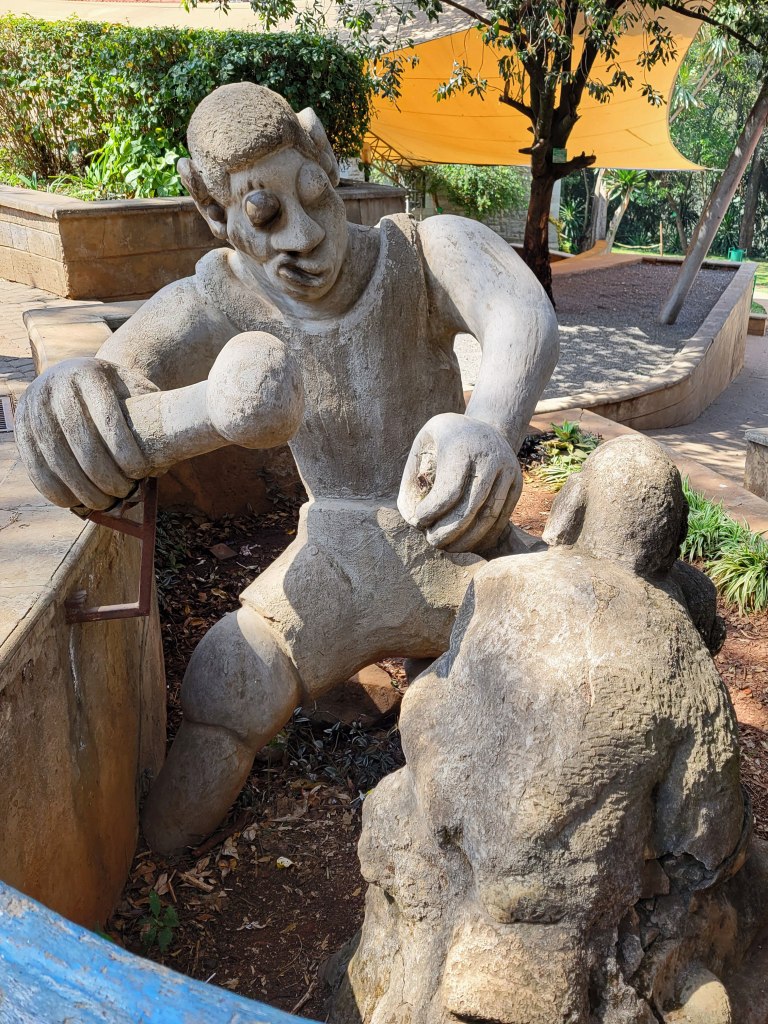
Often bypassed by tourists, this fine museum should be on everyone’s ‘to do’ list as an important orientation to Kenya’s history (ancient to modern day), culture, arts and nature, including extensive displays of birds and mammals. Bill and I spent a day there on our own, plus another couple of hours on the first day of our group tour.

Here’s a zoomed-in image of the elephant skeleton shown in the photo above. Meet Ahmed of Marsabit – his actual bones (not a replica).
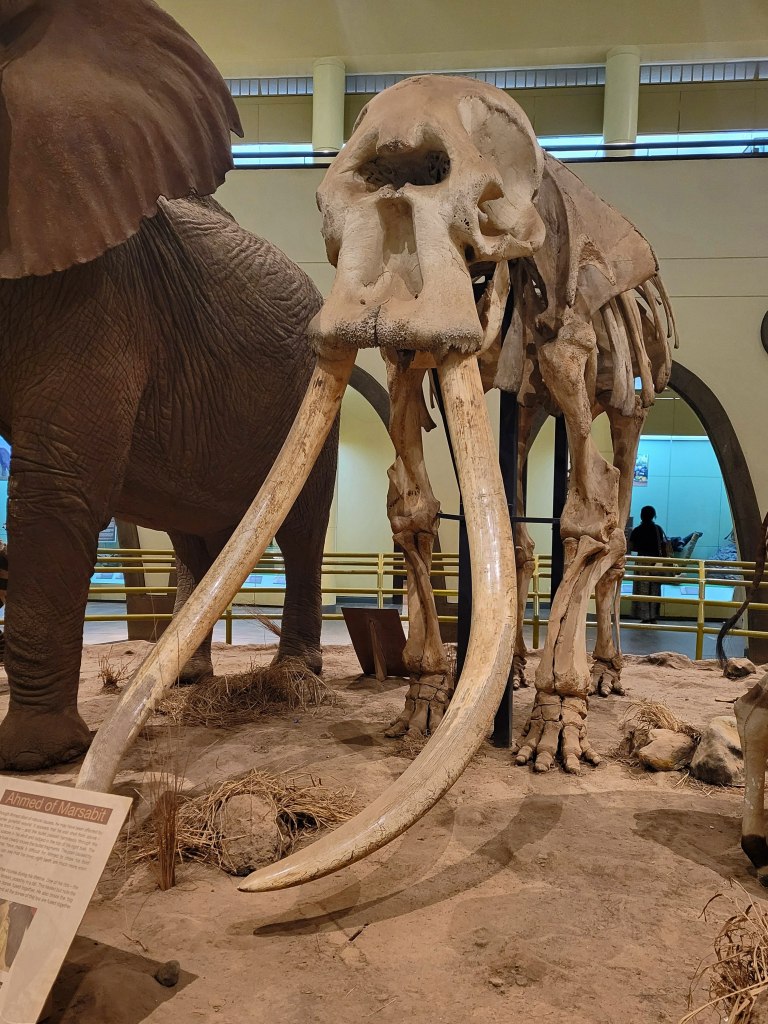
Ahmed was legendary across northern Kenya, renowned for his immense tusks. To guard against poachers, President Kenyatta authorized around-the-clock protection for Ahmed by national park rangers in 1970. When he died of natural causes in 1974 at the age of 55, his tusks weighed in at 150 pounds. EACH! Far short of a record, but impressive relative to the size of his body.
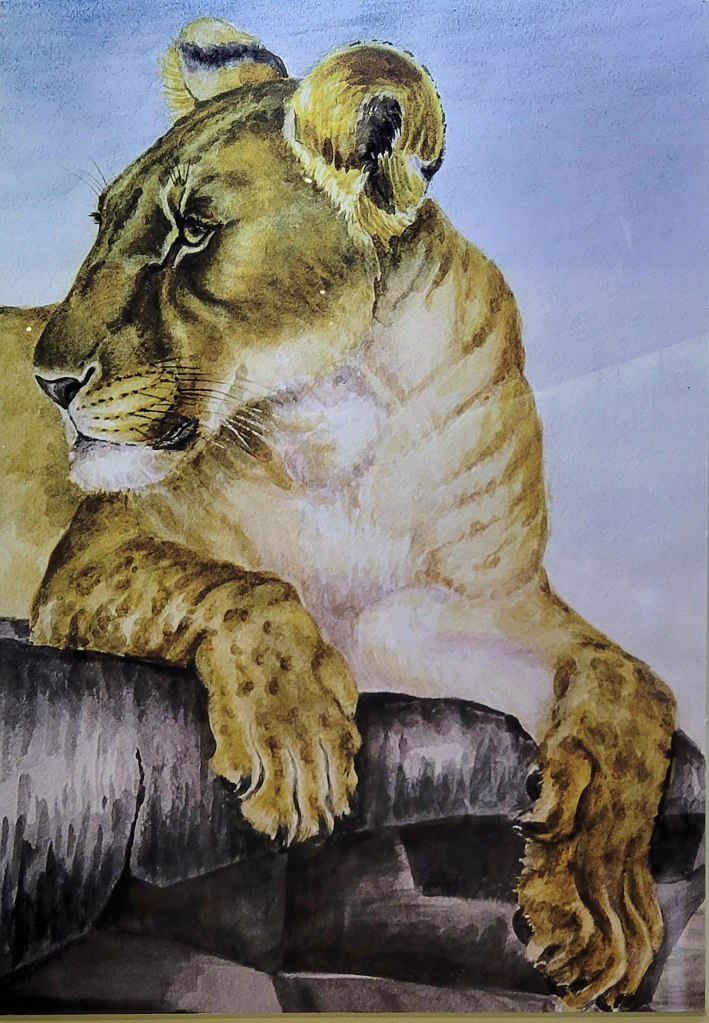
We also enjoyed the Joy Adamson art exhibit – a lot. Perhaps better known as a naturalist and author (Born Free, Living Free, Forever Free, among others), she was an accomplished artist as well and produced more than 500 paintings and line drawings.
Her initial focus was botanical illustrations but expanded when she was commissioned by the Kenyan government to create portraits of indigenous people. She completed 132 paintings in a little more than a year. To a lesser extent, she did animal portraits, including her beloved Elsa (shown below). Her books are now on my reading list.
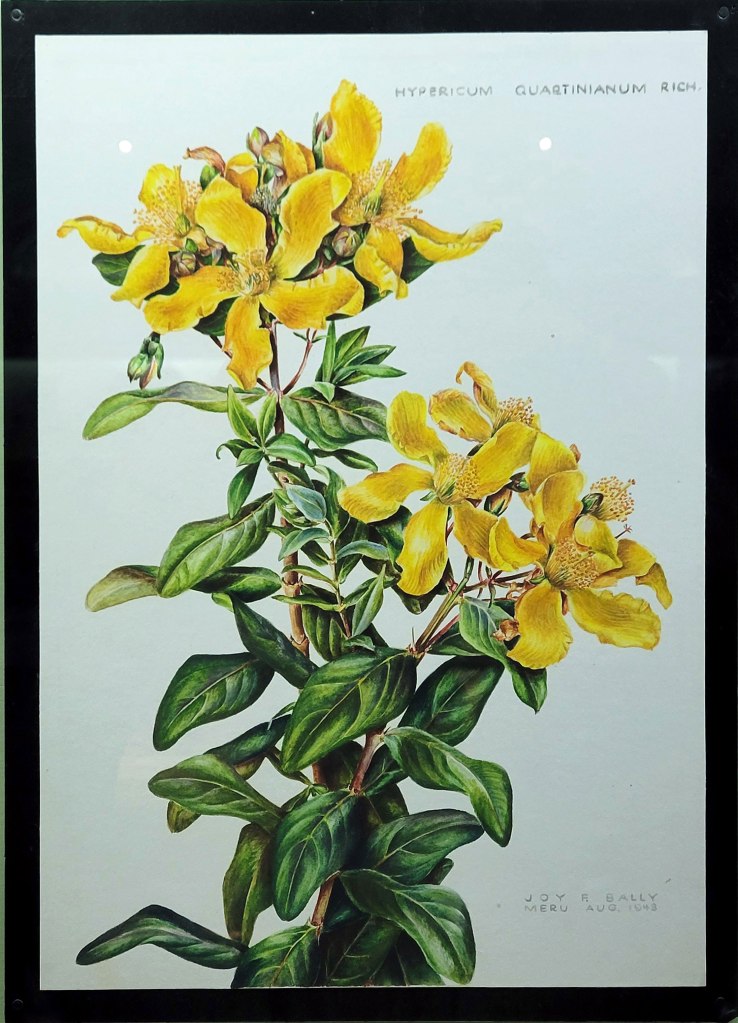

A few more photos from our visits to the museum:




I’ve saved the history section for last. The museum tells the story of Kenya in a series of well-organized chronological displays. It was excellent from an educational perspective yet sobering at the same time. It was not, however, photogenic. So I’ll be brief.
After being ‘discovered’ by early European explorers, the area now known as Kenya was eventually ‘won’ and governed by Great Britain from 1895 until gaining its independence in 1963. During those years, it was an all-too-familiar and troubling story of colonial oppression, discrimination and brutality that was playing out across the globe. And for many Kenyans, the wounds are still healing. Officially, however, Kenya and Britain have maintained strong economic and military ties that continue today.
Women Making Beads
Less narrative and more photos in this section. And a couple of fun videos to close out this article.
We visited not one, but two ceramic bead-making operations in Nairobi – Kazuri Beads (just Bill and me) and Kobe Tough Beads (part of our group tour). Both have similar missions to support disadvantaged women, and their products/business models are virtually identical. Never figured out if their governance or operations are related, but no matter – both are doing good things and making good stuff.
In the gallery that follows – photos from Kazuri on the left, Kobe Tough on the right.
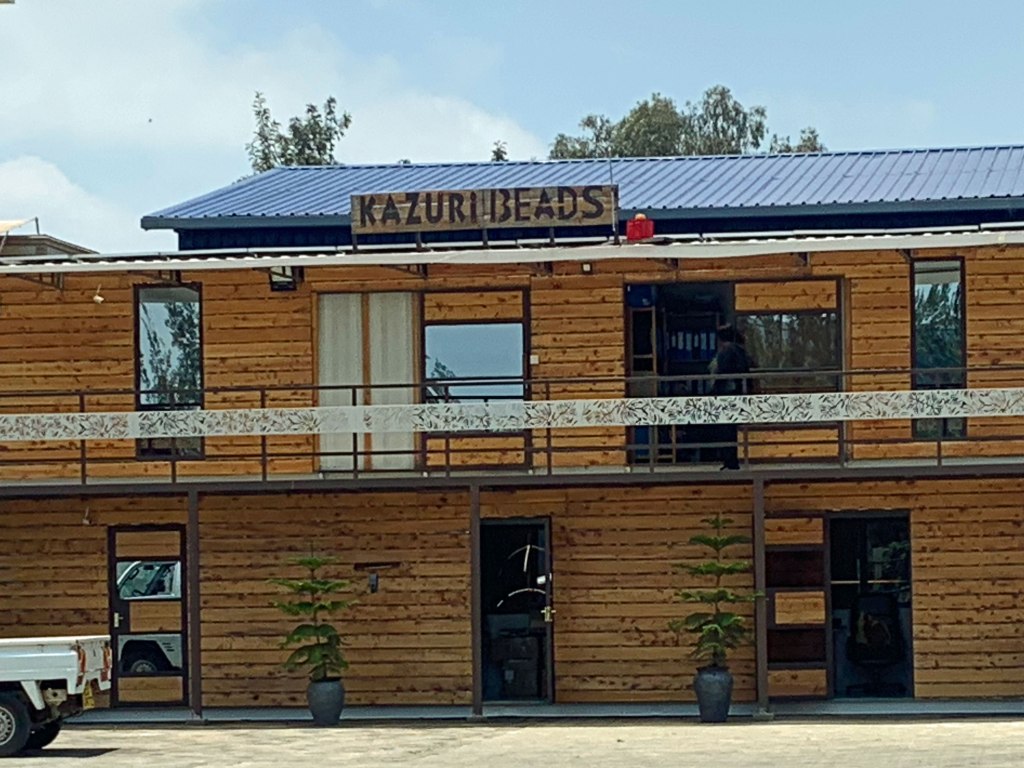


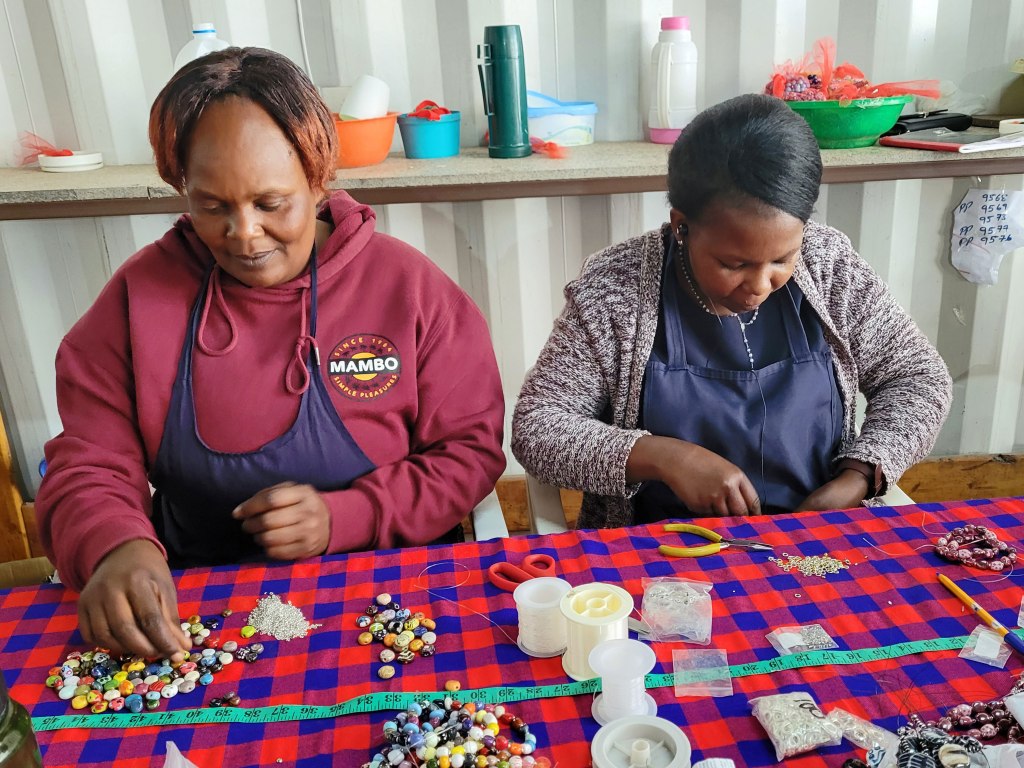
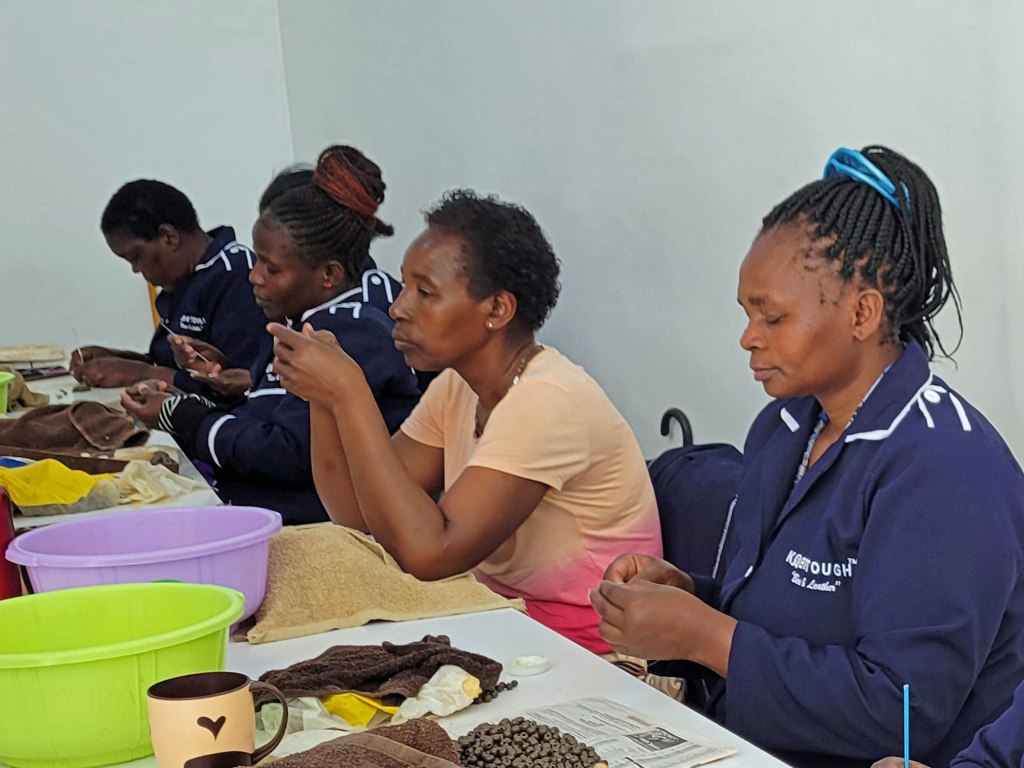


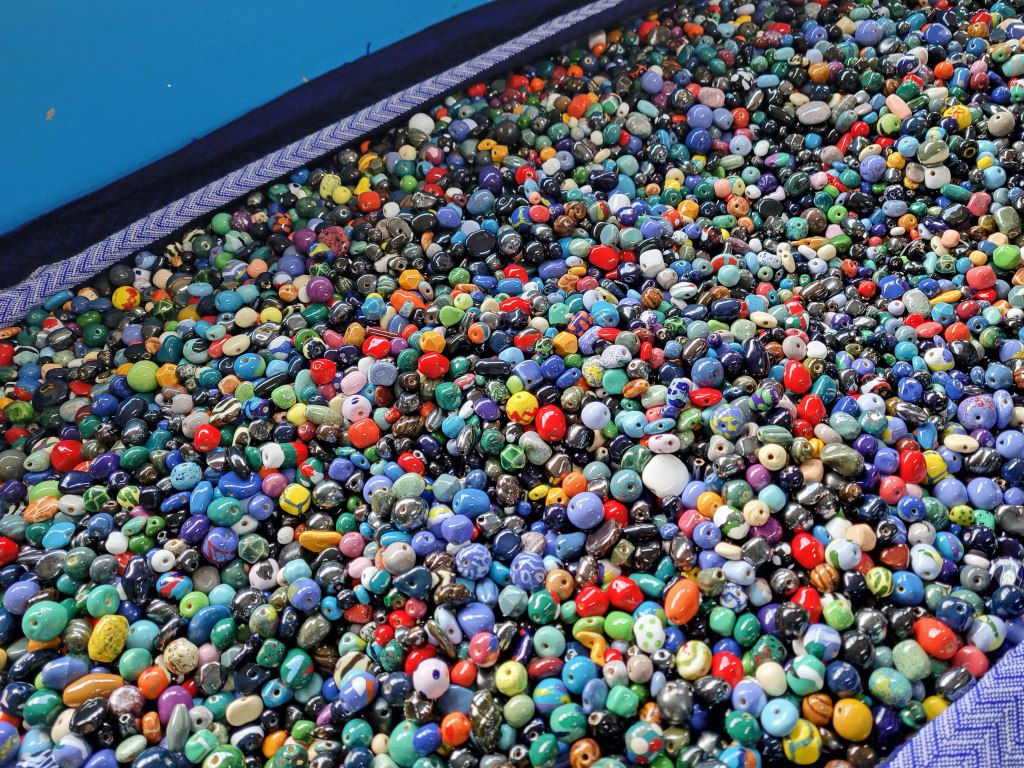
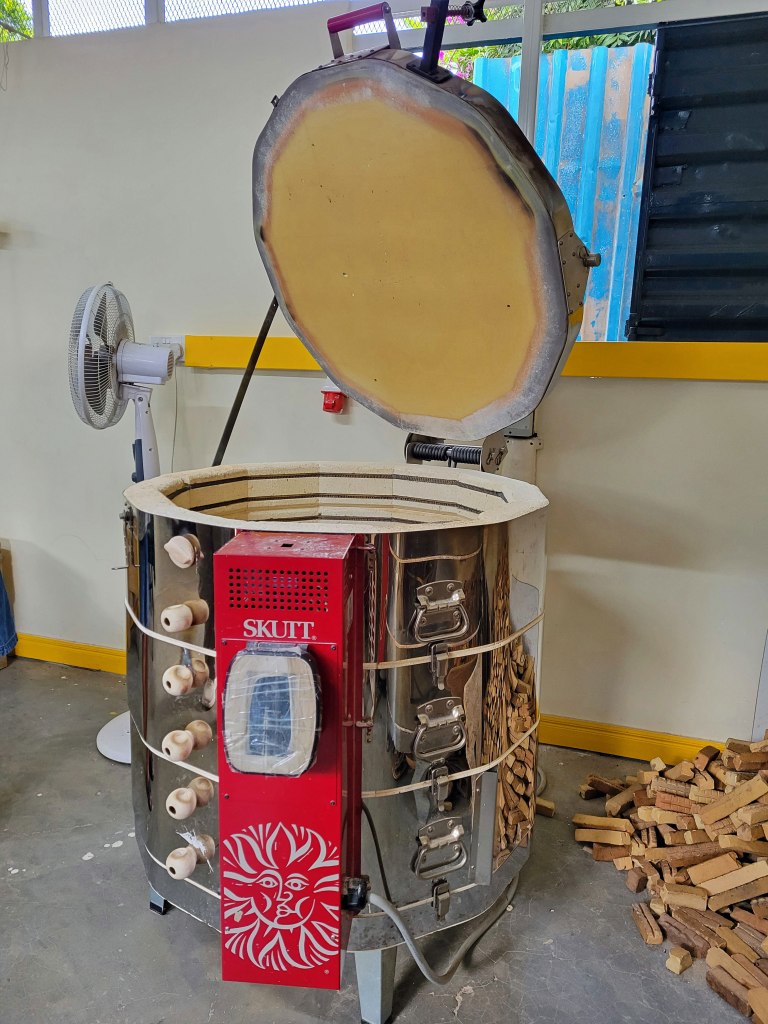
Their kilns looked very different, but both apparently got the job done.

And lucky for us, both groups took time out for singing and dancing. Two delightful places!
Thanks for spending time with us in Nairobi! More to come – baby elephants in the next article.
If you would like to be notified when future articles are published, please click on the ‘Subscribe’ button below.
Discover more from Just Passing Through
Subscribe to get the latest posts sent to your email.


 Just Passing Through
We too loved the giraffe center. Great place.
LikeLike
It’s nice to go to a place where everyone is smiling and having fun!
LikeLike
Oh how I love giraffes – and these pictures are beautiful! I especially love the opening picture with you two. Pure joy. Thanks for sharing the adventure!
LikeLike
Thanks, Mary. The giraffes were Bill’s favorite. I didn’t have a favorite – loved them all!
LikeLike
Oh Carol and Bill; I’ve been enthralled reading and watching your blogs! What a beautiful and intriguing tip of a lifetime. Thank you for creating your blog/journals for us to follow along; we’ve felt like guests invited to join in your fun! Many thanks.
LikeLike
Hi Julie – thanks so much for your kind words. As you can tell, it was a special trip for us!
LikeLike