“Moloka’i is not for everyone.” On the Visit Molokai website, potential tourists are advised that the island has no mega resorts, five-star dining opportunities, tourist-packed beaches or shopping malls. “It’s an island where no building is taller than a palm tree . . . if you’re looking for old Hawaii, this is it.”
All of that sounded appealing to us, and Bill has long wanted to visit Moloka’i. So we booked a room for three nights at Hotel Molokai, the only full service lodging option on the island, and purchased round trip plane tickets from Kahului to Kaunakakai (the only way to access Moloka’i other than by private boat).
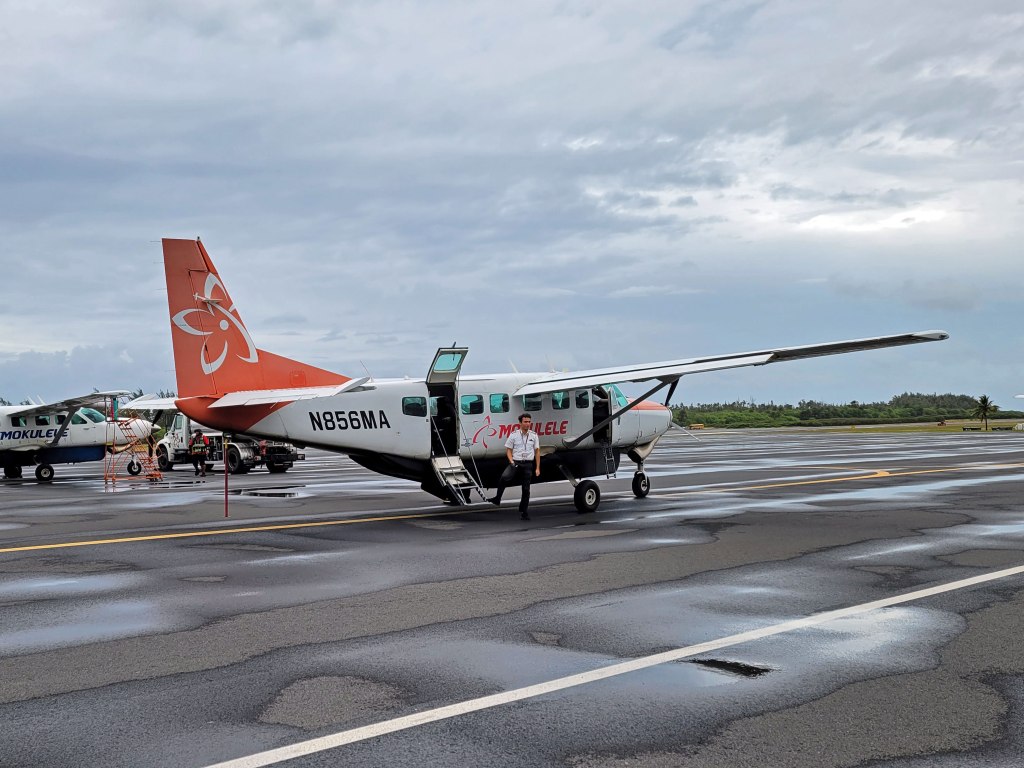


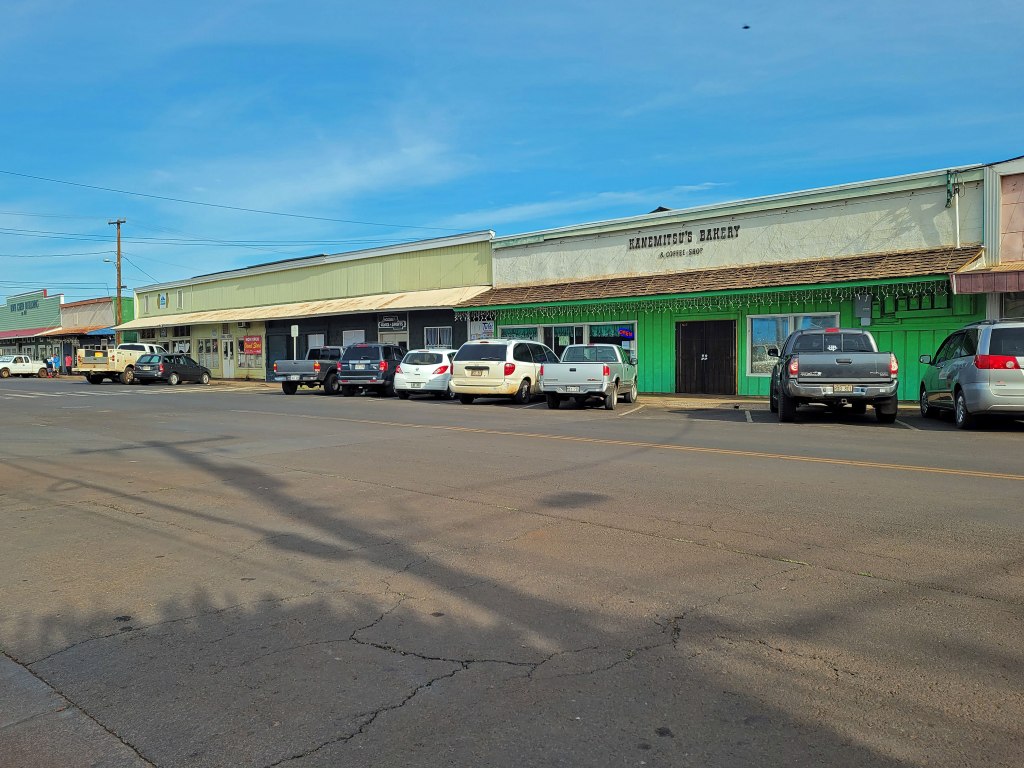
In a nutshell, Moloka’i, with a population ~7,500 and a total of 65,000 visitors over an entire year, was quiet and unpretentious. It seemed as though we had taken a step back in time, and residents intend to keep it that way.
The island is approximately 38 miles long and 10 miles wide, and we explored it from end to end.
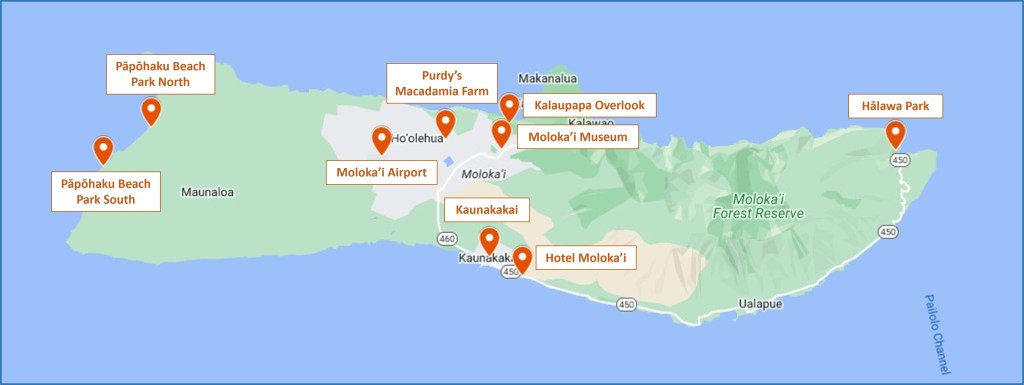
North Side – A Notorious Peninsula, History Museum & Macadamia Nuts
Our first destination was Kalaupapa Overlook.

Ranging between 3,000 and 4,000 high, the sea cliffs on the north side of Moloka’i are advertised as the world’s highest. At the overlook, we got a glimpse of the daunting (and beautiful) landscape that continues for miles. We could also see the large, flat Kalaupapa Peninsula, now preserved as a national historical site.
Kalaupapa was the focal point for a sad chapter of history that began in the middle of the 19th century with a raging epidemic of leprosy (now called Hansen’s disease) in the Hawaiian population. With no effective treatment and no cure, those afflicted with the disfiguring and transmittable bacterial disease were involuntarily removed from their homes, separated from their loved ones and relocated to Kalaupapa to live out the rest of their days.
The first patients arrived in 1866, with a total of 8,000 over the next hundred years. Although a cure became available in 1946, forced quarantine laws remained in effect for another 23 years. In 1969, residents were free to come and go for the first time, but about half decided to stay permanently. Living conditions had greatly improved over the years, and the residents had formed a tight-knit community.
Over the years, the average age of the population increased and the number of residents decreased. As of January 2023, four former patients were living at Kalaupapa, with the U.S. government funding supportive services. For that reason and unlike most national park service units, Kalaupapa remains off limits to the general public, so the overlook was as close as we got.

While the Kalaupapa Overlook provided important geographic context for the Hansen’s disease colony, the Moloka’i Museum and Cultural Center highlighted the human experience.
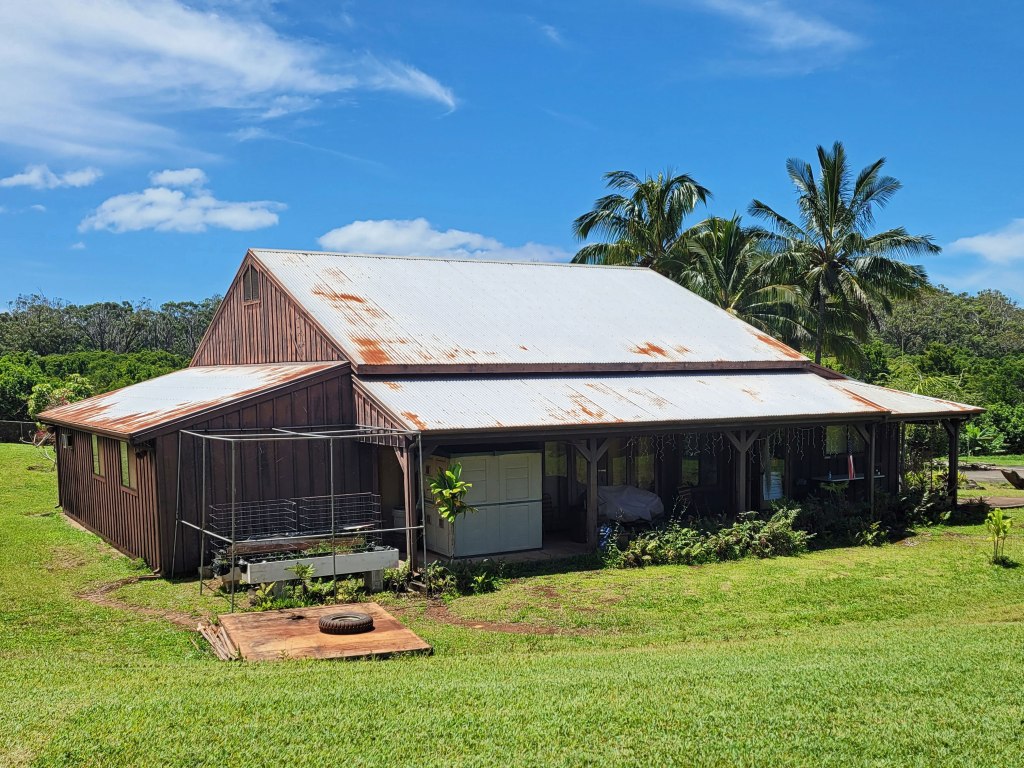
Located about two miles from the overlook, the small museum featured an extensive collection of personal stories and photos of individuals and families who stayed as well as those who left. We spent a couple of hours engrossed in the exhibit.
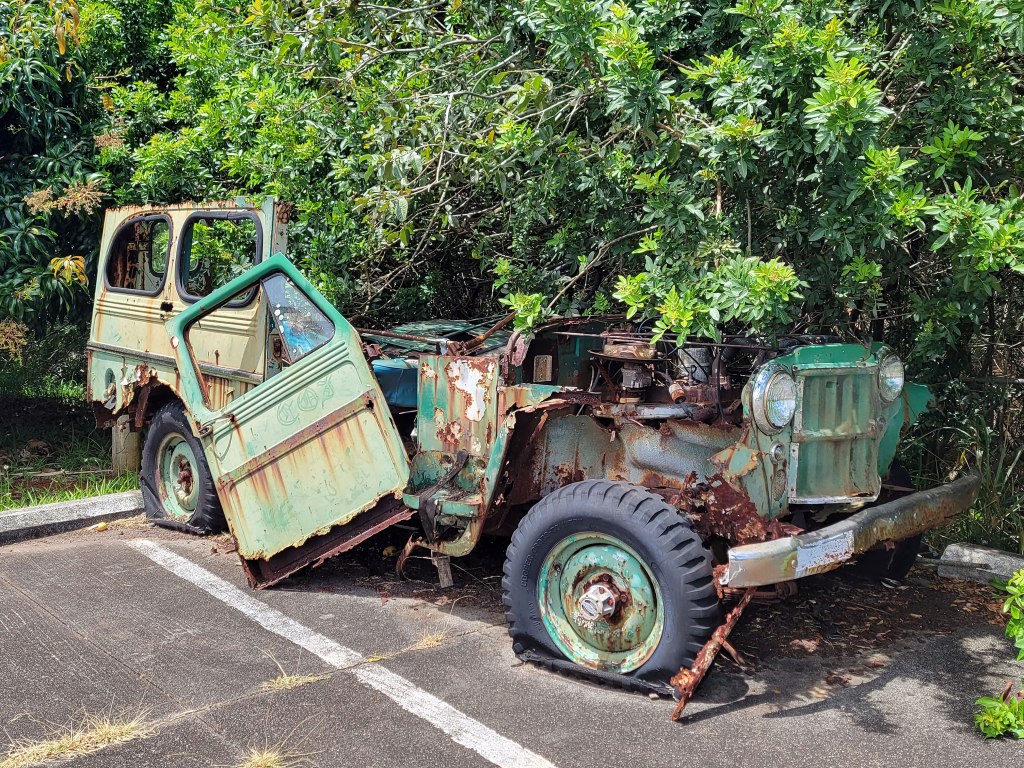
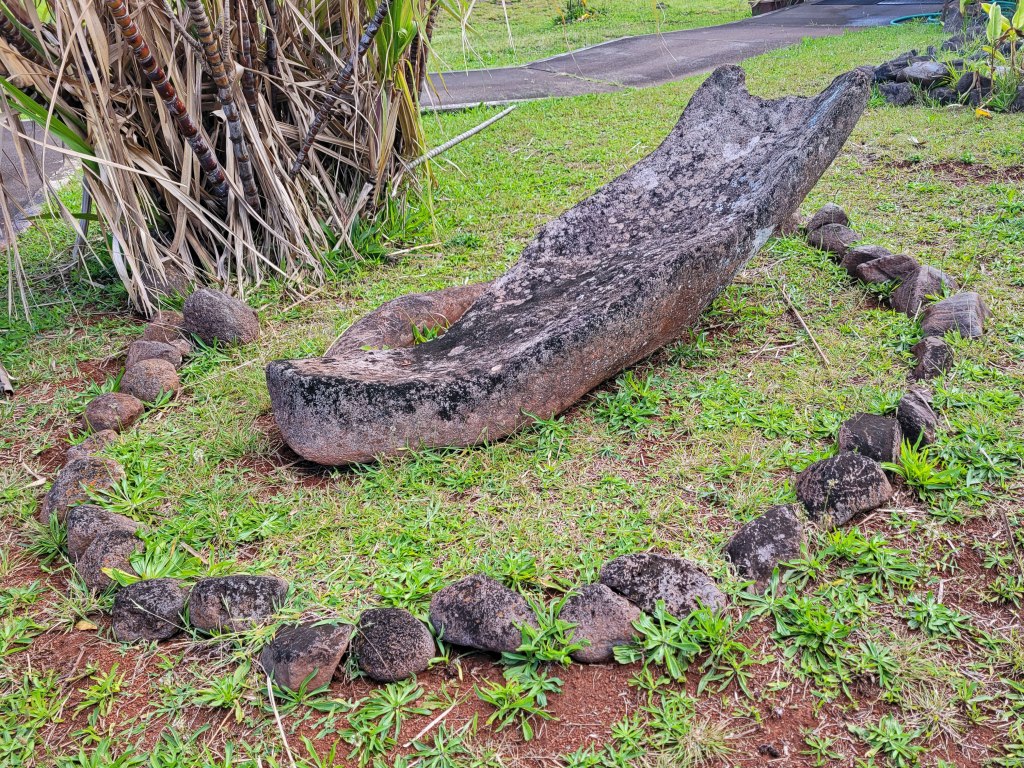
A few more photos from the museum . . .
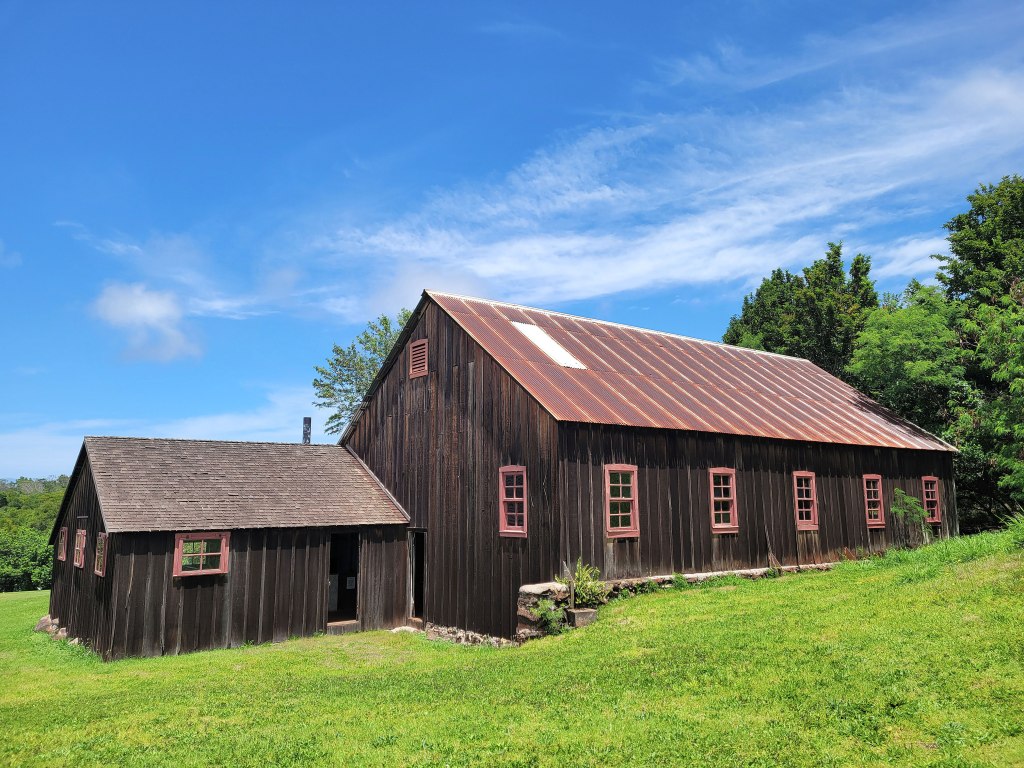

Our final destination on the north side of Moloka’i was Purdy’s Natural Macadamia Nut Farm.
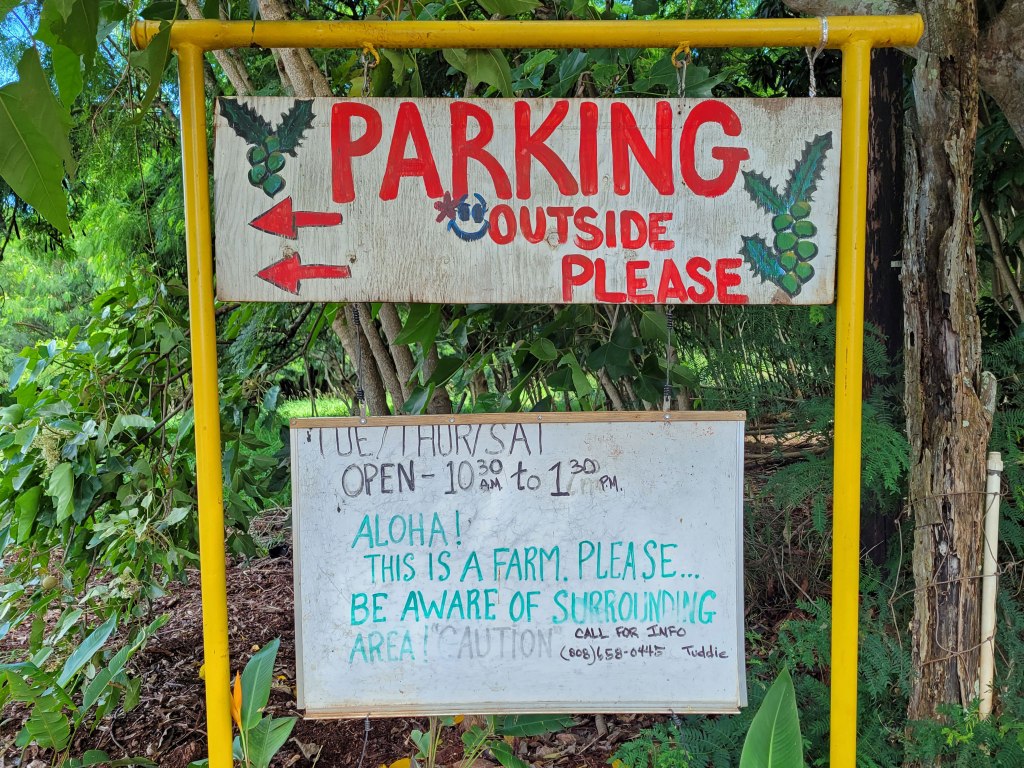
We received a warm welcome from Tuddie Purdy, owner of the 5-acre farm, followed by a short explanation of the history of macadamia nuts in Hawaii (imported from Queensland, Australia in 1882), growth and development of nuts (trees are ever-bearing, nuts are tree-ripened and hand-picked throughout the year), and processing techniques (mechanical separation of the kernel from the shell).


The tour was super laid back, and we enjoyed interacting with Tuddie and other family members. As expected, the samples were delicious, and we walked away with a couple of bags.
West Side – Shattered Dreams & Empty Beaches
At 53,000 acres, Molokai Ranch is the largest tract of land on the island. Over the years, it’s been a cattle ranch, a sugar cane plantation and a pineapple farm. Since the 1970s, various foreign investment groups have tried to transform the west side of the island into a premier tourist destination, but failed, primarily due to objections by local residents. After an ambitious development plan by the current owners was rejected in 2008, the company shut down its entire Moloka’i operation, closing facilities and laying off staff.
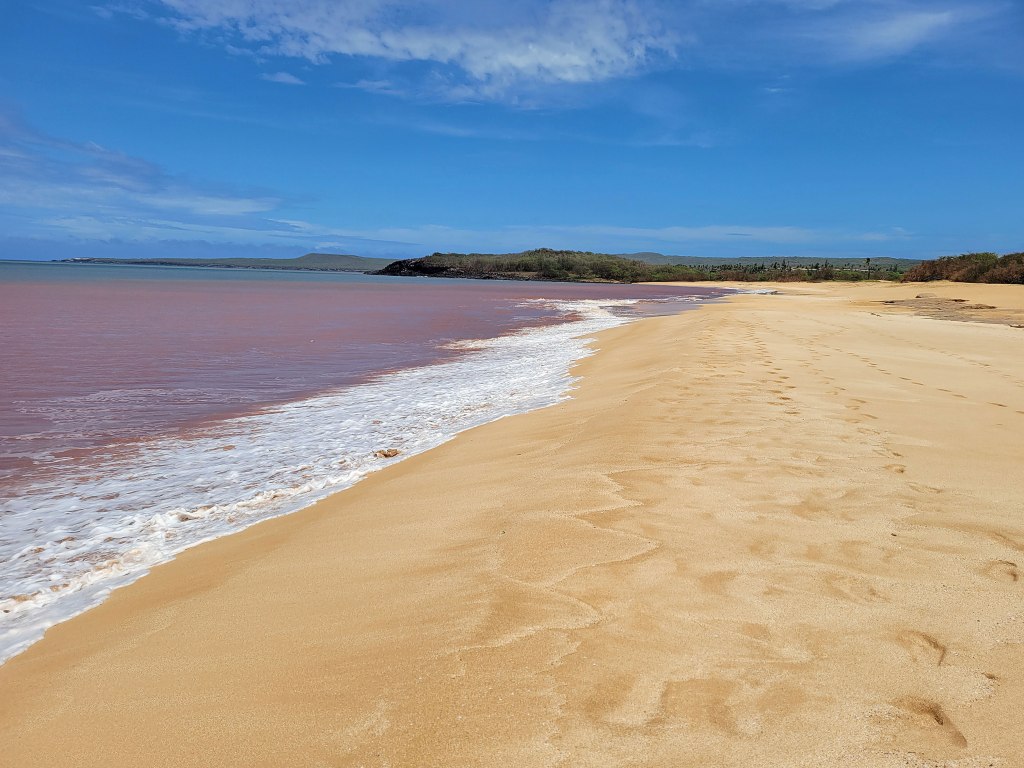
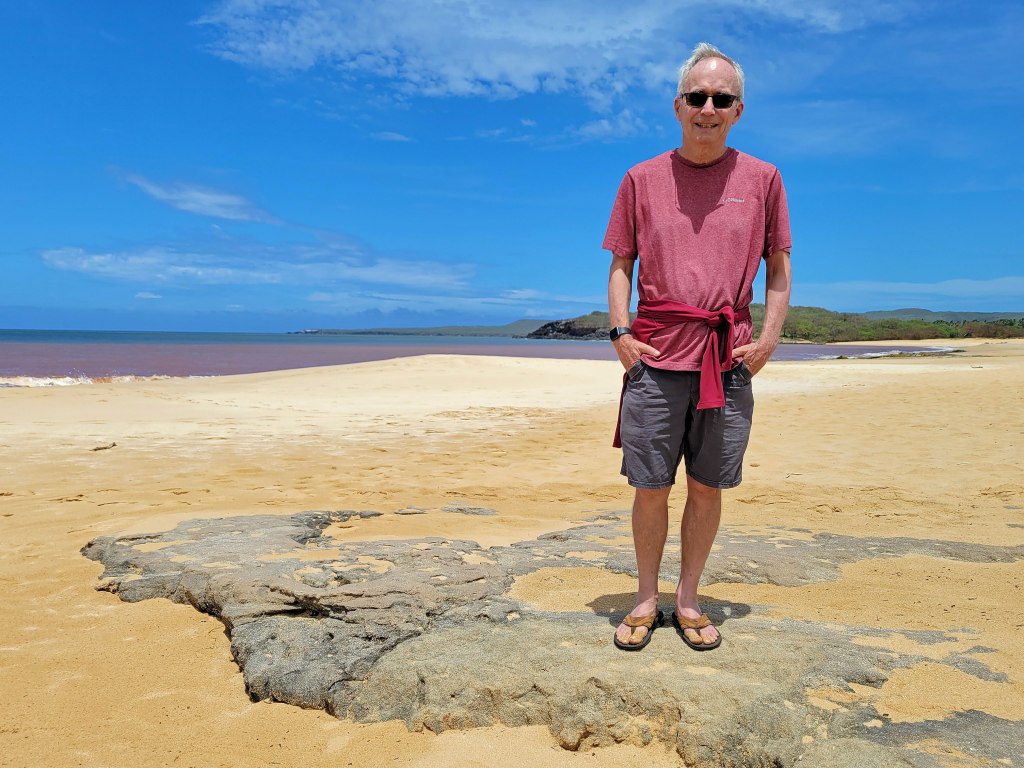
Little has happened on the west side of the island since that time, so after 25 years of neglect, the vegetation is an overgrown mess and the infrastructure – including a hotel and golf course – is crumbling. But oh my goodness, Pāpōhaku Beach is amazing – three miles long and up to 100 yards wide in places. No lifeguards, no amenities and virtually no people. Here’s how it looked on the north end . . . .
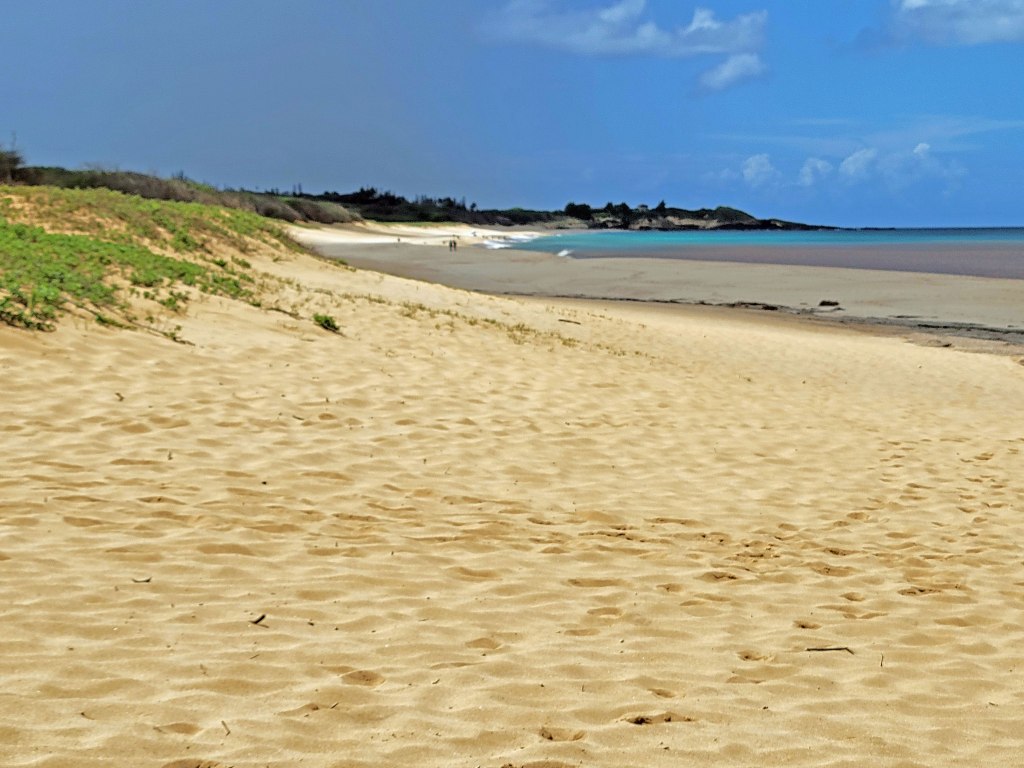
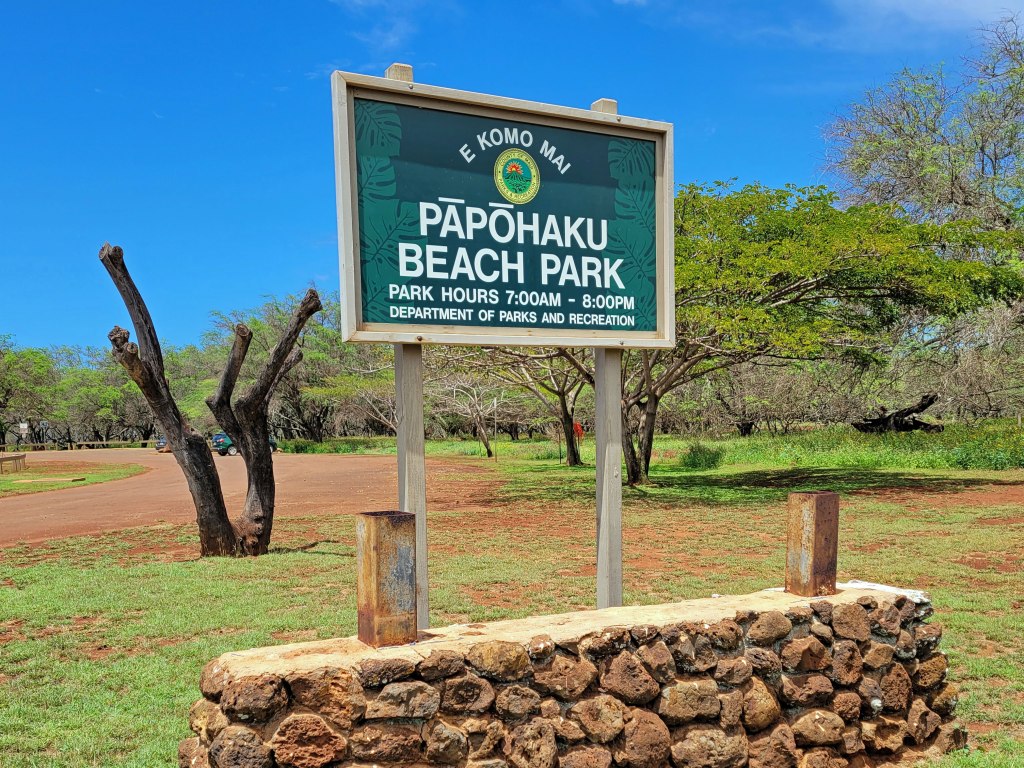

At the south end, we were greeted by a a large warning sign in the parking lot. Lovely.

An unmarked rocky path through the trees led to the ocean. Not very appealing for wading or swimming, but interesting colors and terrain.

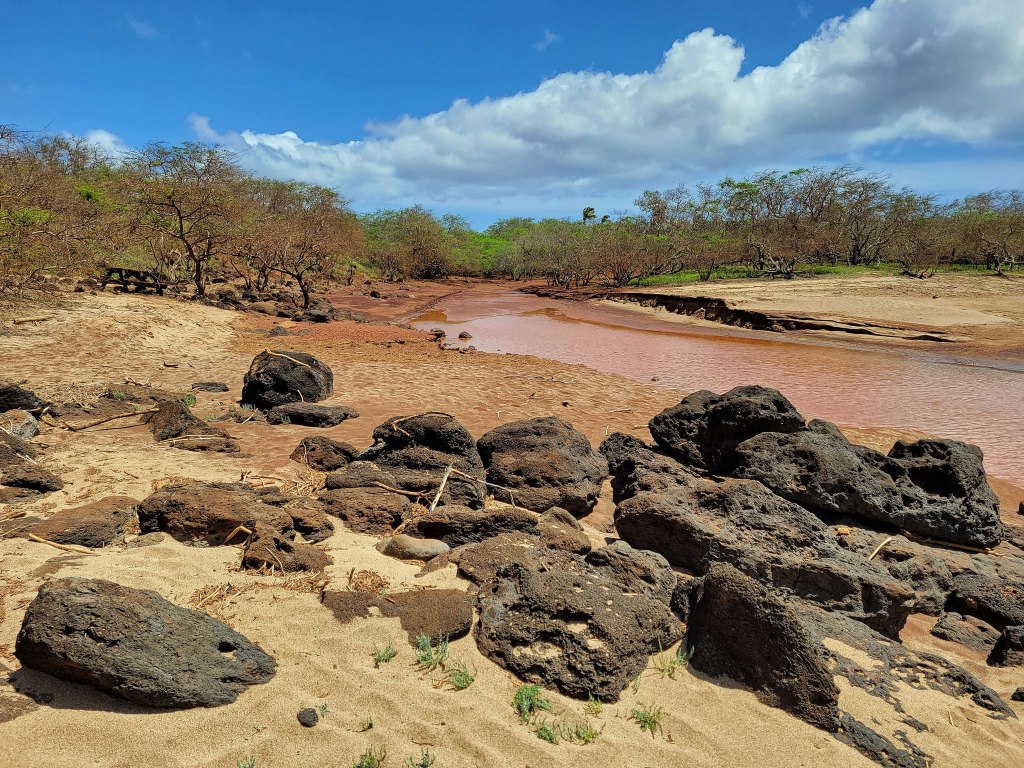
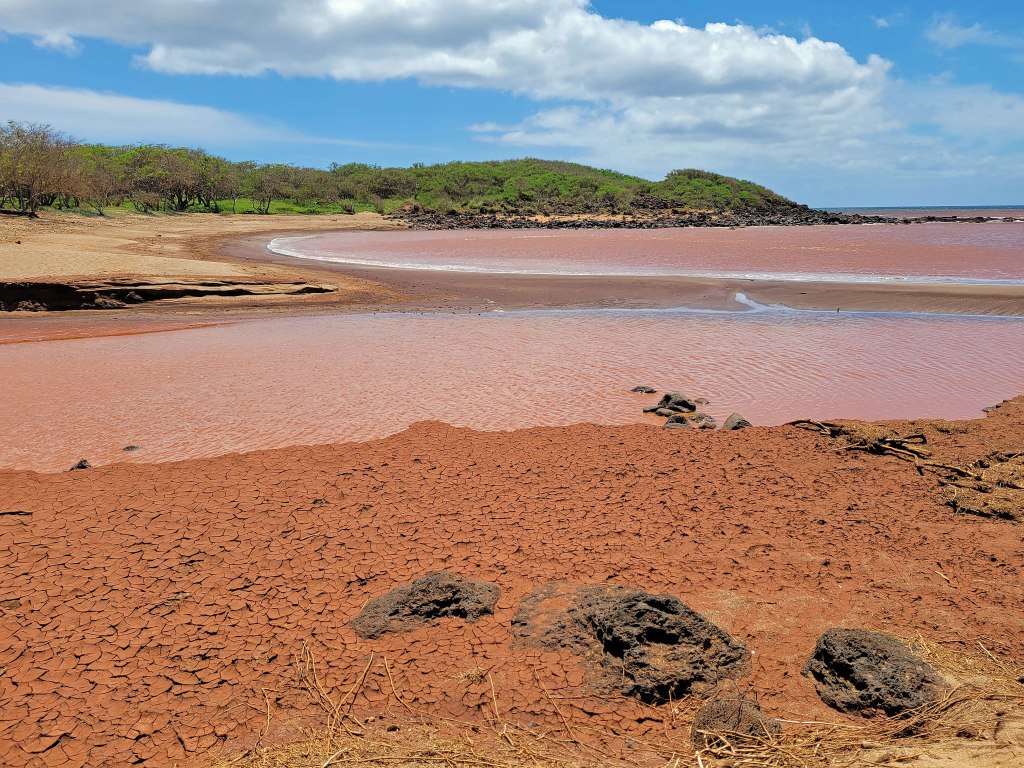
Probably not everyone’s idea of fun, but we enjoyed ourselves. And if you’re interested, the Molokai Ranch is still for sale, with an asking price of $260 million.
East Side – Lush, Remote & Wild
Having driven to the end of the road headed north, and then west, it just made sense that we would also check out the eastern side of the island. The drive took a little over an hour, much of it along the shore with terrific views. As we headed higher, the narrow road (single lane at times), tight curves and steep drop-offs were reminiscent of our drive around the north side of Maui, but without the traffic.
At a high point on the road, a stunning view of the Hālawa Beach cove suddenly emerged, and we knew the drive had been worth it.
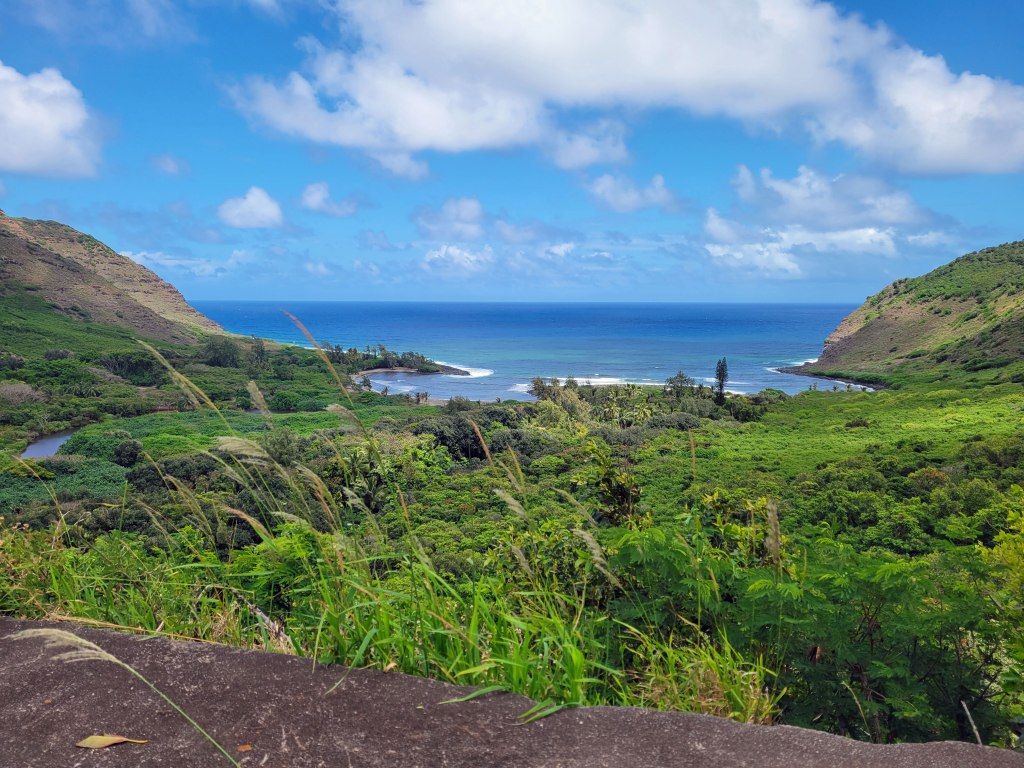
The actual beach was equally beautiful, and we had a delightful time just chilling.
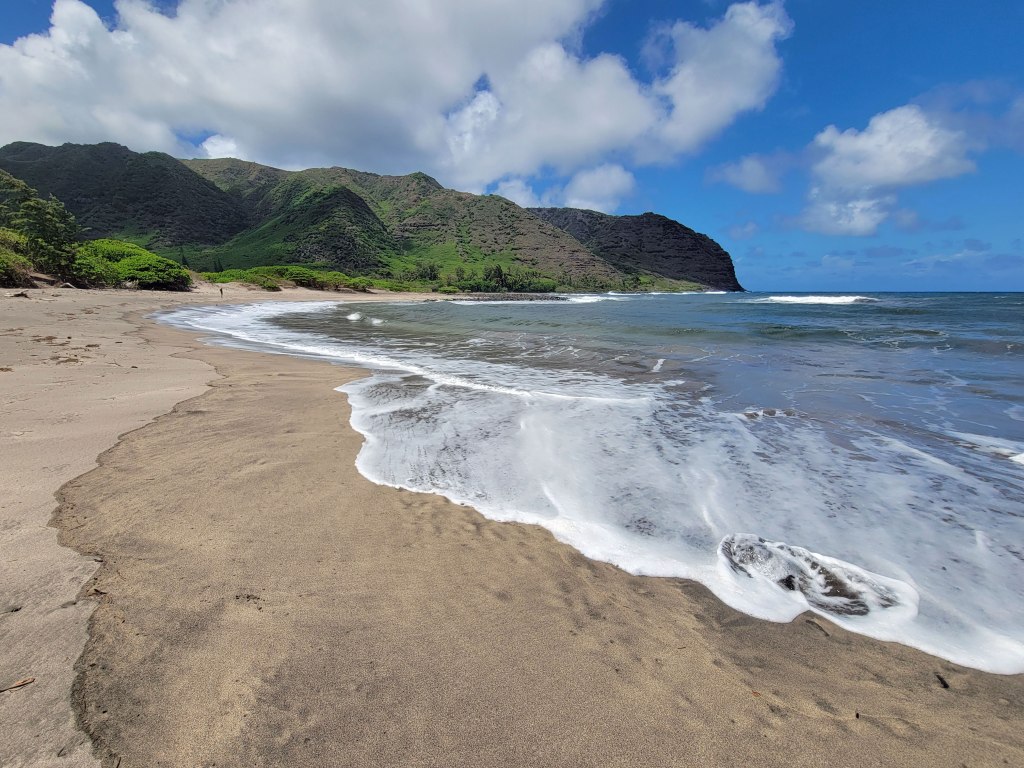
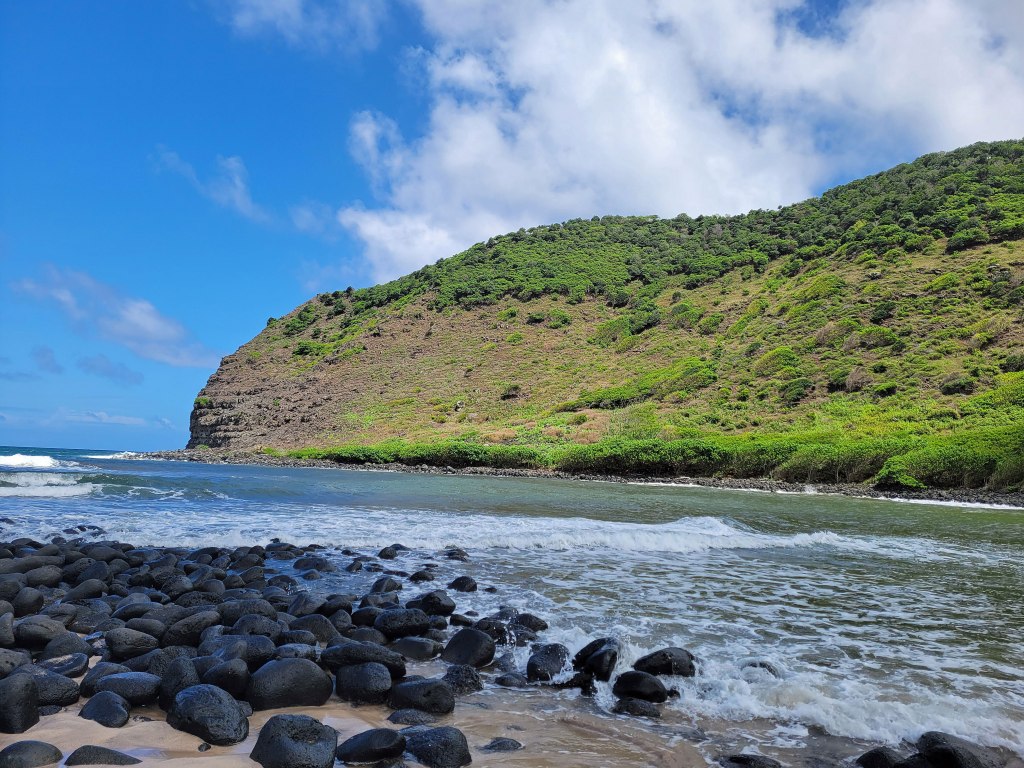
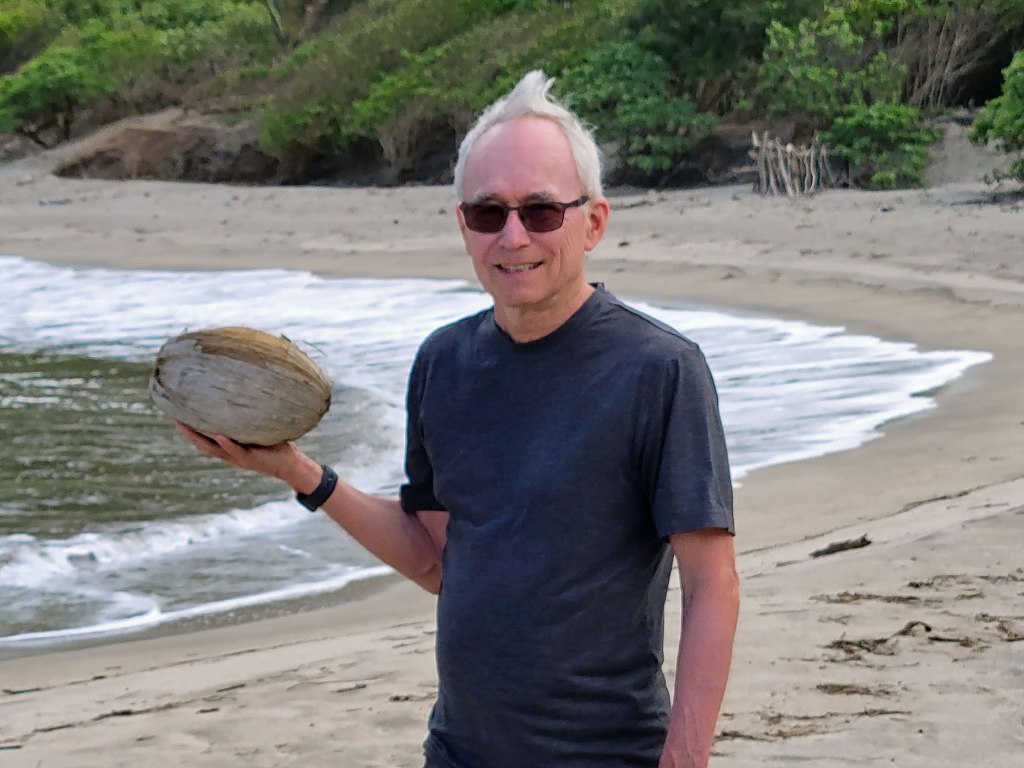

Here’s the view looking back toward the lush valley and mountains . . . .
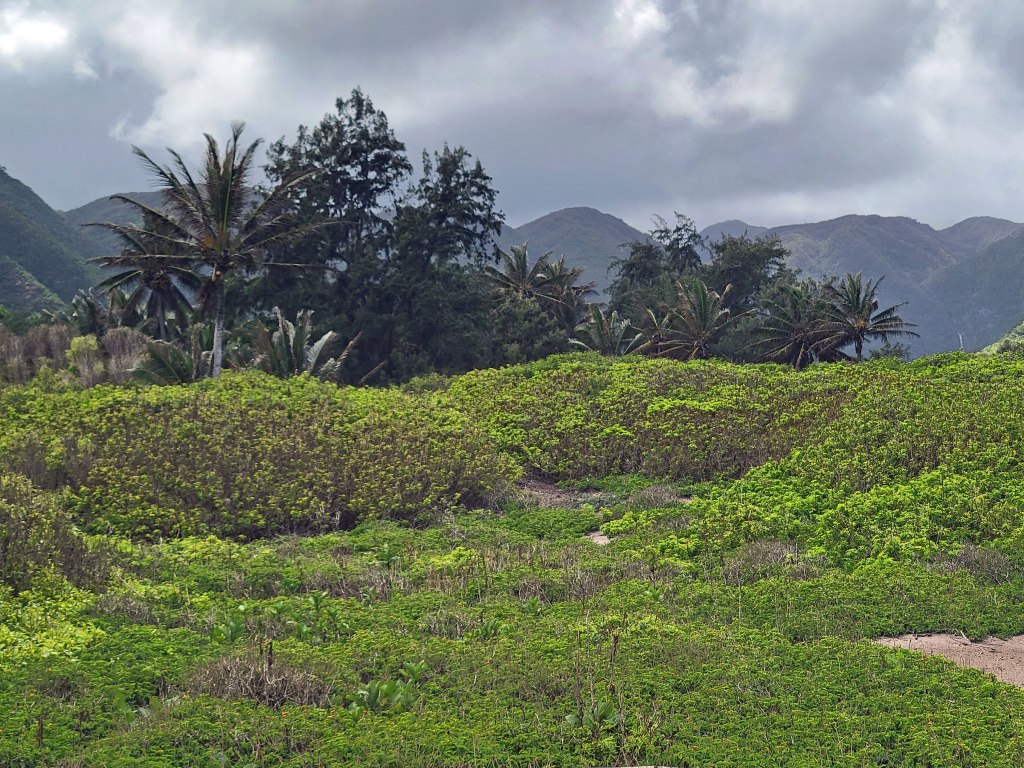
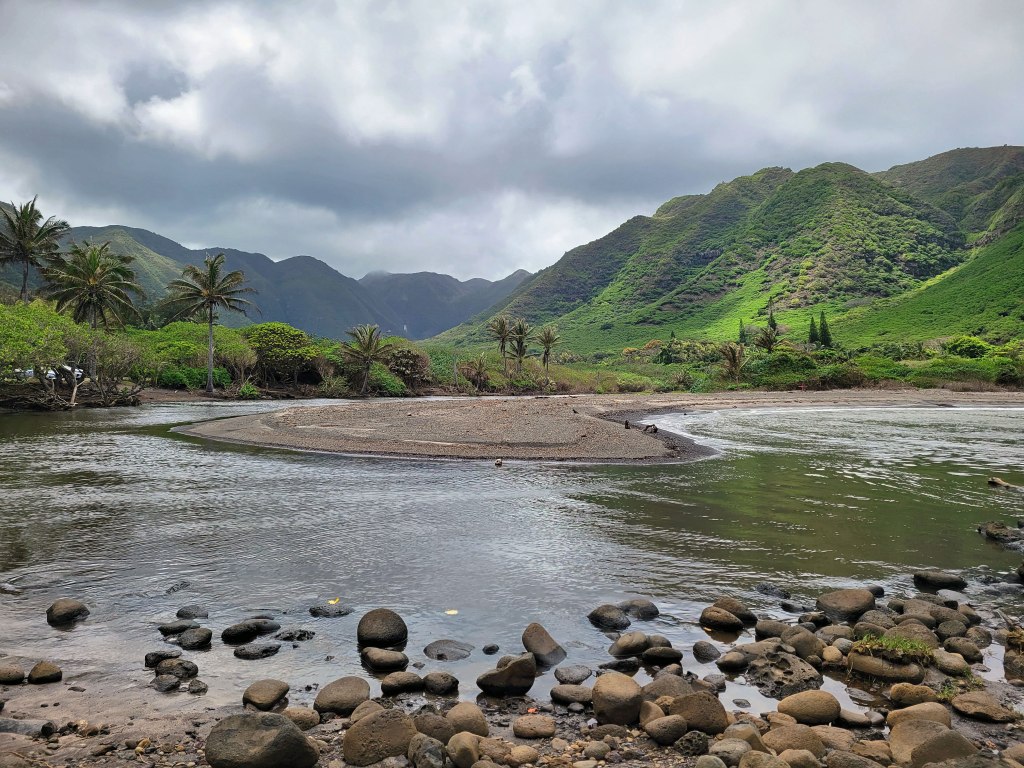
Once we saw the natural beauty of the area, we regretted not having booked a hike to Moa’ula Falls, located at the end of Hālawa Valley. Accessible only with a guide because the trail crosses private land, the 250-foot cascade is considered a sacred site by Native Hawaiians, and according to visitor reviews, the waterfall is a gem. So if you go to Moloka’i, you might want to look into it – three miles each way, with several water crossings, muddy terrain and large tree roots on the path.
And that’s how we spent our three days on Moloka’i. It was pretty clear that making a side trip to the island wouldn’t appeal to everyone, but we both enjoyed every minute of our stay.
This is the last of five articles about our trip to Maui in March, 2023. (Click here to see all.) Mahalo for traveling with us, and aloha for now.
If you would like to be notified when future posts are published, please click the SUBSCRIBE button and enter your e-mail address.
Discover more from Just Passing Through
Subscribe to get the latest posts sent to your email.


 Just Passing Through
OOOH. I have been waiting for this one! Old Hawaii for sure – and described very well!
LikeLike
Thank you Marlene. Happy to hear that I was able to convey a bit of the look and feel of this unique part of Hawaii.
LikeLike