
Costa Rica is famous for its biodiversity, with an estimated 500,000 species of wildlife. But spotting even a fraction of the animals (most live deep in the rainforest and many spend their lives in the treetops) is challenging, even with an experienced guide. And decent photos? For most travelers and casual photographers (like us) – fuhgeddaboudit! ¡Solo vive el momento y disfruta!
And perhaps visit the privately-owned La Paz Nature Park and Wildlife Refuge located about an hour outside of San José for a more up close and personal experience with some of those elusive animals.


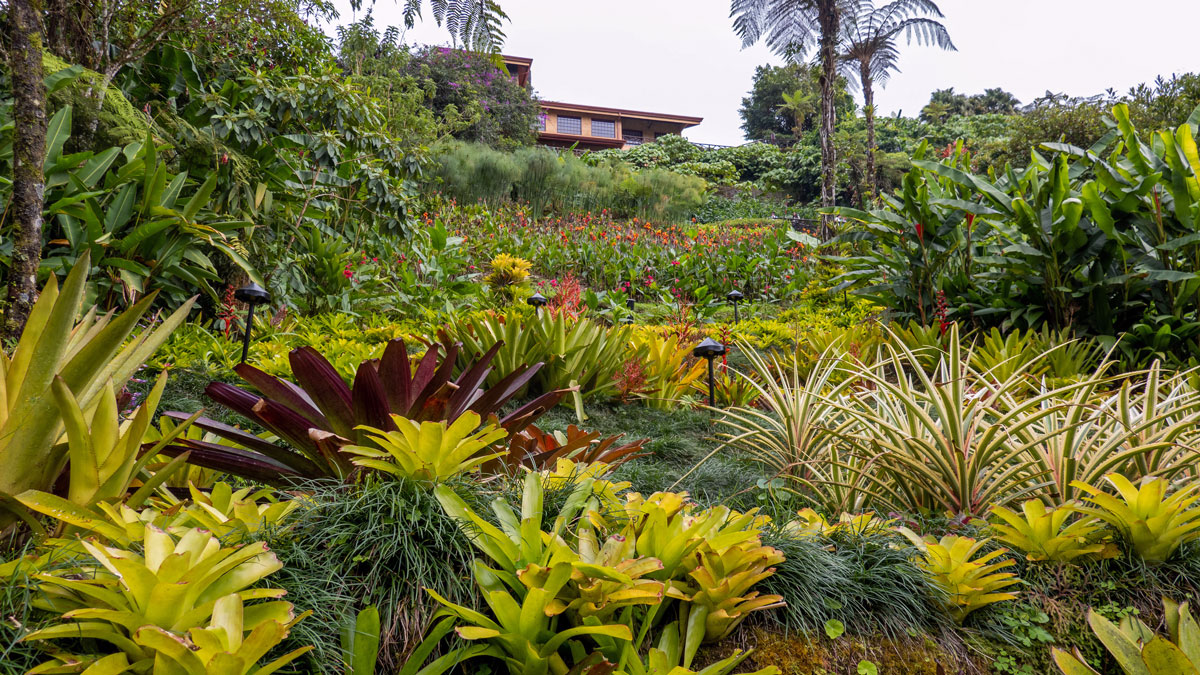
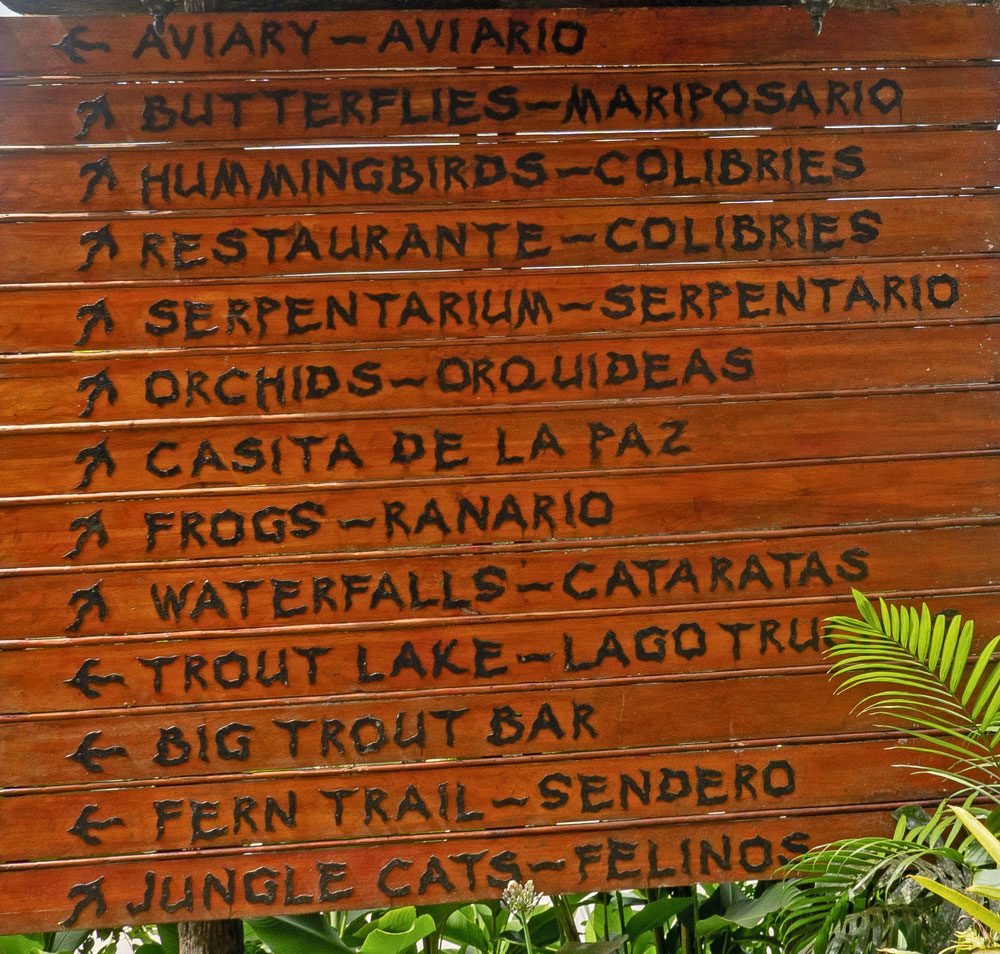
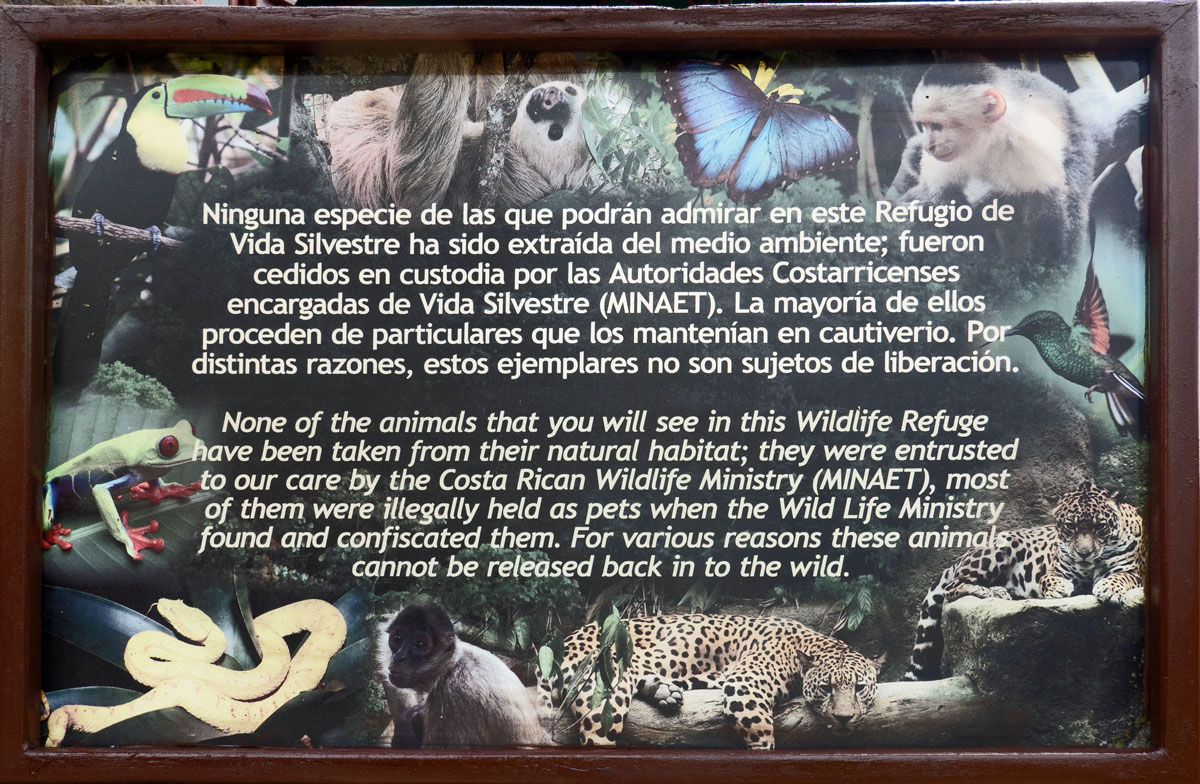
Just to emphasize and paraphrase from the signage – the animals in the refuge were not taken from their natural habitat. Most were illegally kept as pets and confiscated by authorities, who then entrusted their care to this organization. They cannot survive in the wild, so the refuge is their lifelong home.
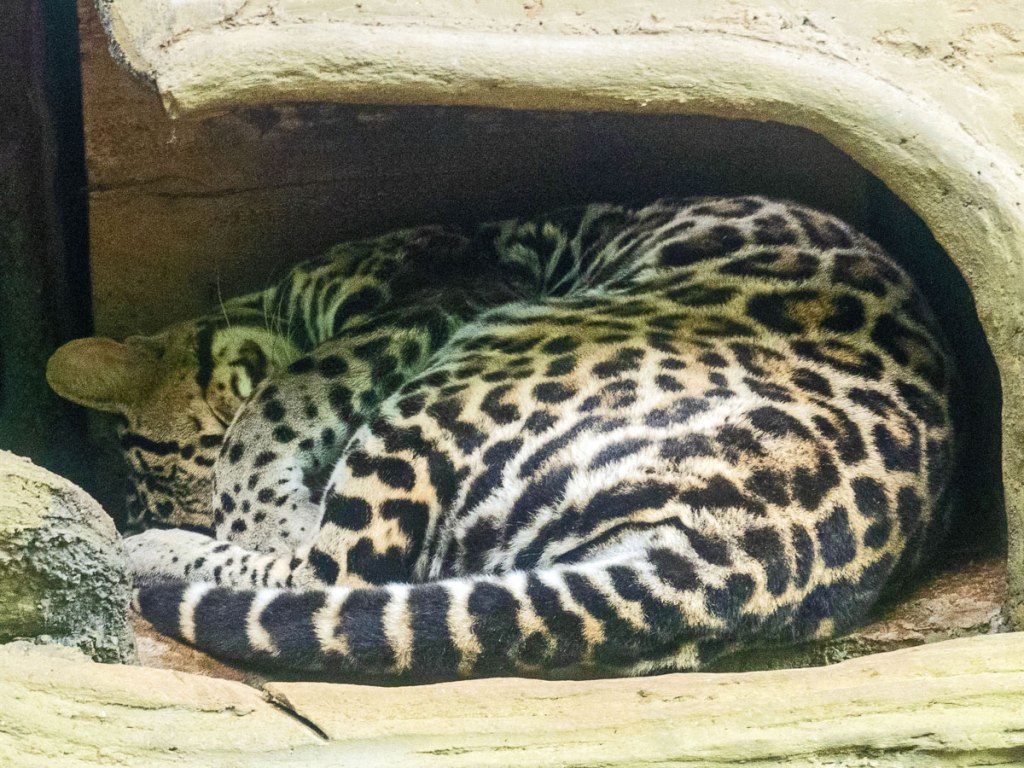
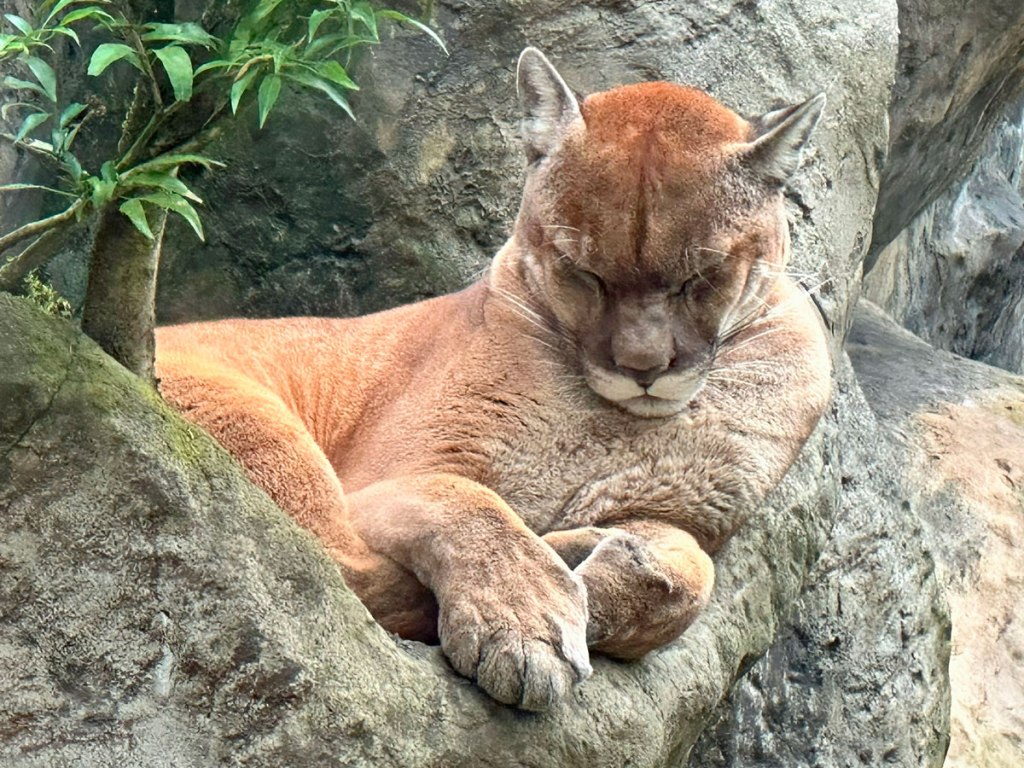
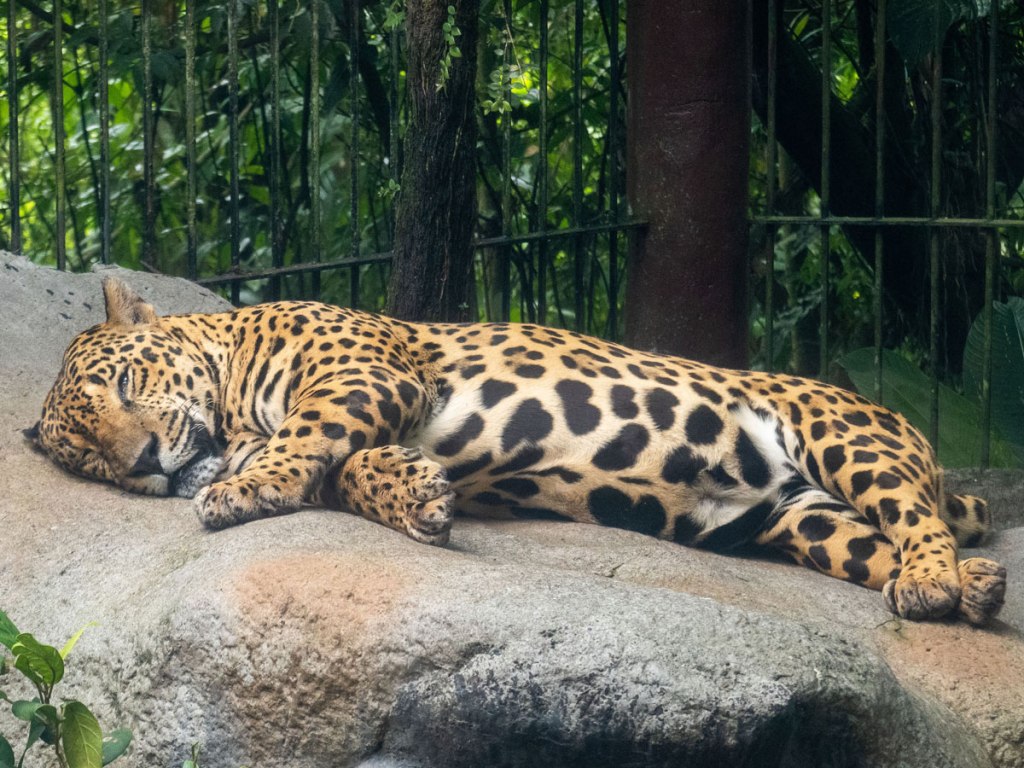
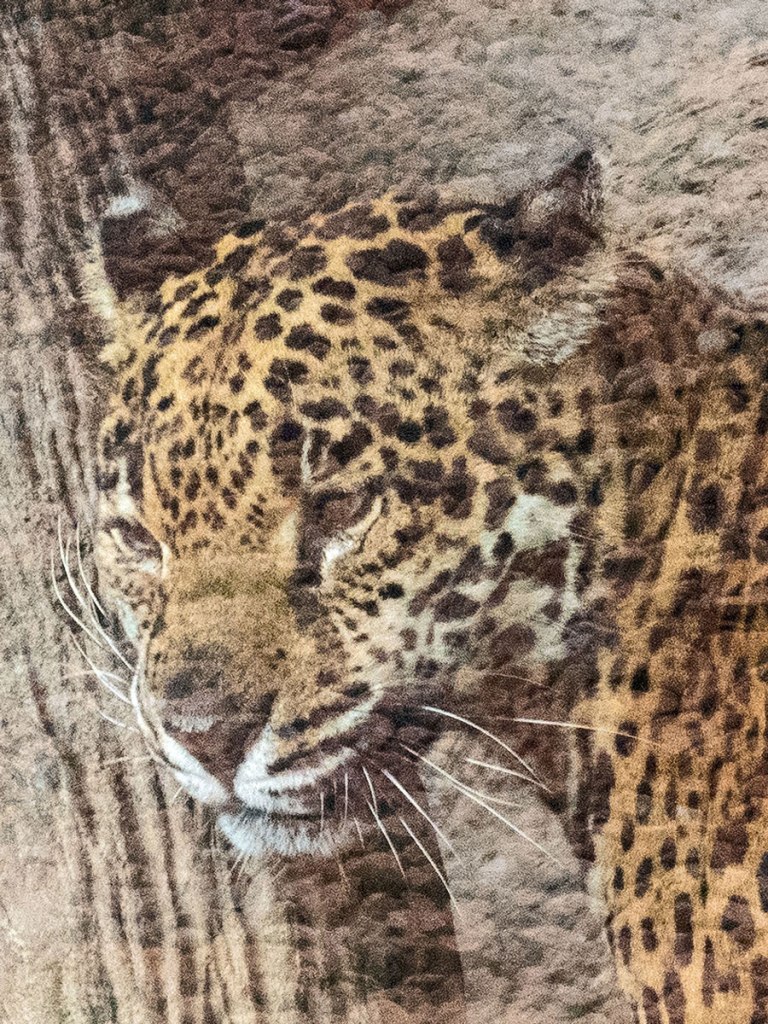
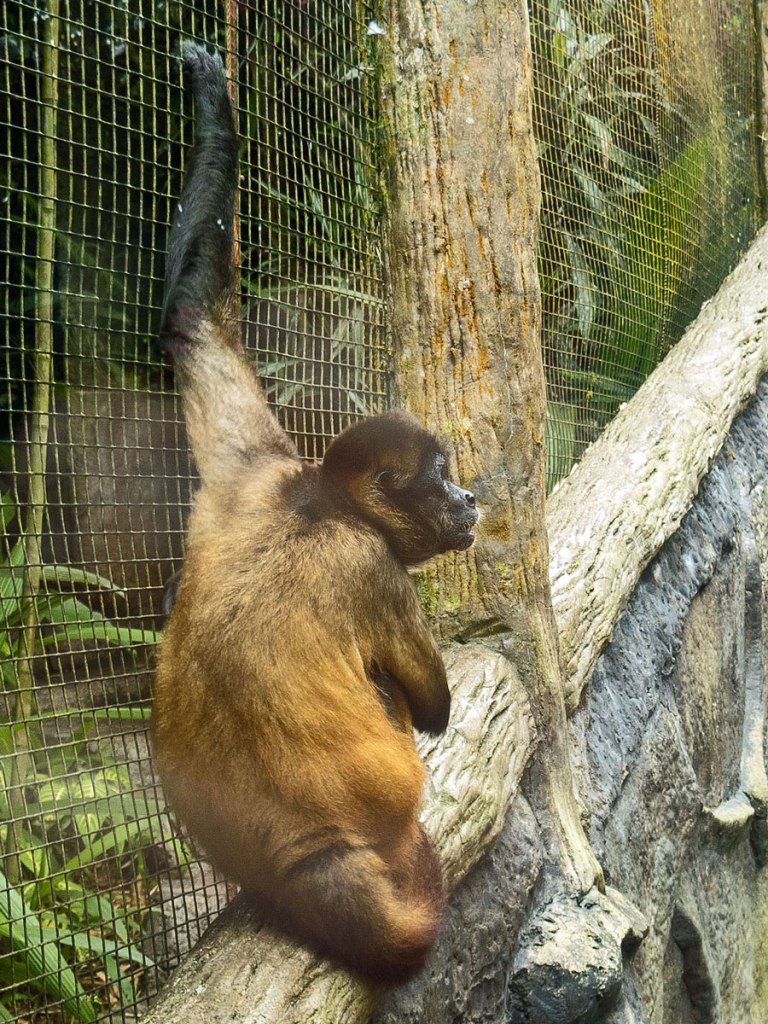
In the mammal category, we saw jungle cats, sloths and monkeys, as well as a few non-rescues that just liked the neighborhood.


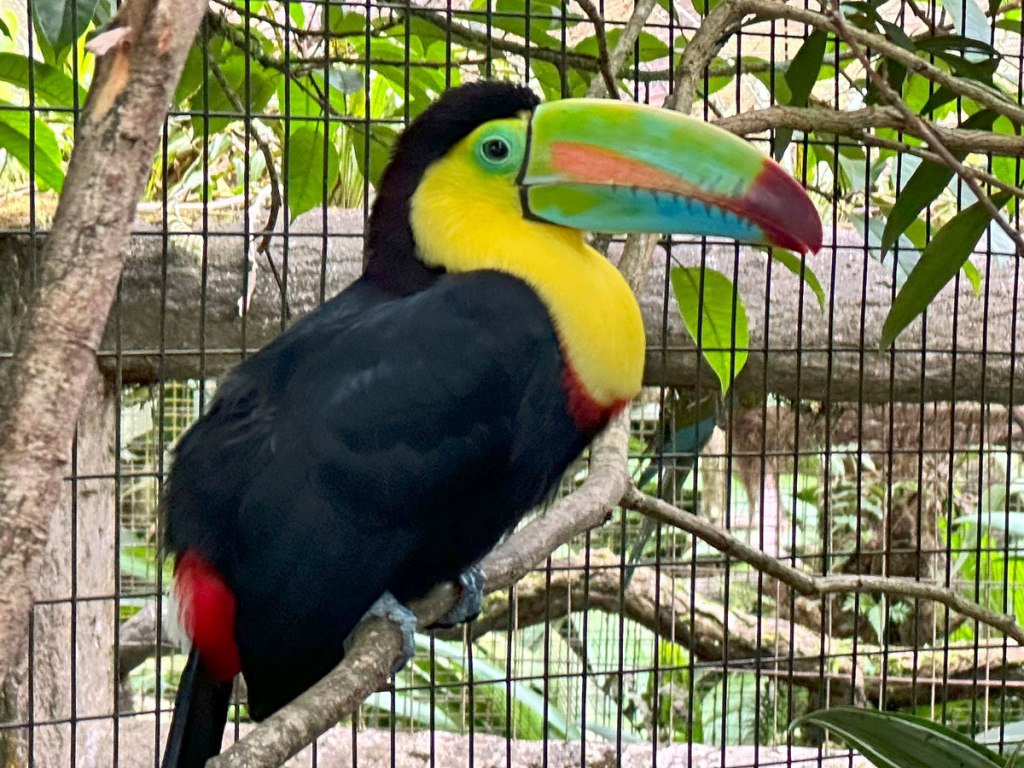
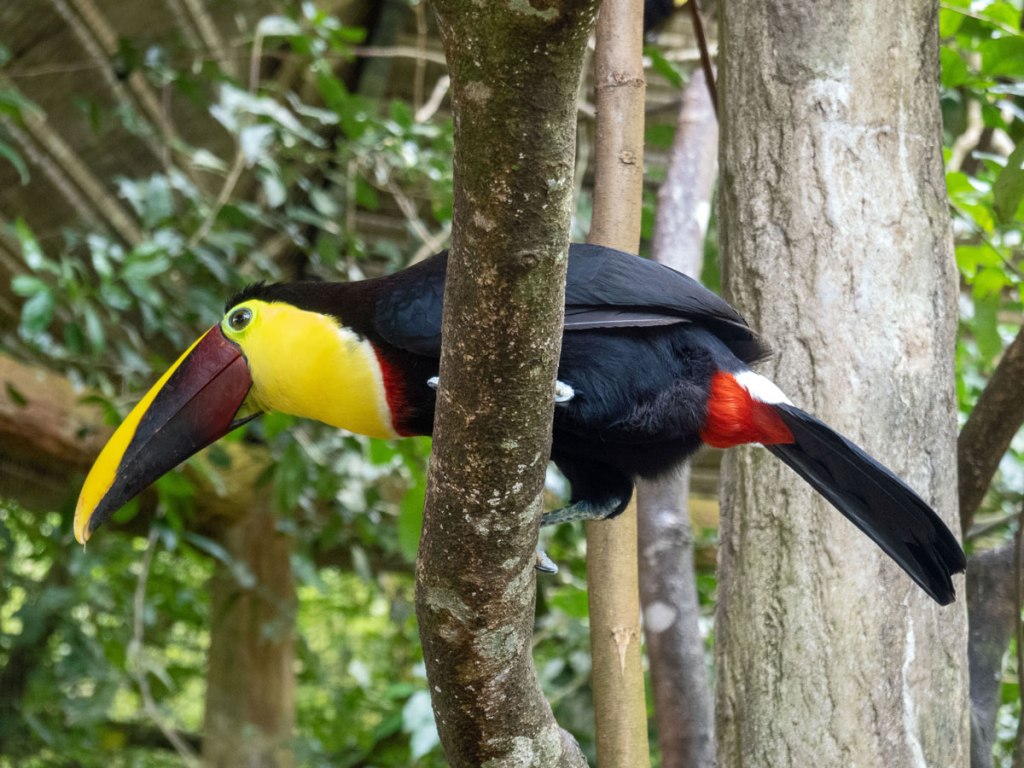
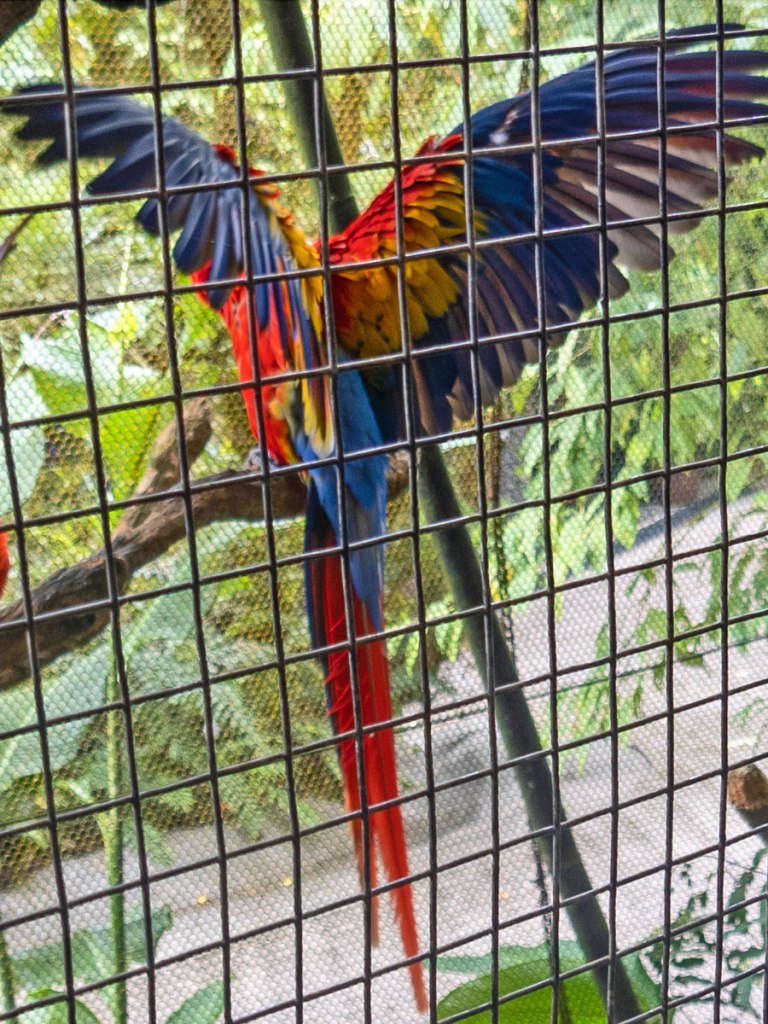
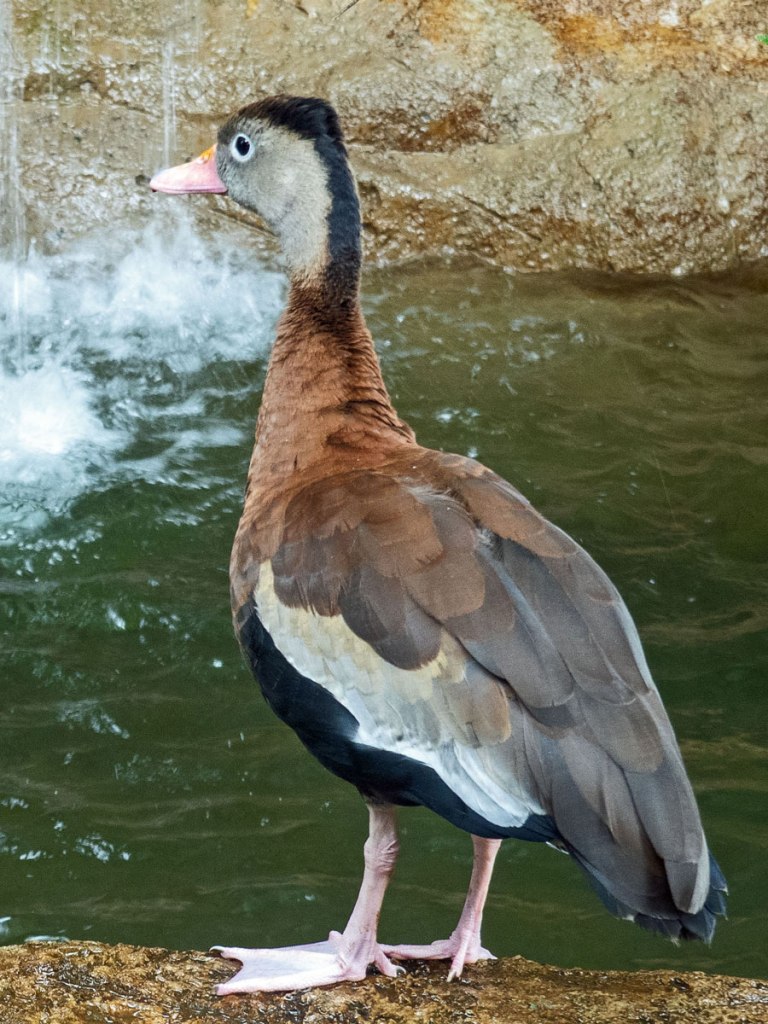
The aviary was home to 34 different bird species. Even at close range, good photos were difficult.

The ‘drop in any time’ hummingbird garden (not enclosed) has recorded visits by 26 different species. Pictured below is (perhaps) a green-crowned brilliant hummingbird.

The large butterfly observatory featured 25+ species living in an ecosystem that supports the full life cycle from eggs to larva to chrysalis to adults. Nature also gets a helping hand from the dedicated on-site reproduction lab.
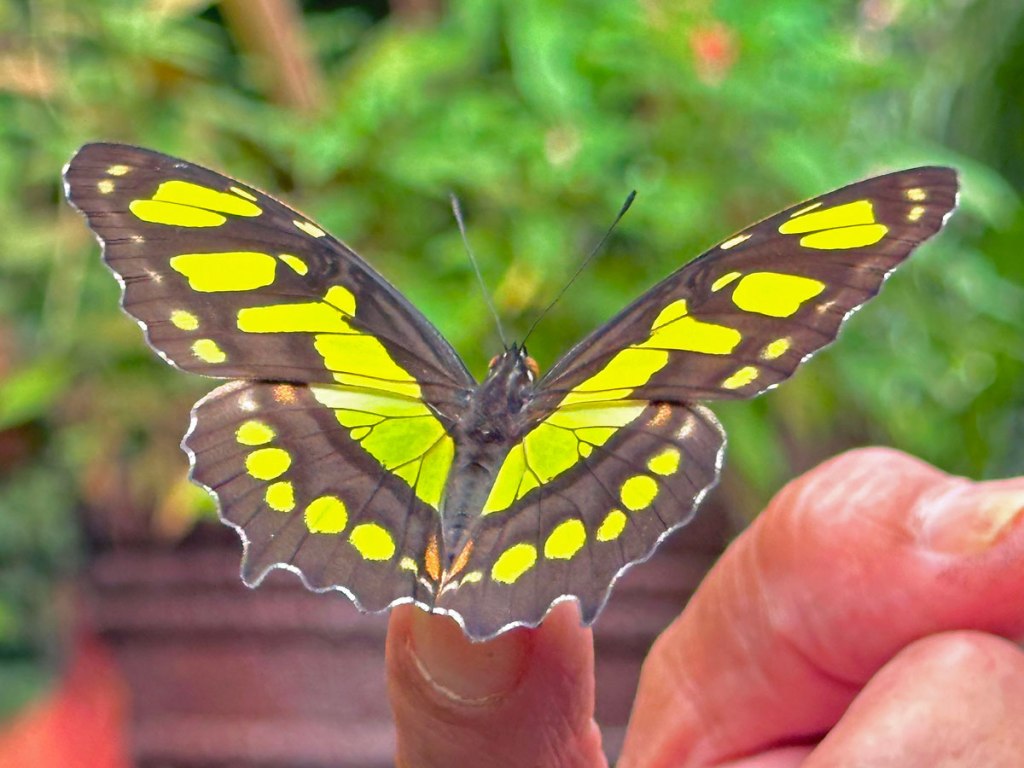
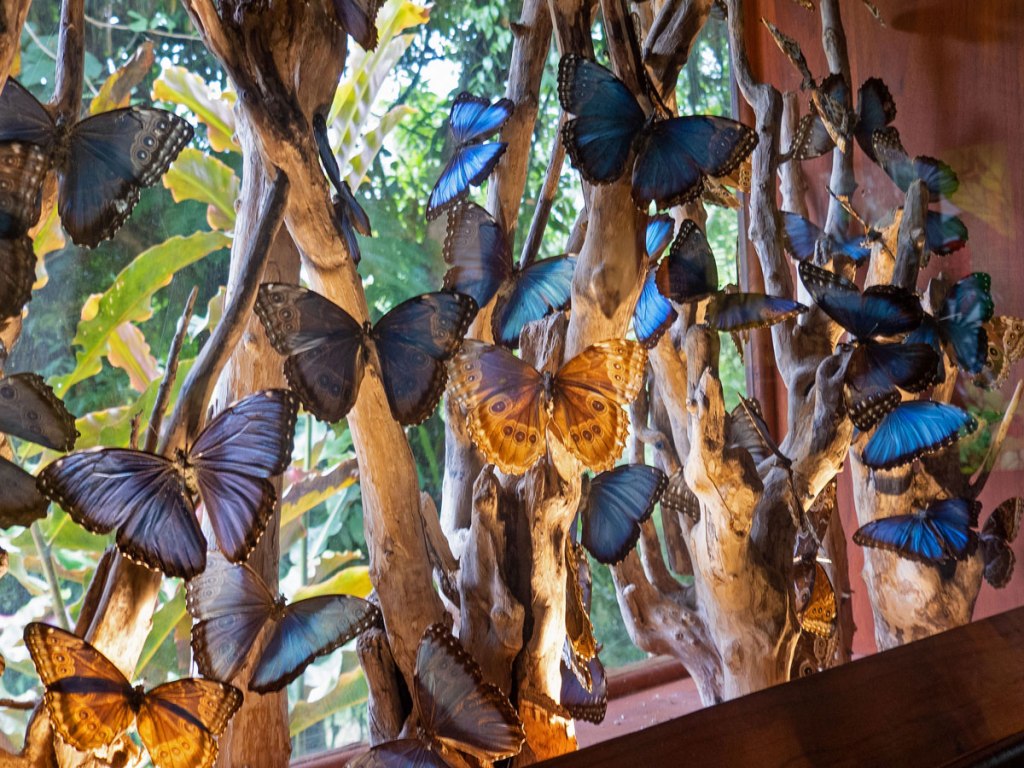


The experience of wandering around in a butterfly garden never gets old. Visually stimulating yet peaceful and calming. And the fan favorite blue morphos were abundant, displaying their vivid colors when in flight, less so when resting.
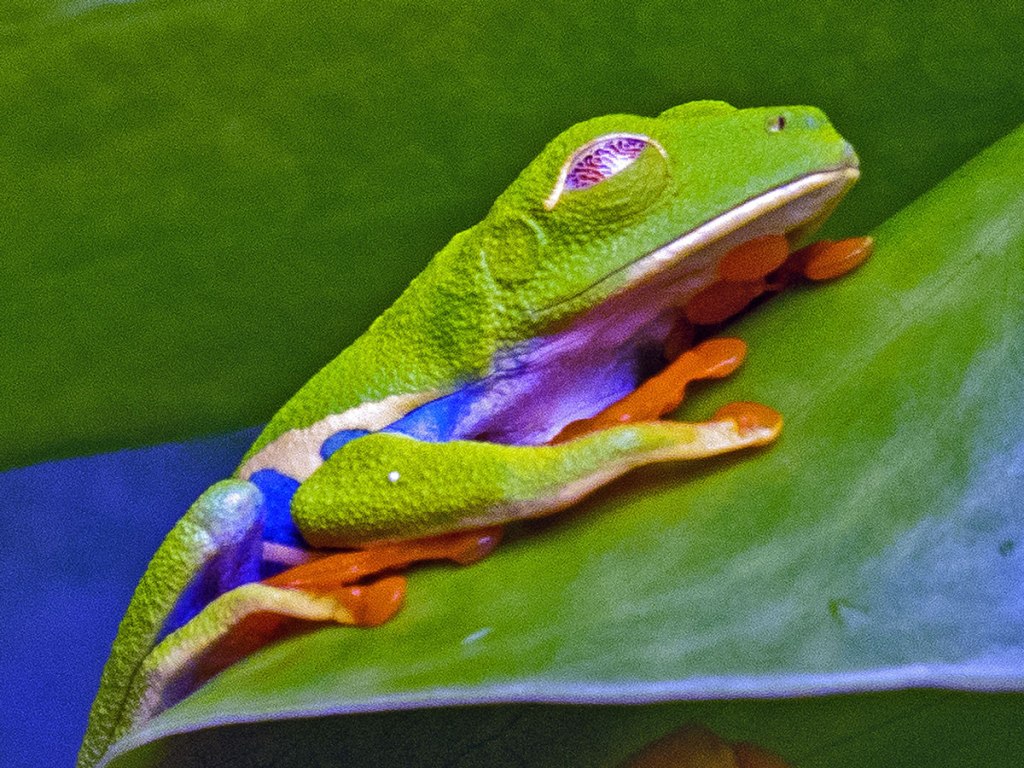
La Paz even had a walk through ranarium for frogs, a new concept for us. As some of the most colorful animals in Costa Rica, one might assume they would be easy to spot in this contained habitat. But no – we found only two of the 22 species that lived there. This cute frog was quite content to let us take a few close-ups. Species unknown – some type of leaf frog or tree frog.
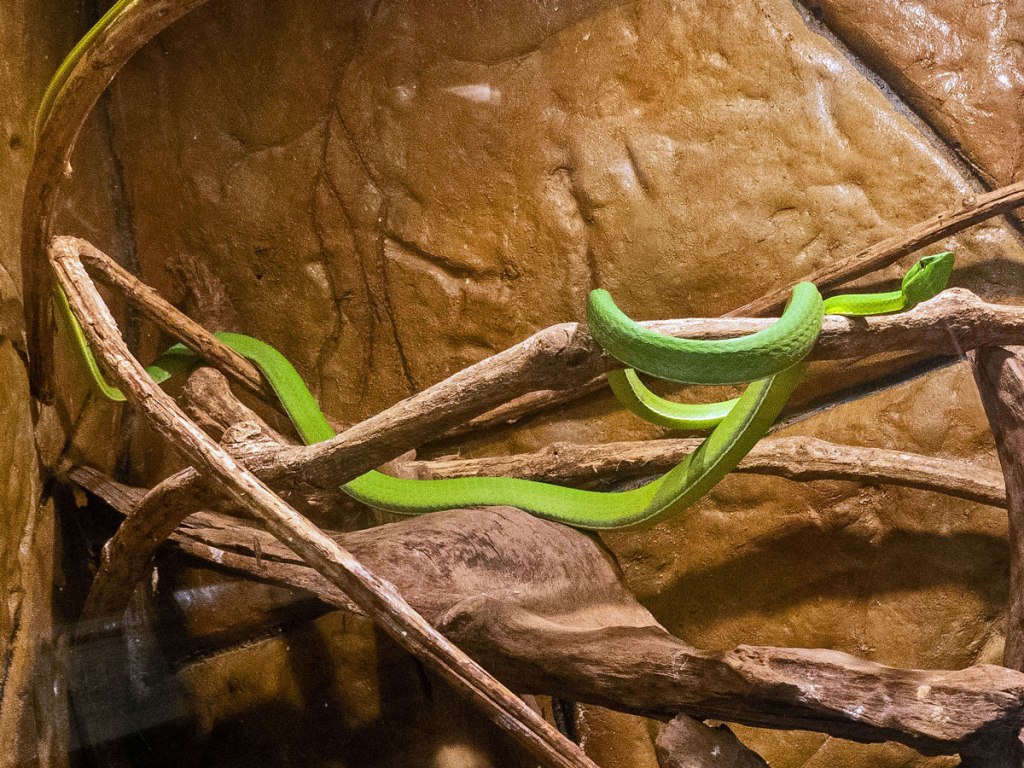
Our visit to the serpentarium was a little creepy for me, but Bill found it fascinating. He would have missed lunch if I hadn’t gone back to escort him out.
There were 30 different species of snakes available for viewing, and at least half were venomous – some only mildly so but others quite deadly. It’s unbelievable that people would choose a poisonous snake as their companion animal.
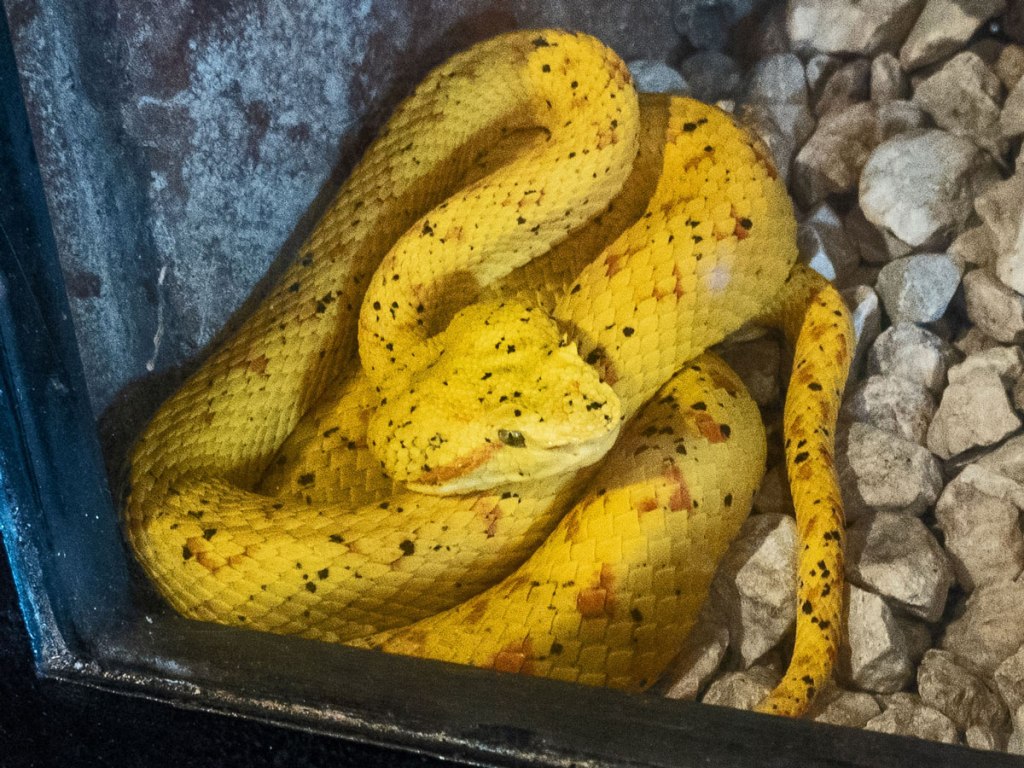
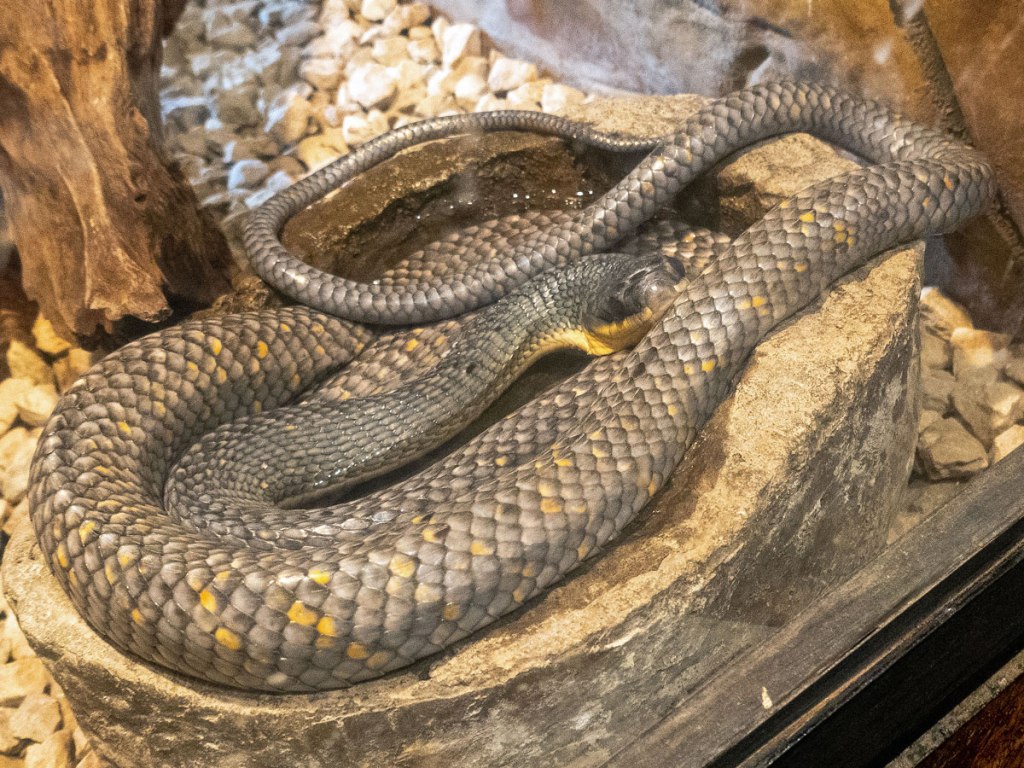

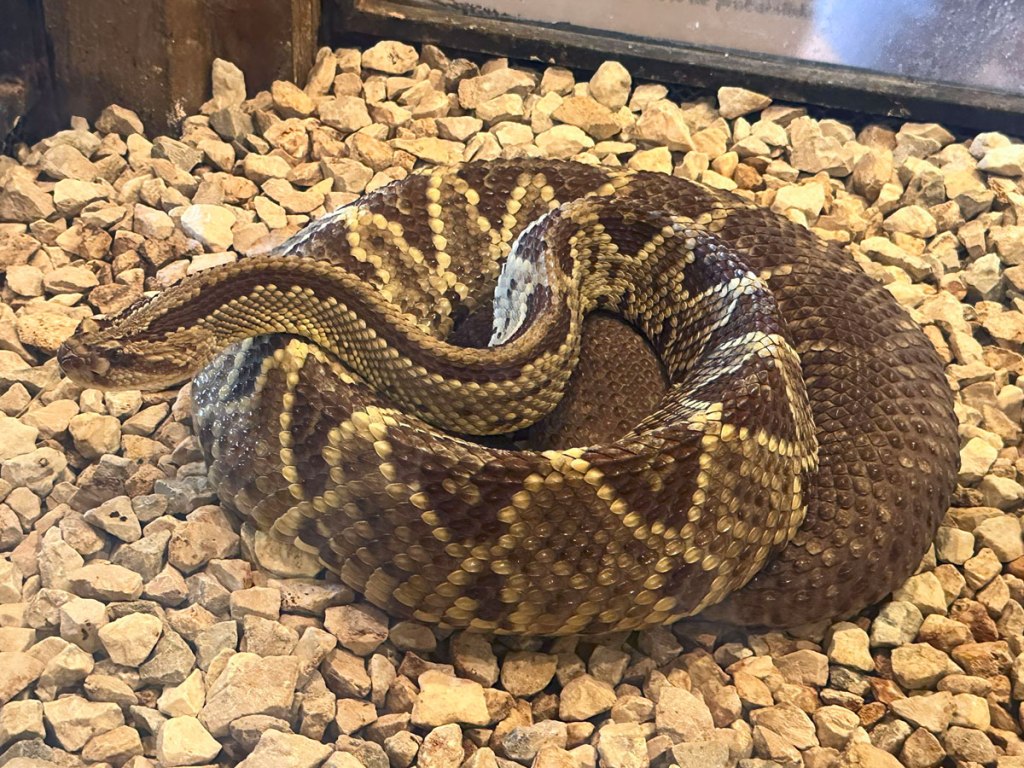
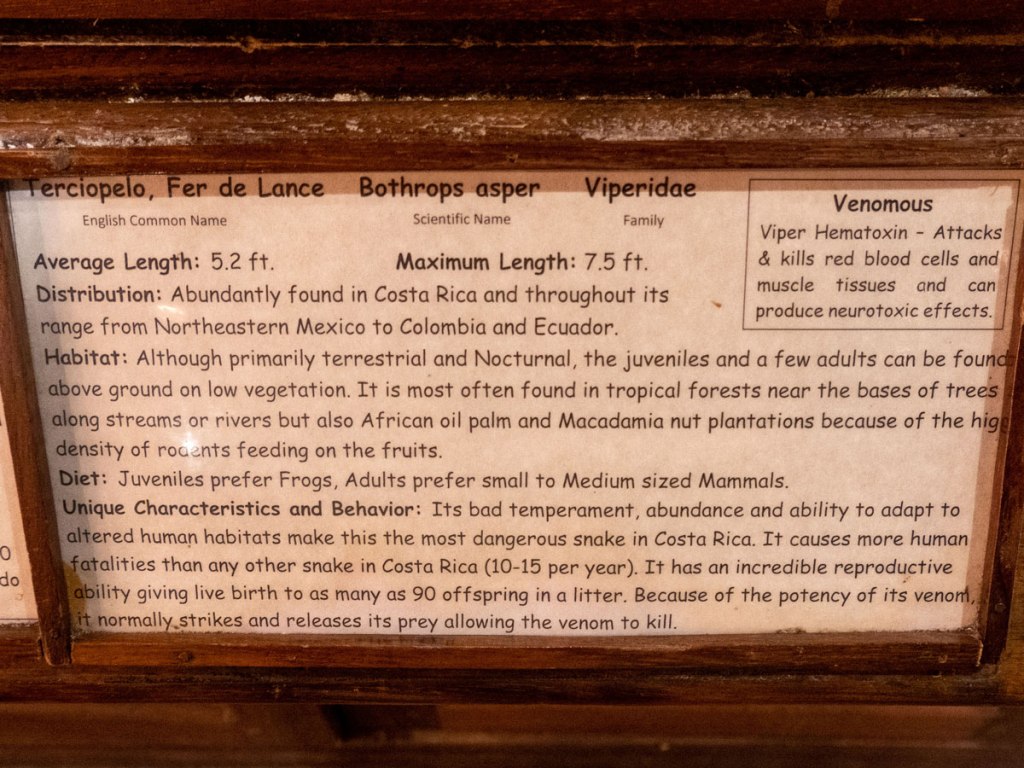
The wildlife refuge was the main attraction for us, but there was more to see at La Paz. The casita típica shown in the gallery below was a reproduction of a typical farmhouse from the early 20th century – built with authentic materials using tools and methods available during the period.
The colorful oxcart (carreta) parked in front of the casita is a proud national symbol of Costa Rica with agrarian roots. Historically used by farmers for a multitude of tasks, the wagons also transported coffee beans from their source in the highlands to the docks on the Pacific Ocean beginning in the mid-19th century. The tradition of decorating oxcarts with colorful designs emerged during the early years of the 20th century and is unique to Costa Rica.


Rarely used as working wagons today, ornamental oxcarts were widely displayed throughout the country, and one factory still makes them – Fabrica de Carretas Eloy Alfaro. Had we known, it would have been a fun place to visit.
The final attraction at La Paz was the spectacular waterfall, actually a series of five waterfalls easily viewed from a nicely constructed path with seemingly endless steps.

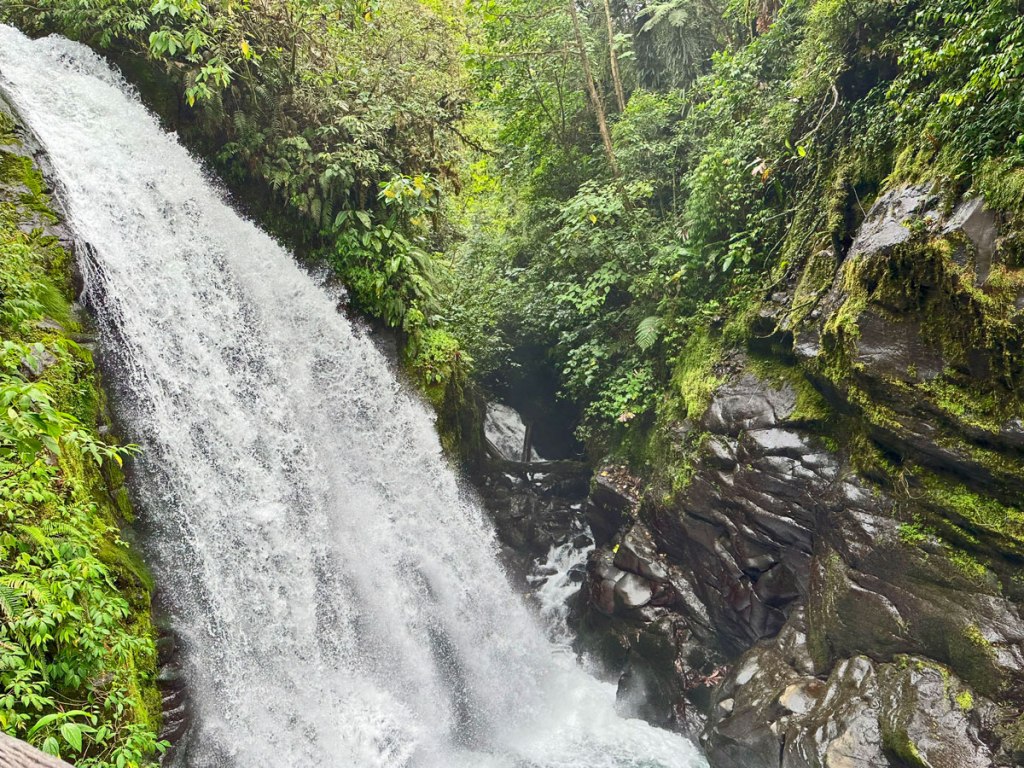


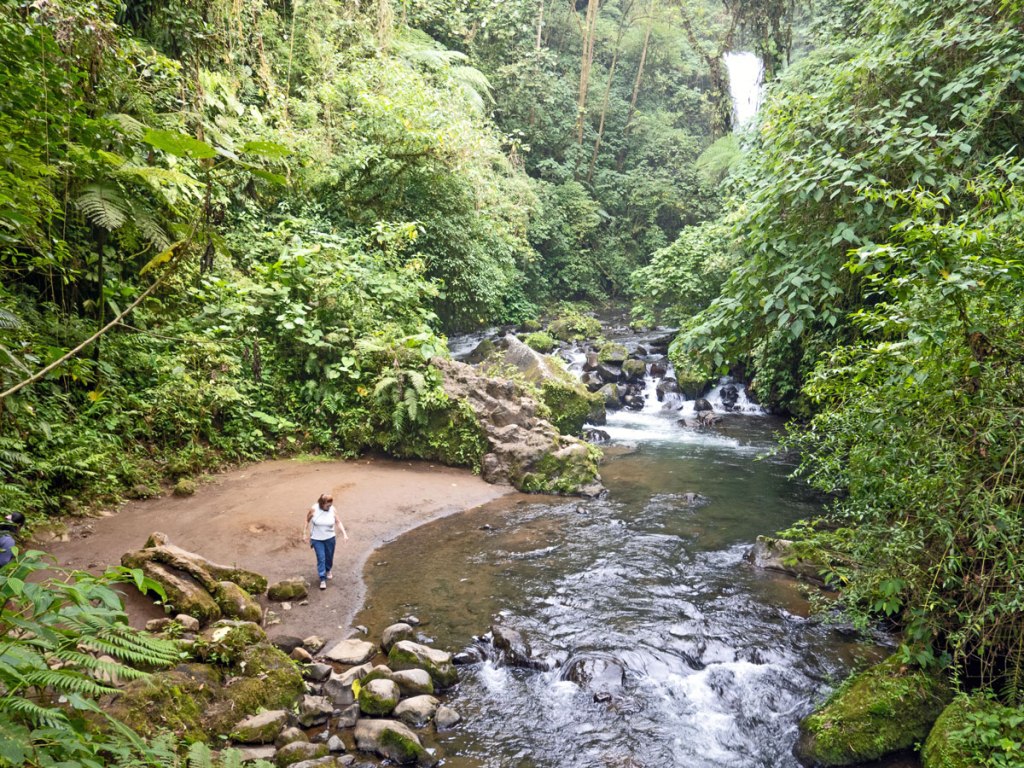

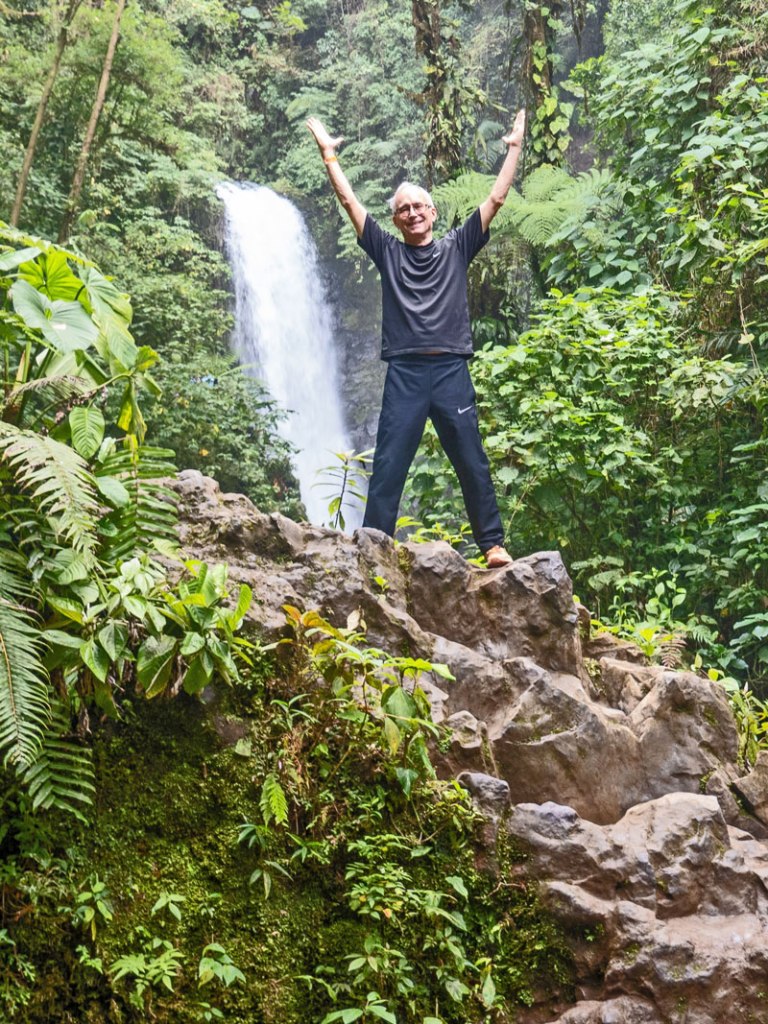
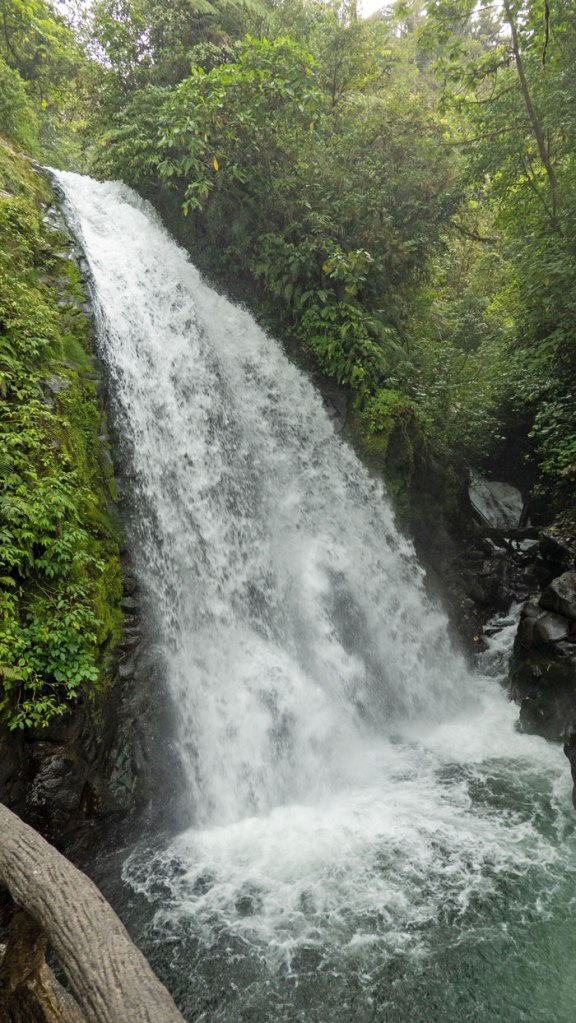
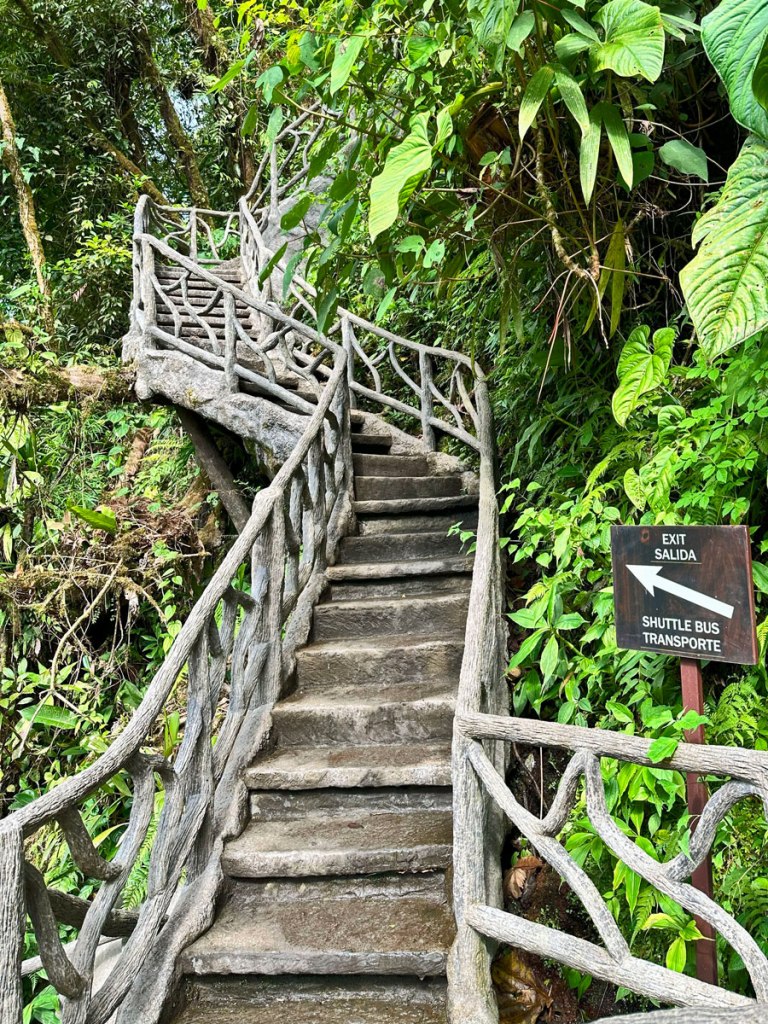
The sheer volume and power of the cascades was impressive – the best waterfalls we saw in Costa Rica.
We opted not to rent a car during our trip, instead making use of an array of commercial shuttles, both private and shared, to travel between destinations. Then we booked guided day tours for the places we wanted to visit, such as La Paz. It was a good choice for us.
Besides getting picked up and dropped off at the hotel and not having to worry about navigating in a country that doesn’t use street addresses, the drivers and tour guides were all great – certified, professional, knowledgeable, personable and proud citizens of Costa Rica. Plus there was the advantage of making stops along our routes that added to the overall experience.
The day trip to La Paz started and ended at our hotel in San José, with driver Cristóbal and tour guide Arturo. Just us and one other couple. The first stop was at roadside café and coffee farm, where Arturo talked us through some of the finer points of growing, roasting and purchasing coffee in Costa Rica.

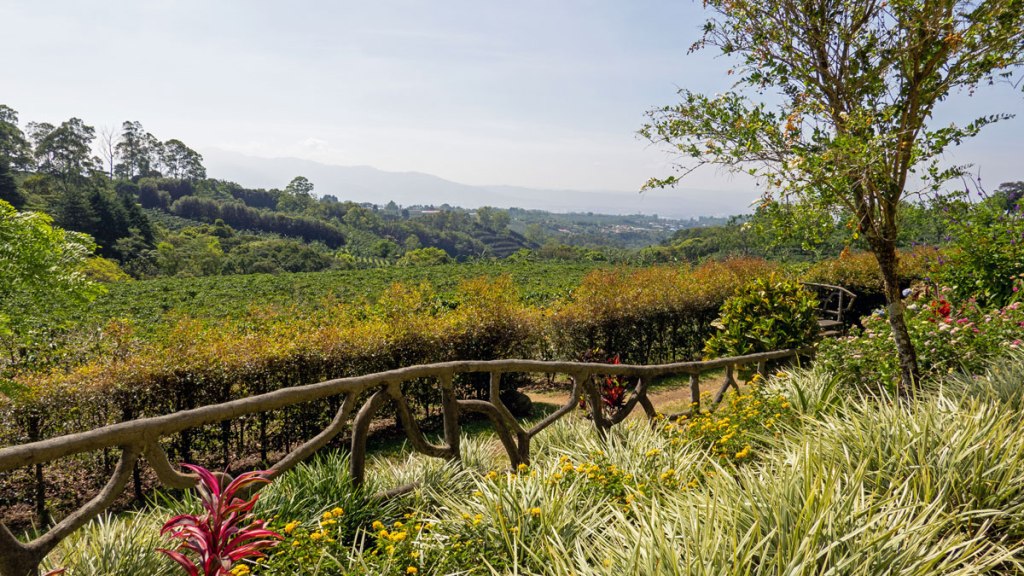
We learned that:
- Coffee originated in Ethiopia.
- All coffee beans grown in Costa Rica must be Arabica.
- Ninety percent of Costa Rican coffee leaves the country.
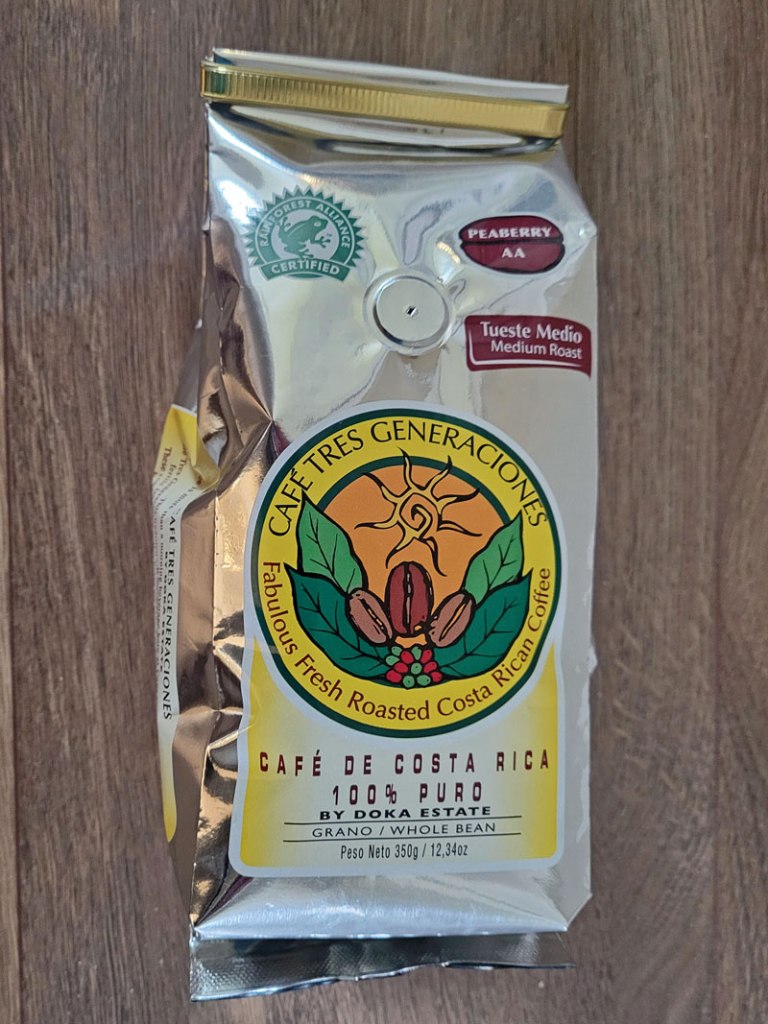
- Each red fruit typically contains two beans. A singleton, occurring about 10% of the time, is called a peaberry bean and commands a higher market price due to better perceived quality. We bought a small bag but have yet to try it.
Our second stop was at a souvenir shop that featured fresh strawberries, local cheeses and, of course, numerous other ‘must have’ items, including strawberry wine and sangria.

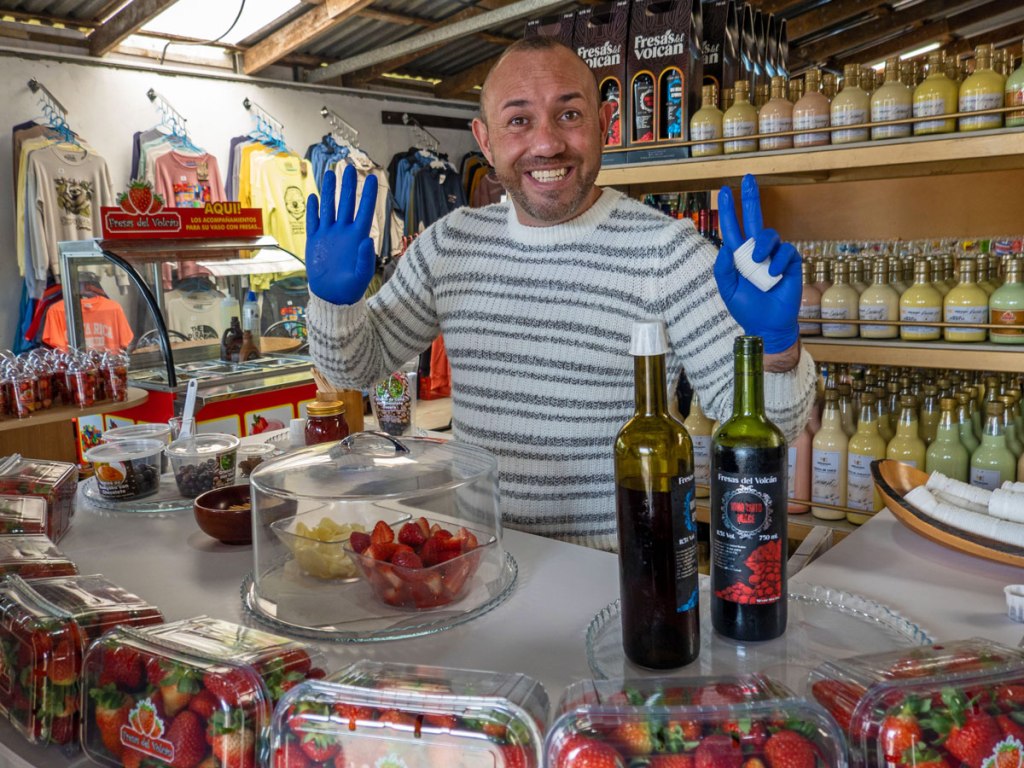
We bought a large container of fresh strawberries to enjoy later, and they were super delicious.
Some would refer to these ‘comfort stops’ as tourist traps, and no doubt, they offer unlimited ways to part with your colones at somewhat higher prices than elsewhere. So what? We enjoyed it!
Next up: La Fortuna and the Arenal Volcano
If you would like to be notified when new articles are published, please click on the “Subscribe” button and enter your email address. Thank you!
Discover more from Just Passing Through
Subscribe to get the latest posts sent to your email.



 Just Passing Through
i love, love, the green! Not so much the critters!
LikeLike
As I looked at all of the amazing creatures and the lush greens the word ‘miracle’ just kept coming to mind! What an amazing world. Thank you for sharing it with us. xo
LikeLike
Thanks Mary. I heartily agree! Costa Rica is a perfect place to get a giant ‘nature fix.’
LikeLike