
Perhaps it’s the mystical cloud forest or the cool and crisp mountain air. Maybe it’s the extra effort required to get there or the excellent food, lodging and hospitality we experienced. Or all of the above. Certainly if we travel to Costa Rica again, I will make a beeline for Monteverde.

Getting there was a highlight. Only twenty miles from La Fortuna as the crow flies, but a 3-4 hour mostly uphill journey in real life, with nearly 4,000 feet difference in altitude.
First leg – a leisurely boat ride across Lake Arenal, the largest in Costa Rica. Passenger ferries operated by tour companies are a popular means of transport for turistas without wheels. A beautiful day and a relaxing ride, but nothing spectacular.


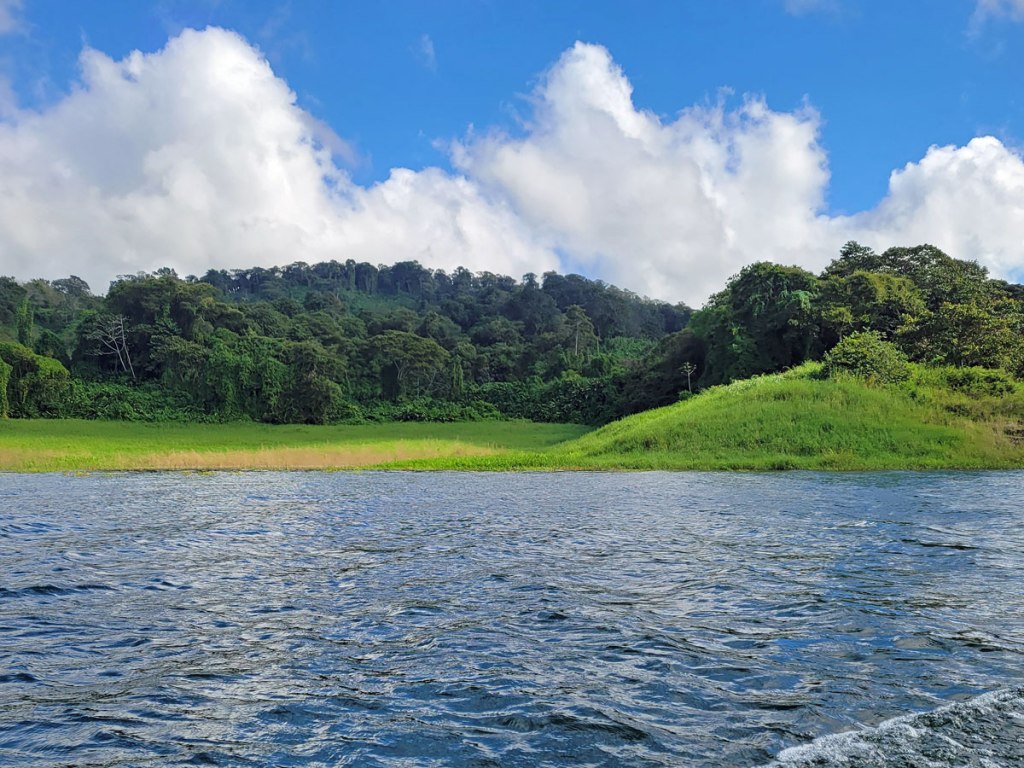
The second leg was a 2-hour van ride to the town of Monteverde on a narrow, winding gravel road with an abundance of potholes. And it WAS spectacular – rural, lush, scenic and non-commercial.

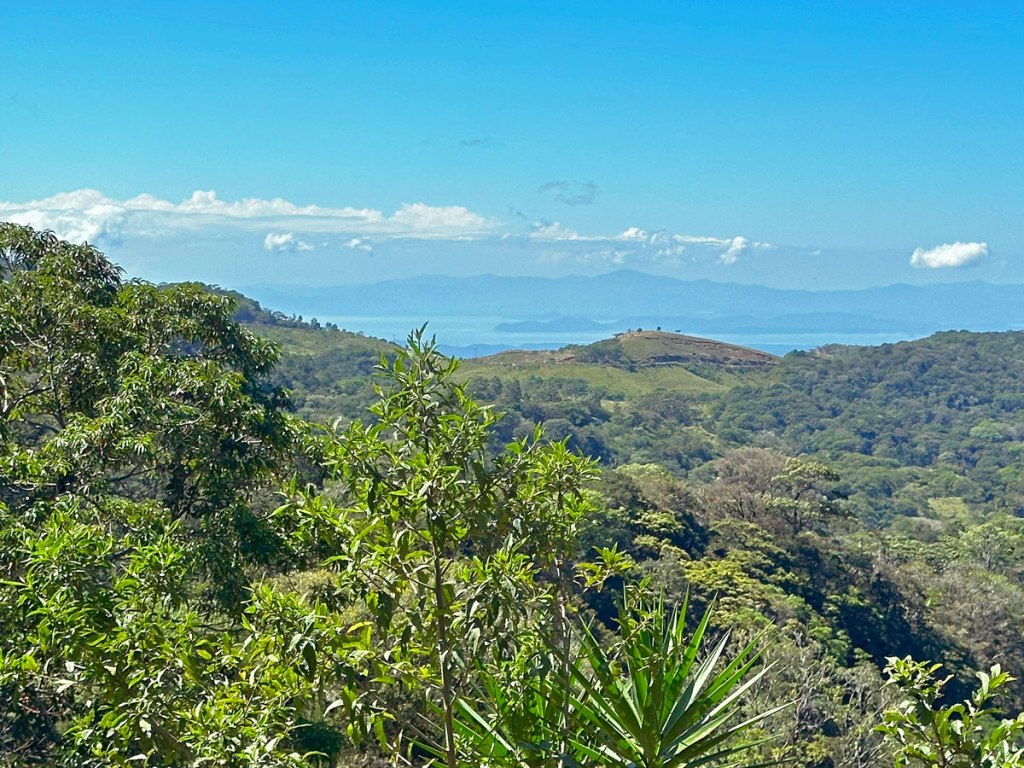
For those interested in hydrologic features, Monteverde sits on the Continental Divide of the Americas that separates the Atlantic and Pacific watersheds and runs from northern Alaska through Canada, the U.S. (including Rocky Mountain National Park in our backyard), Mexico, Central America and through the Andes to the southern tip of South America.
Monteverde was on our travel itinerary because of its proximity to a large expanse of protected cloud forest. If you’re unfamiliar like we were, it’s a high altitude rain forest in which the vegetation is shrouded in persistent clouds and fog. The reduced level of direct sunlight combined with nearly constant moisture creates a unique ecosystem found in <1% of the planet’s remaining forests. End of science lesson.
Our day in the cloud forest . . .
. . . Was mostly sunny with some low hanging clouds in the distance. No rain, no condensation and no need for rain gear. Not at all what we expected.


We could have done a zip line adventure or a hanging bridges tour. We opted for the latter, because honestly, what’s the point of visiting the cloud forest if you only experience it while careening through the air at 60 mph (slight exaggeration) screaming at the top of your lungs and too scared to even open your eyes? I rest my case.
The hanging bridges tour was more our speed – a 2-mile trail with eight suspension bridges at different levels culminating in beautiful views of the forest canopy.
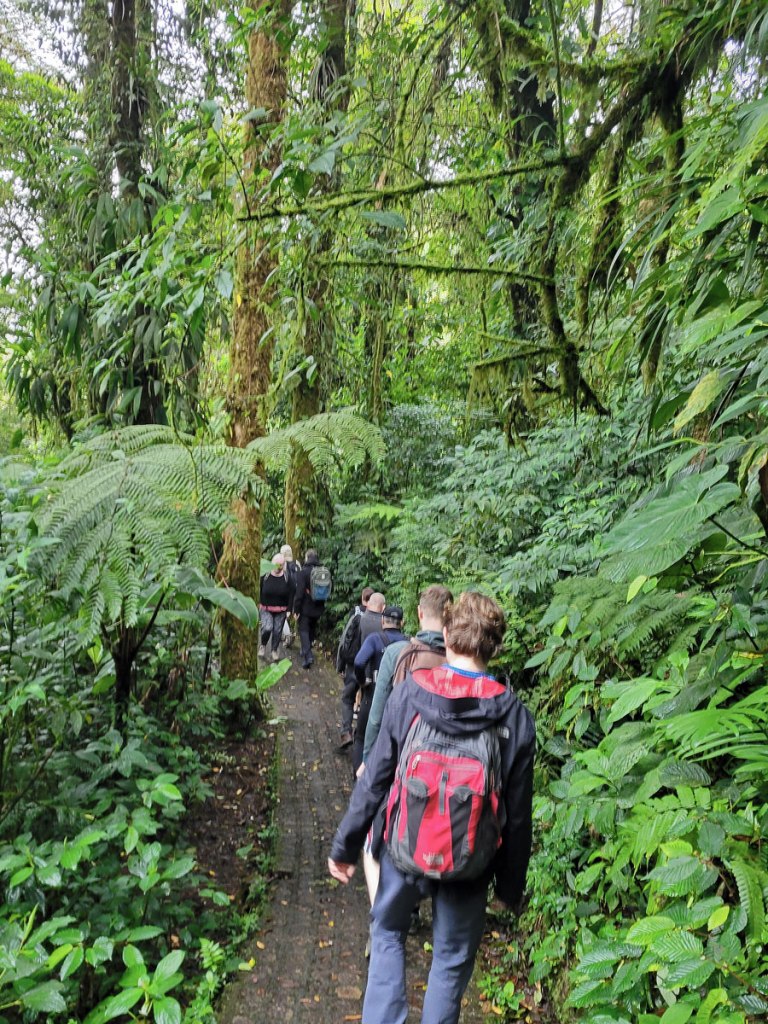
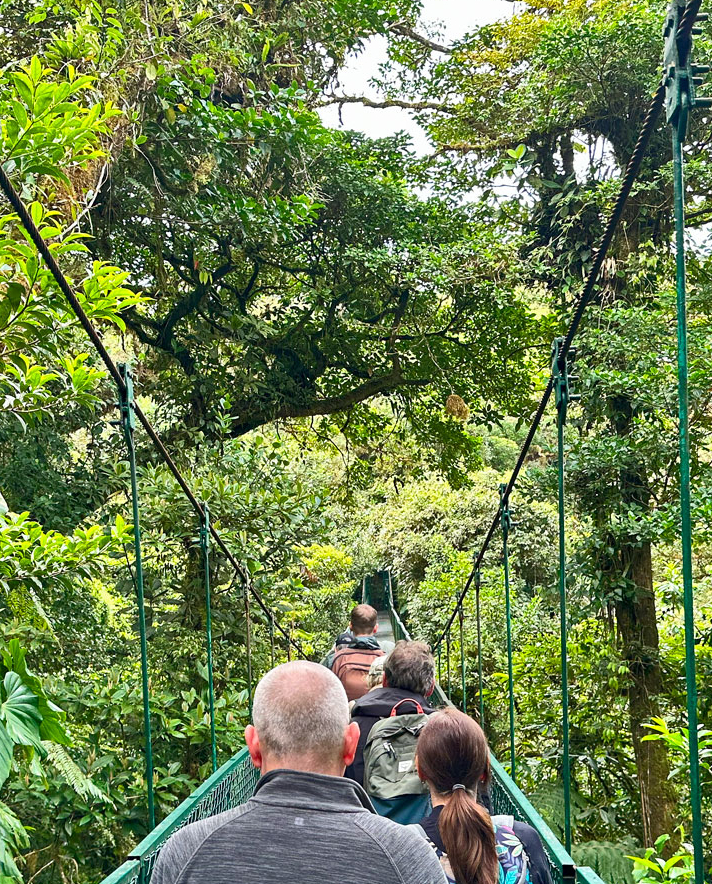
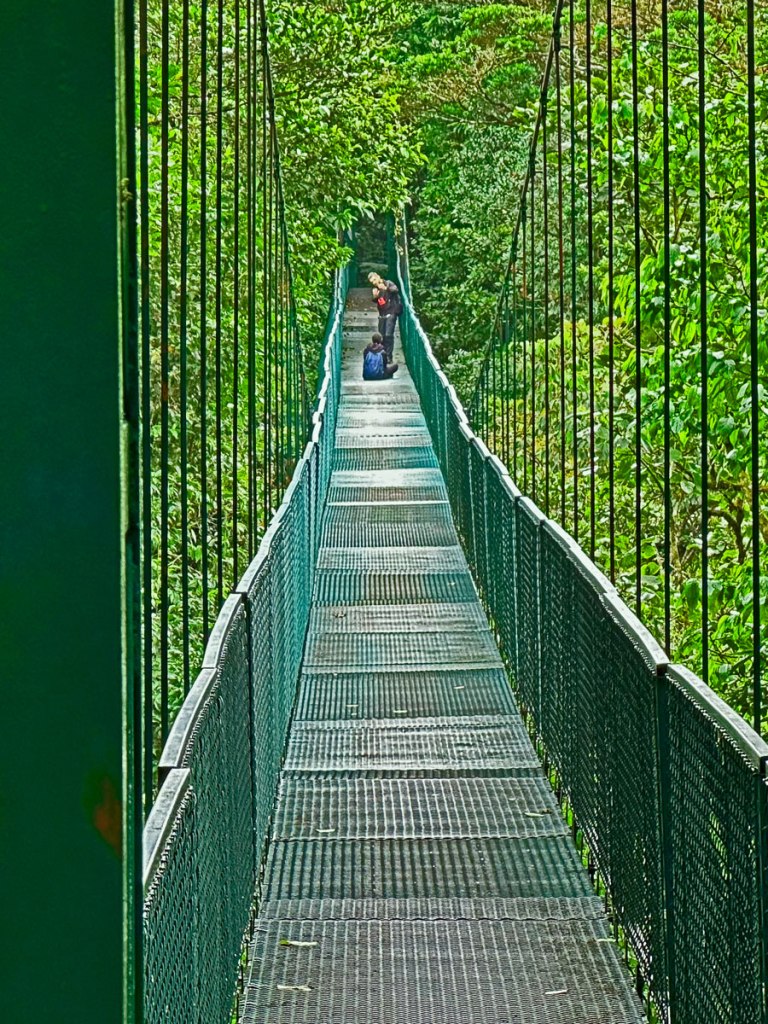
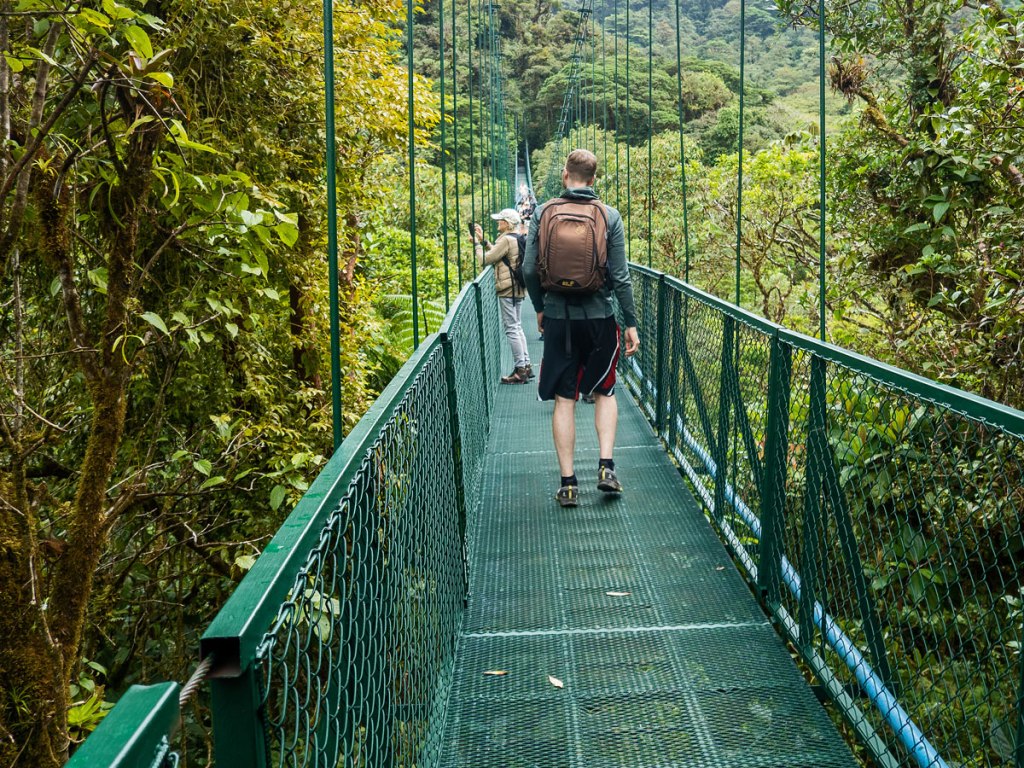

The dense vegetation of the canopy was a sea of green – various shades with endless layers and a patchwork of intriguing textures. Again, not exactly what we expected, but peaceful and serene.
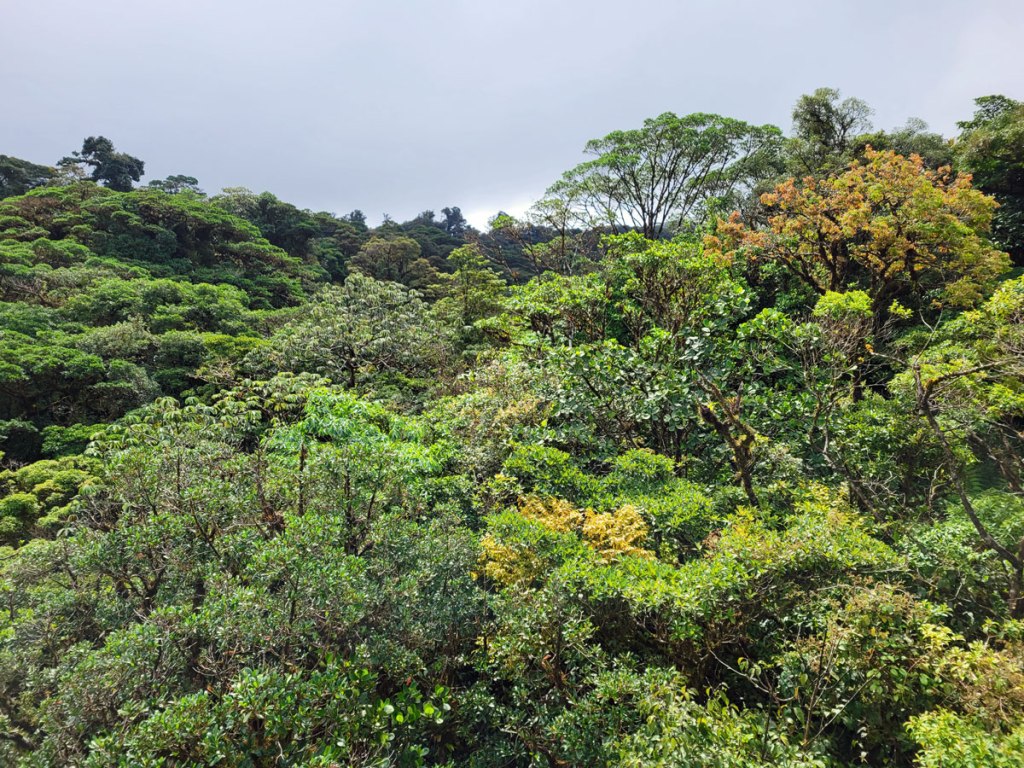

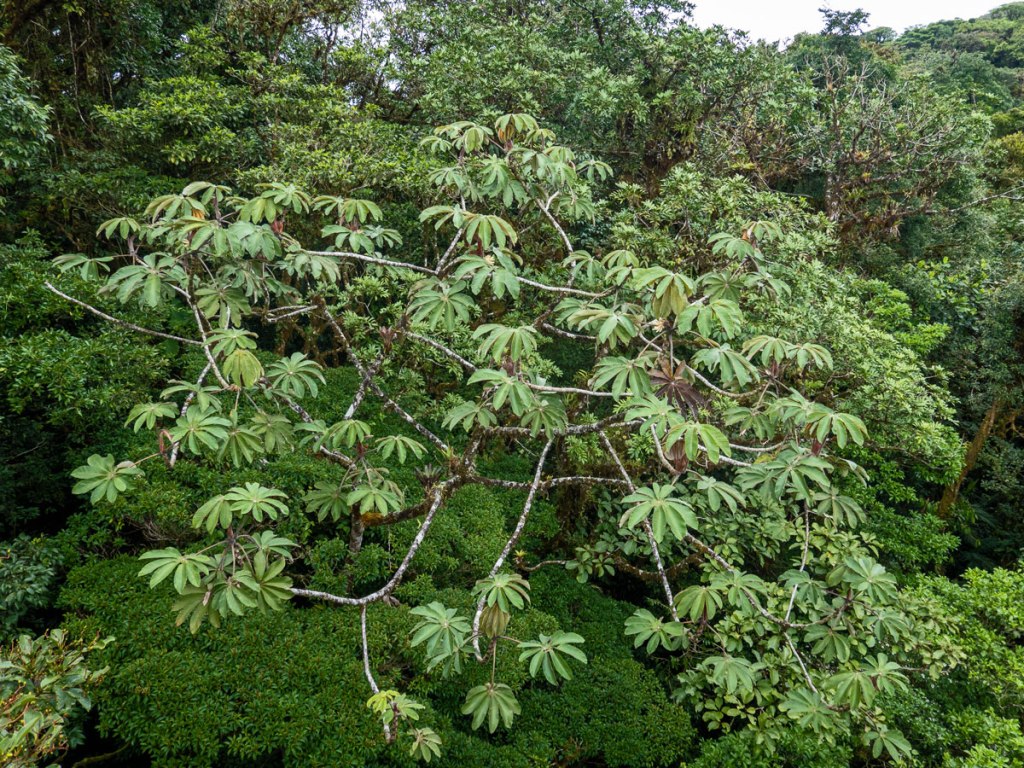


There were a few splashes of color now and again, but we didn’t see even one of the 420 types of orchids that grow in the forest. Wrong season, perhaps.
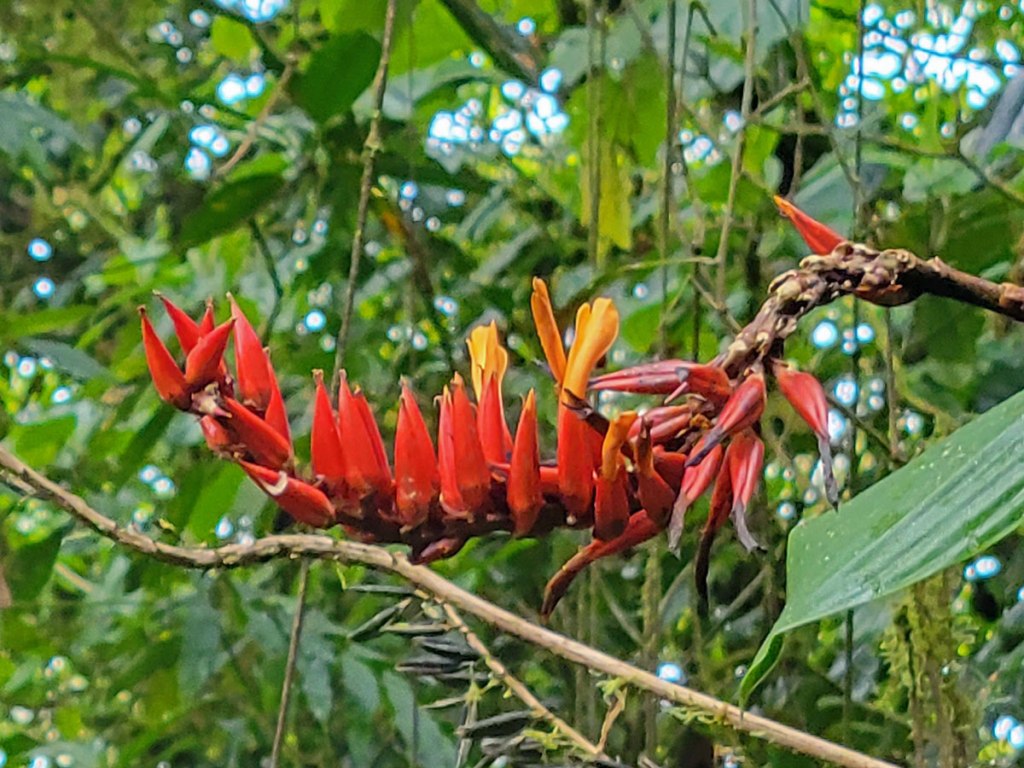

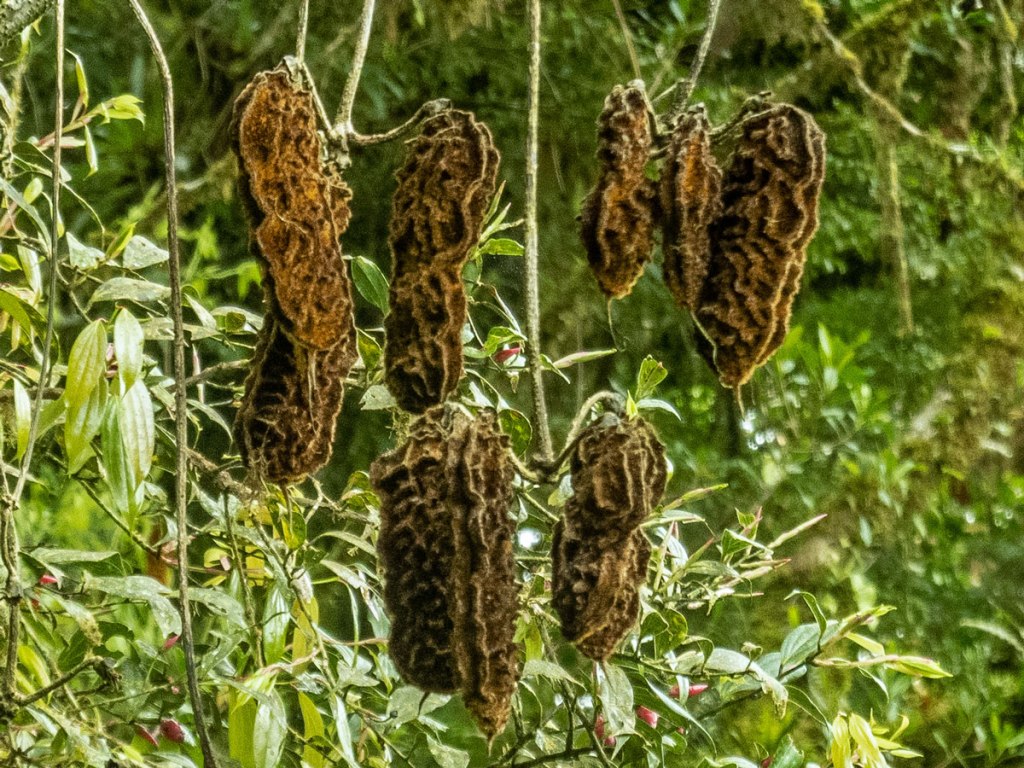
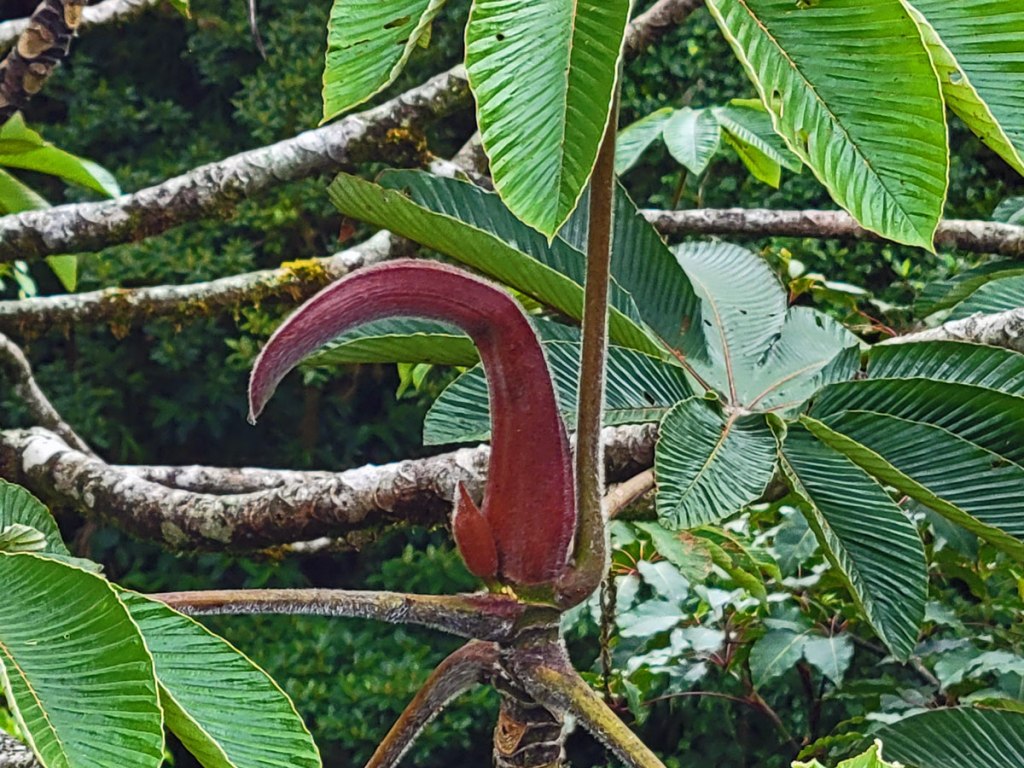
The forest is also home to an astounding number of animal species – 100 mammals, 400 birds, 120 reptiles and amphibians, and thousands of insects. However, we didn’t see much wildlife. Probably hiding from the screaming zip liners. Our guide pointed out a few birds and one tarantula.
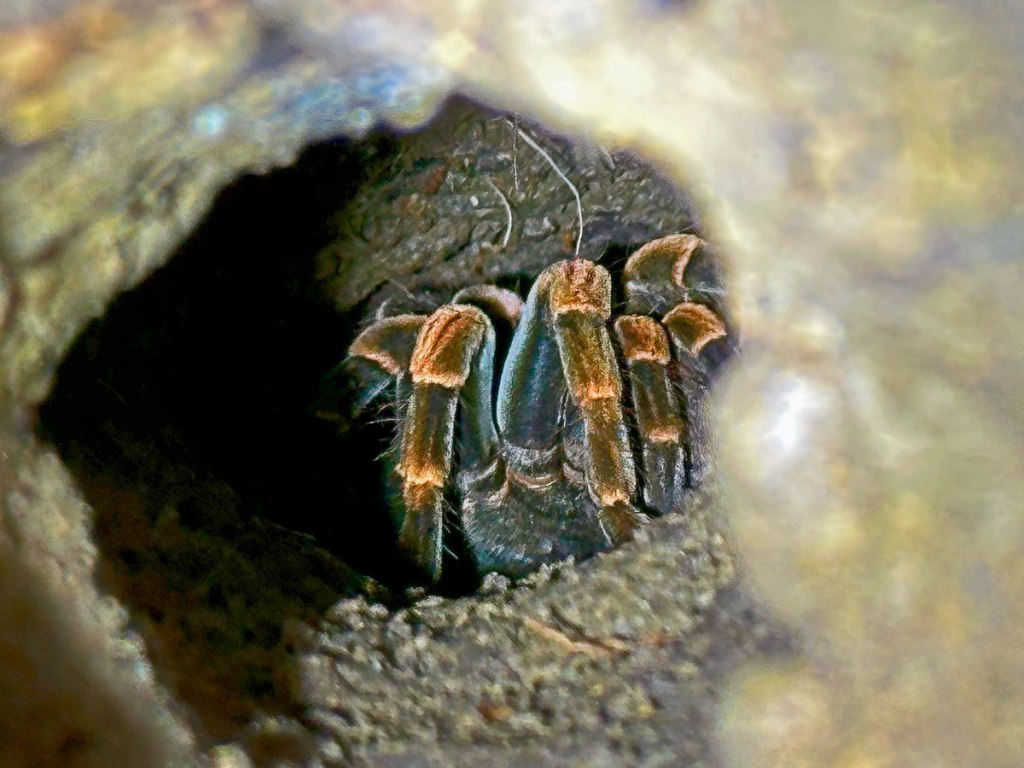
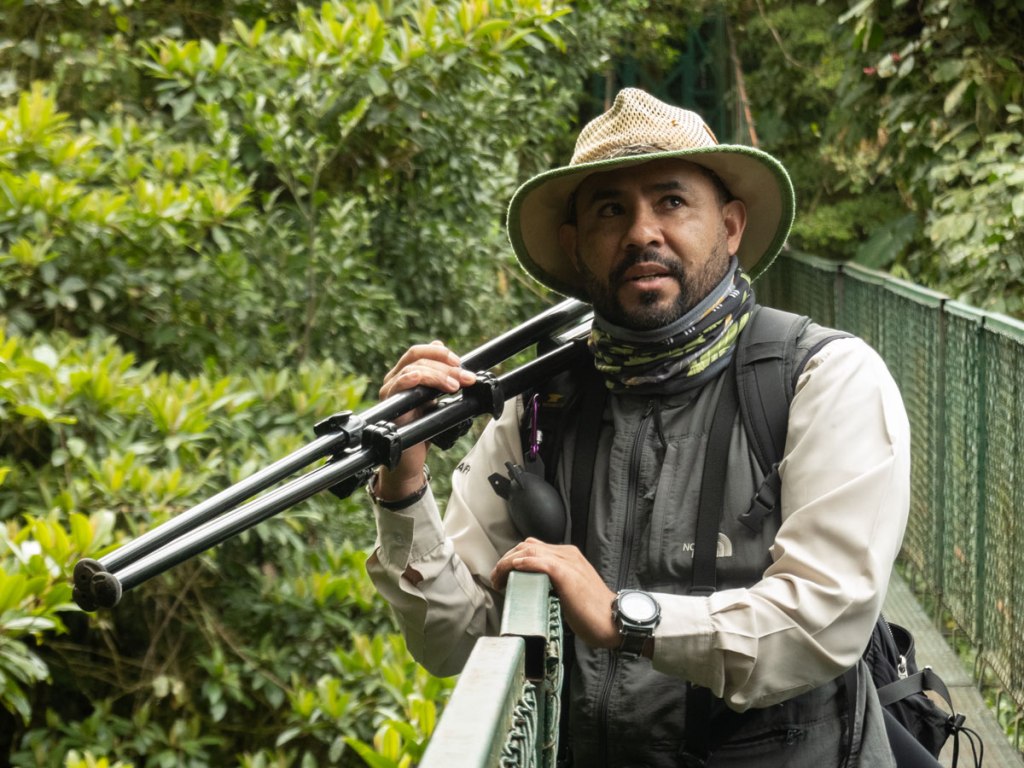
The cloud forest was a fascinating place where we could easily have spent many hours. The suspension bridges were super cool, and the guided tour was the right choice.
But on a somber note, climate change is threatening the very existence of the Monteverde cloud forest.
According to local naturalist Andrey Castillo, “we used to have around 30 sunny days a year. Today we have more than 130.” More direct sunlight equals higher temperatures, less humidity and the decline of conditions that have sustained this rich ecosystem for thousands of years. In the words of University of Costa Rica biologist Andrea Vincent, “a cloud forest that no longer has a cloud formation is going to disappear. There is no alternative.” So sad, and likely irreversible. (Source for both quotes: Tico Times, 6/2/23)
With 900 bird species in Costa Rica . . .
. . . A guided birding tour was high on the wish list, so we signed up for a 3-hour private tour with local guide Eduardo. The most coveted sighting in Monteverde is the Resplendent Quetzal, a beautiful and endangered species rarely seen in the wild.
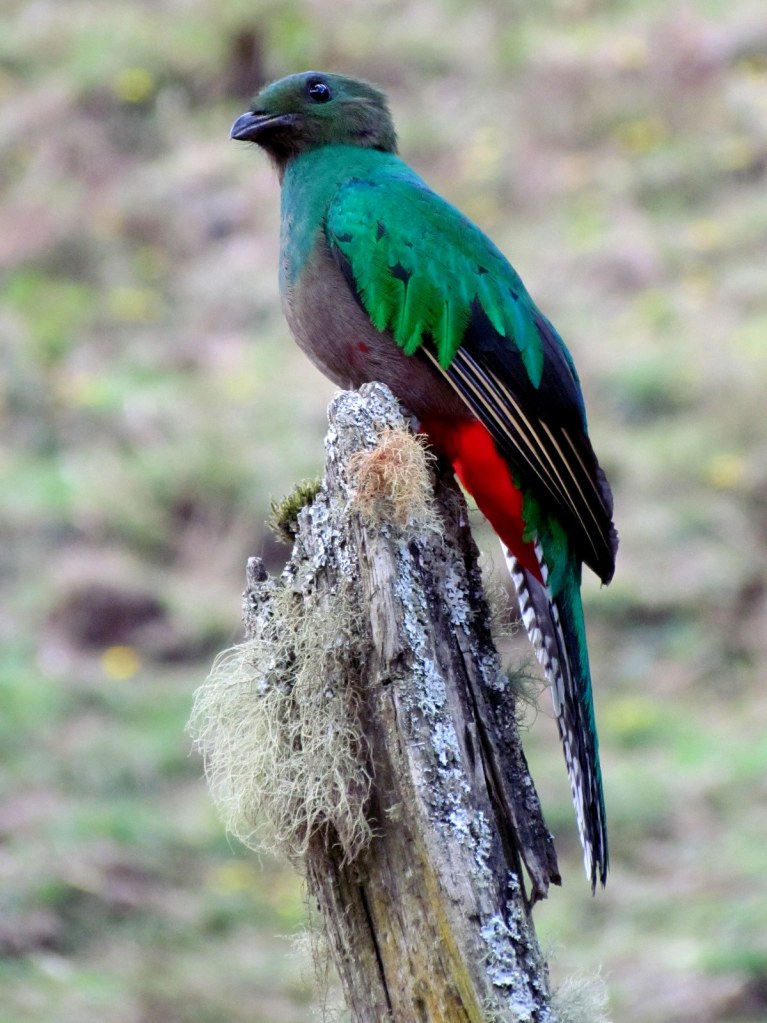
Nope, we didn’t see one. Eduardo, however, was an amazing guide and well-versed in the subject matter. He pointed out dozens of different birds, some perched in trees and others in flight. We learned about endemic birds of Central America as well migratory birds from both North America and South America.
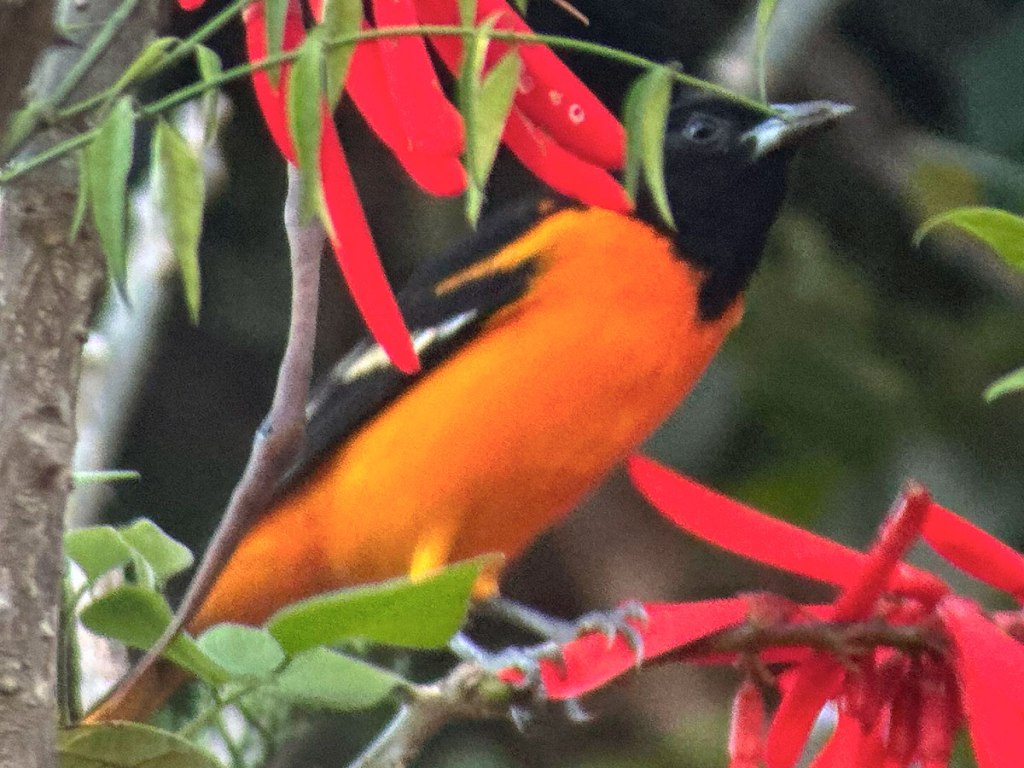
There’s no record of what we saw, but we came away with a handful of semi-decent photos. (Labels are best guess – no guarantee of accuracy.)


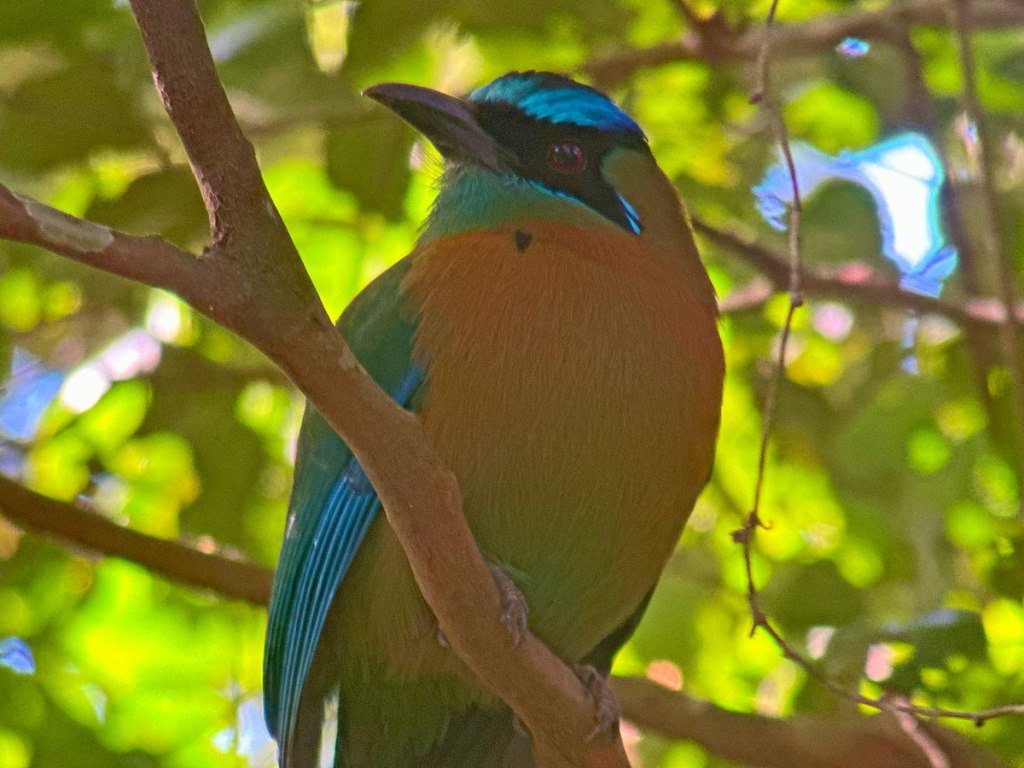
We saw a couple of familiar birds likely escaping winter weather in the U.S. – the original snowbirds!

Our final bird photo below was a clay-colored thrush, the national bird of Costa Rica.
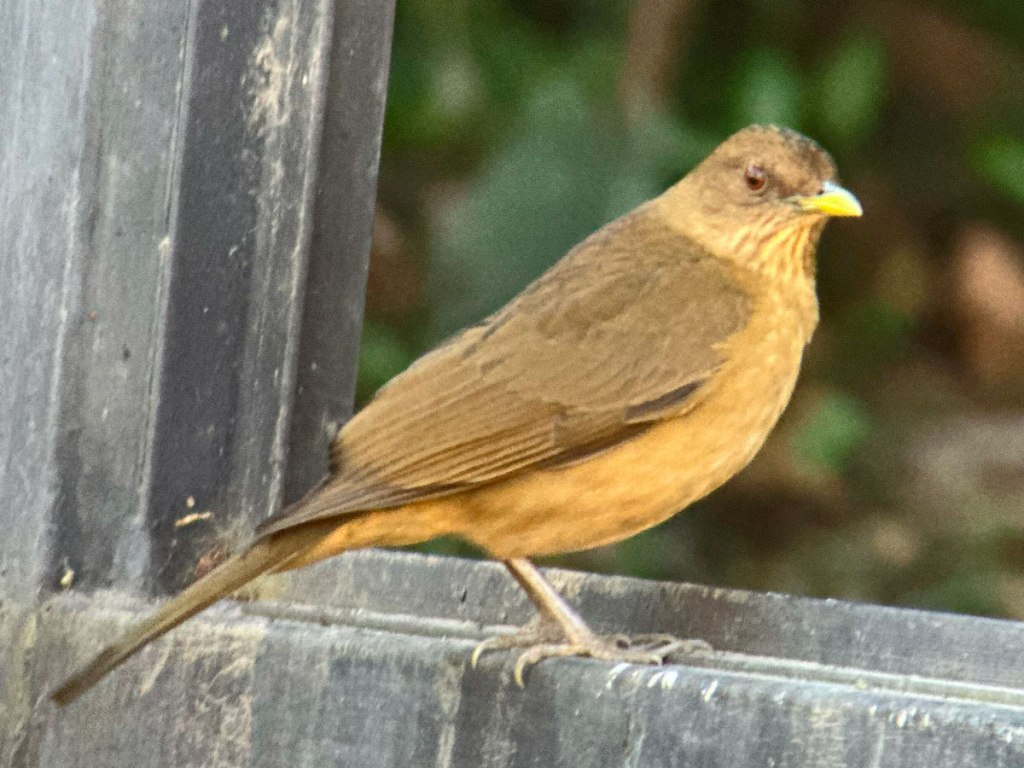
Known locally as the Yigüirrot, it was selected as the national bird by Costa Ricans in 1977. Neither colorful nor showy, the clay-colored thrush can be found throughout the country and makes its presence known with a melodious tune that marks the beginning of the rainy season. We were happy to get a good look at this one.
Our birding tour started early at 5:30 am, so we were back at the lodge in time for a late breakfast with the entire afternoon at our disposal. We headed out on foot to the Monteverde Butterfly Gardens for our second excursion of the day.
Butterflies, bugs & an unexpected encounter
It was a short walk from the lodge – less than a kilometer, with a beautiful forest view from the lobby.


Visitors must be accompanied by a guide, which was easy. When we walked in, the receptionist assigned us to Joe, a staff entomologist from London. He knew his stuff and reveled in showing us the facility’s live collection of (non-butterfly) insects and arachnids. Joe lamented that even though cockroaches, scorpions and tarantulas are interesting creatures and vital to the ecosystem, they lack the charisma of butterflies in attracting dollars from tourists and donors. Indeed.
Here are a few of the 30 species of butterflies at the Gardens. These photos – way better than ours – were posted on Trip Advisor by previous visitors.

The Gardens features four different butterfly habitats representing a variety of Costa Rican ecosystems, from the cloud forest to the lowlands. We only have a handful of photos to share.
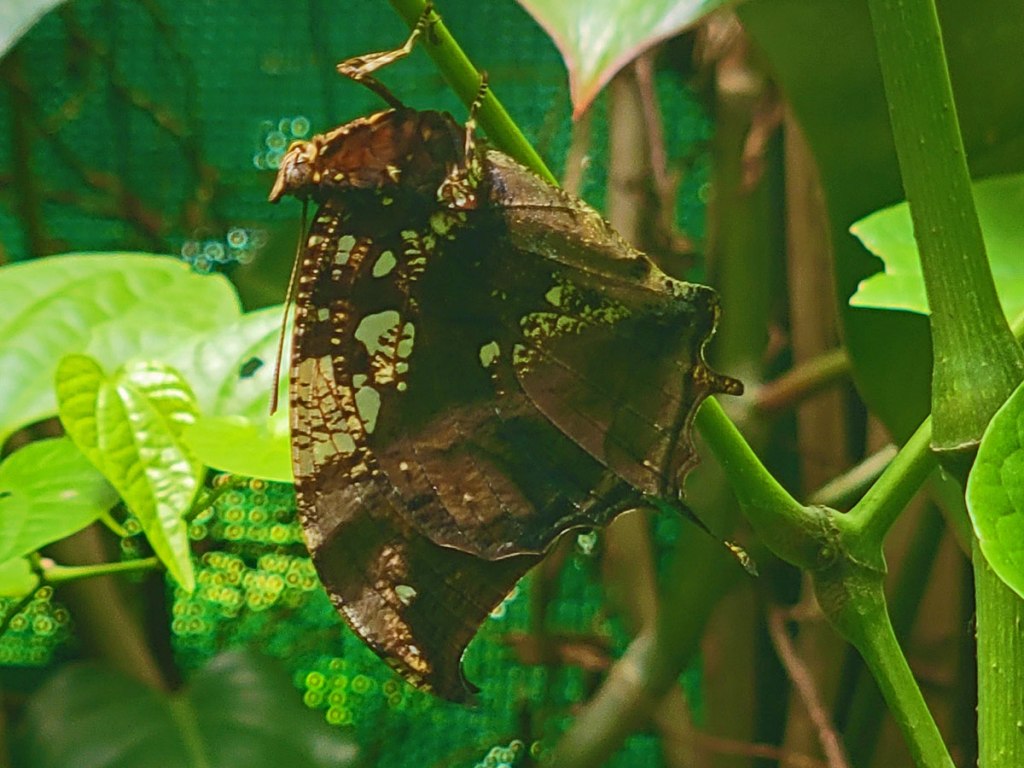
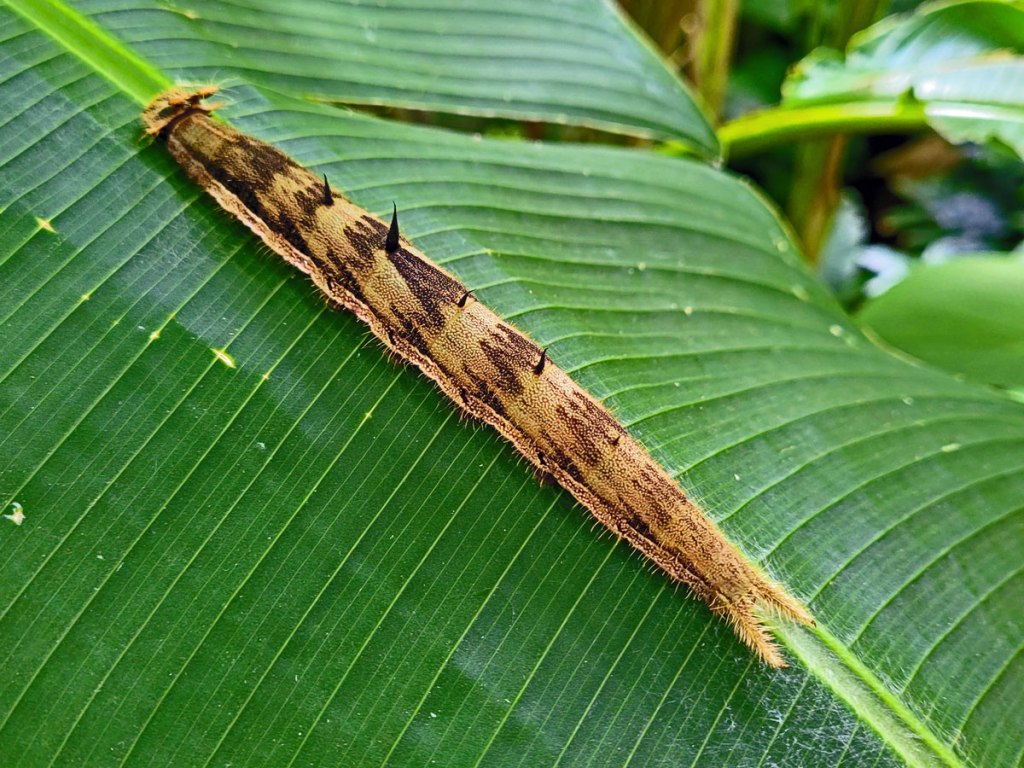
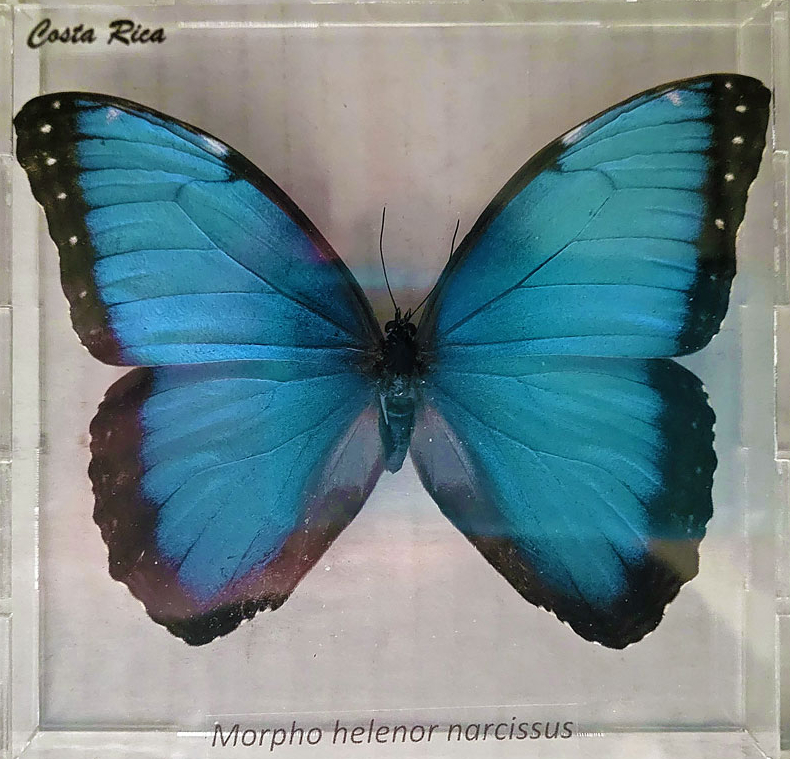
The fan favorite was the beautiful Blue Morpho, declared an official national symbol of Costa Rica in 2022. The electric blue butterfly can be seen fluttering throughout the countryside as well as showcased on the 50,000 colones bill. Challenging to photograph in flight with wings extended, they aren’t so pretty when resting with wings folded. But it works for them, of course.

No good photo ops led us to Plan B – admit defeat and purchase a Blue Morpho souvenir from the gift shop.😎
The forest outside the butterfly enclosures was home to all sorts of wildlife. We were lucky enough to come across a band of at least 10 white-nosed coatis on the main path. The humans and animals were both surprised, and although we were delighted, they apparently were not, as they quickly dispersed, but not before humoring us with a couple of quick snapshots.

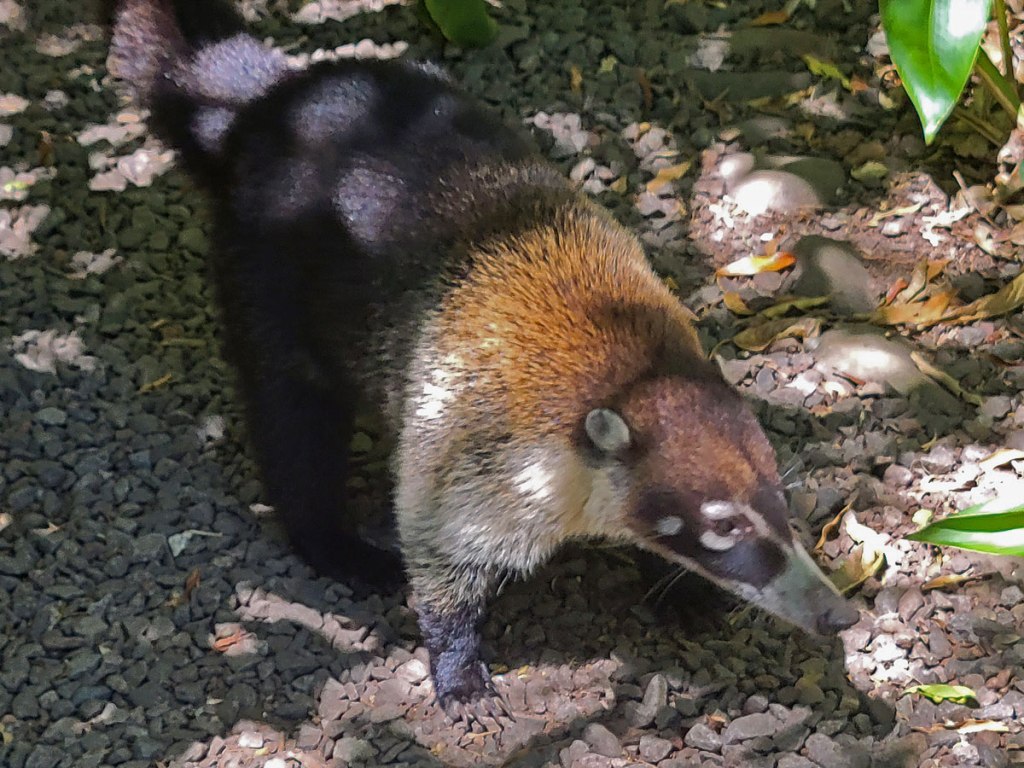
Coatimundi (pizotes) are relatives of raccoons. Cuter, but with annoying (to humans) behavioral similarities.
Not much more to say about our time in Monteverde, except that our accommodations were excellent and within walking distance to several tasty eating places. Plus our bird photos at the lodge turned out better than on our guided tour.
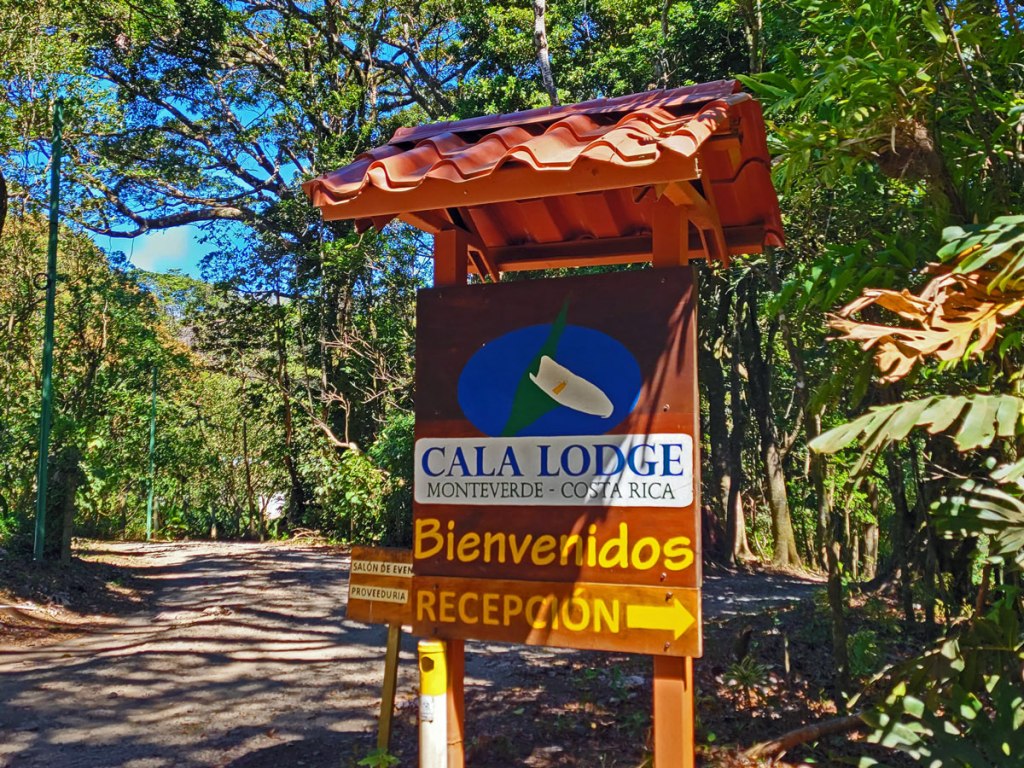


There’s something special about Monteverde, and we hope you agree!
Stay tuned for an upcoming article about our stay in Ocotal on the Pacific coast.
If you would like to be notified when a new article is published, please enter your e-mail address below. Thank you!
Discover more from Just Passing Through
Subscribe to get the latest posts sent to your email.


 Just Passing Through
1 comment ›