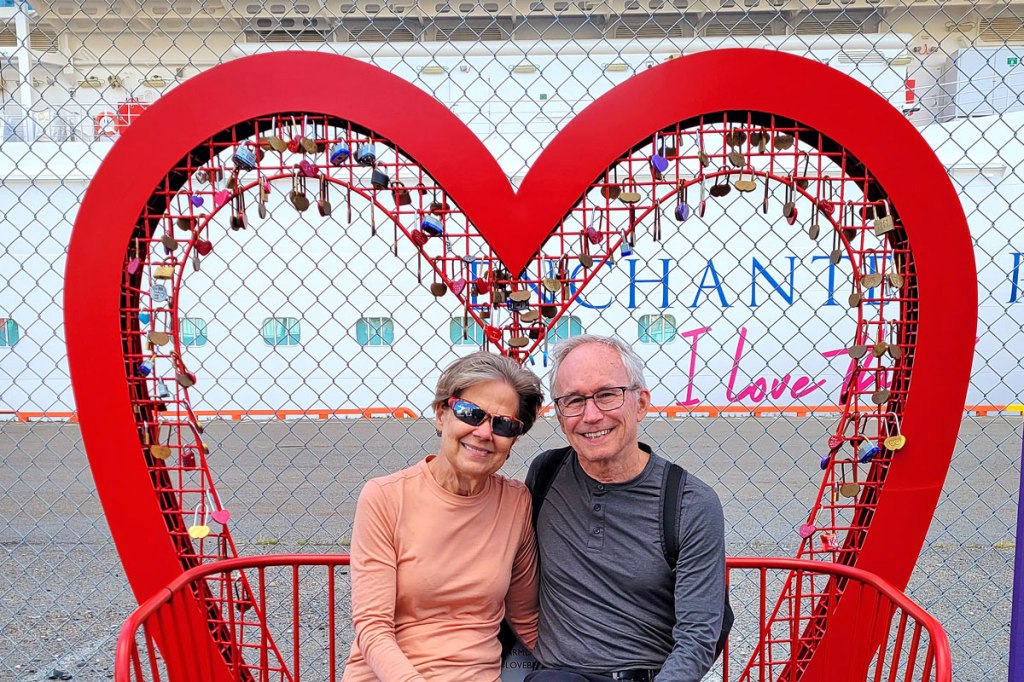
In my last post about our time in Halifax, Nova Scotia, I promised a photo gallery of highlights from the rest of our five week vacation in the Maritime provinces of Canada. I really tried but couldn’t condense the experience into one article. And so, this post is the first of two – double the photos. We organized the images (and a few video clips) around themes, hoping to convey the beauty and joy we found in Nova Scotia, Prince Edward Island and New Brunswick.
This first article focuses on scenic water views, boats, lighthouses and Scottish Gaelic culture. The odd-looking map below approximates the boundaries of our travels.

Expansive Water Views
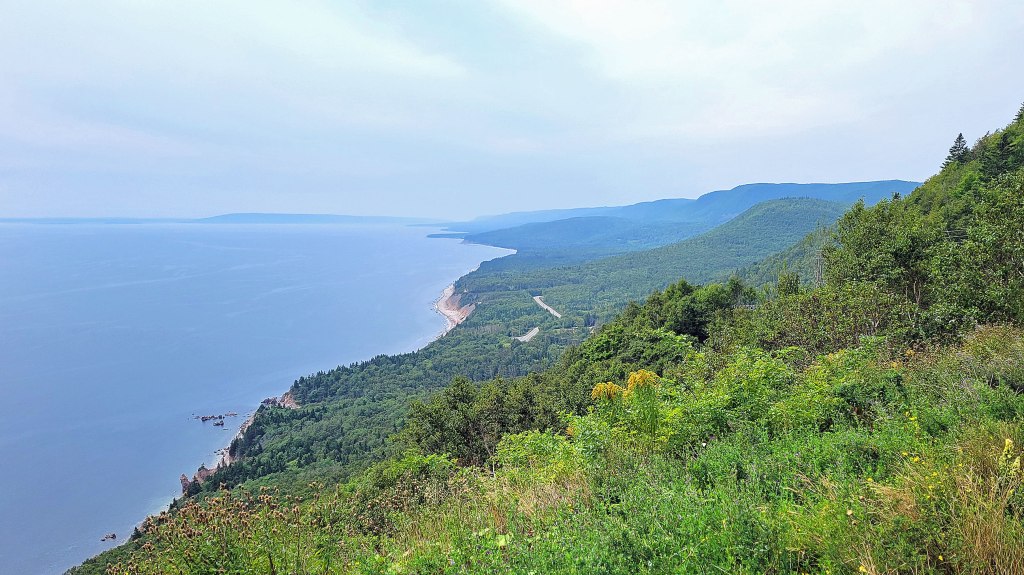
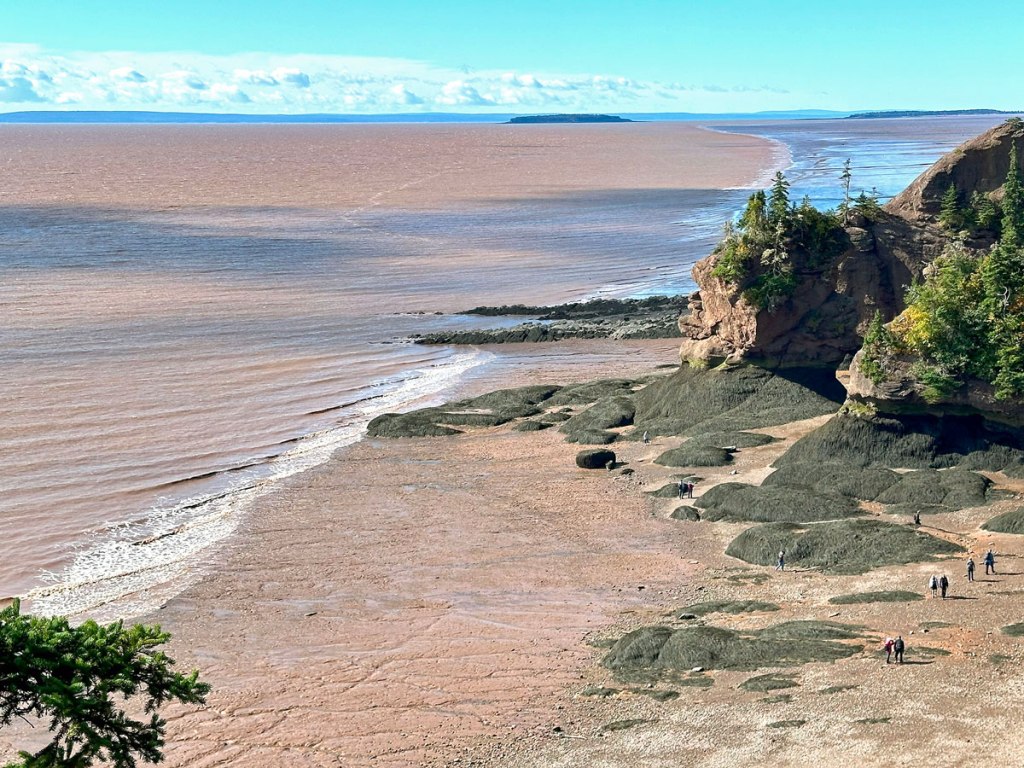
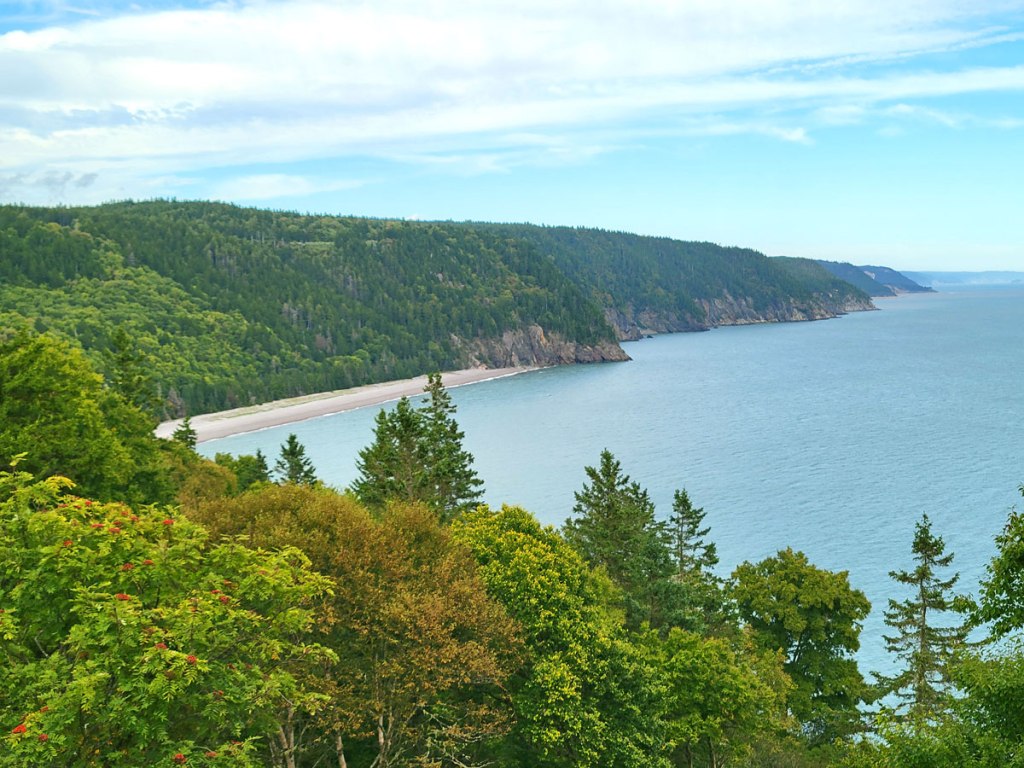
We shouldn’t have been surprised, but wow, so much water around every turn. Eight thousand miles of coastline in Nova Scotia alone! Plus countless lakes, rivers, streams, waterfalls, marshes, and so forth.
Here are five breath-taking views where water and land converge. Note: NS=Nova Scotia, NB=New Brunswick, PE=Prince Edward Island



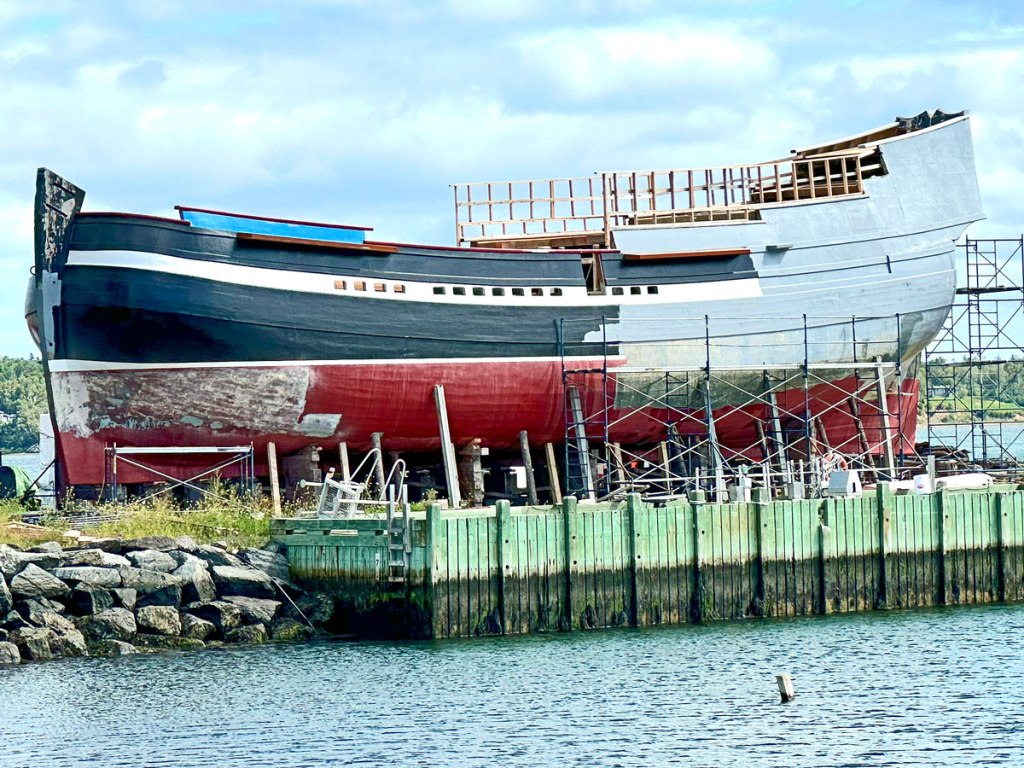
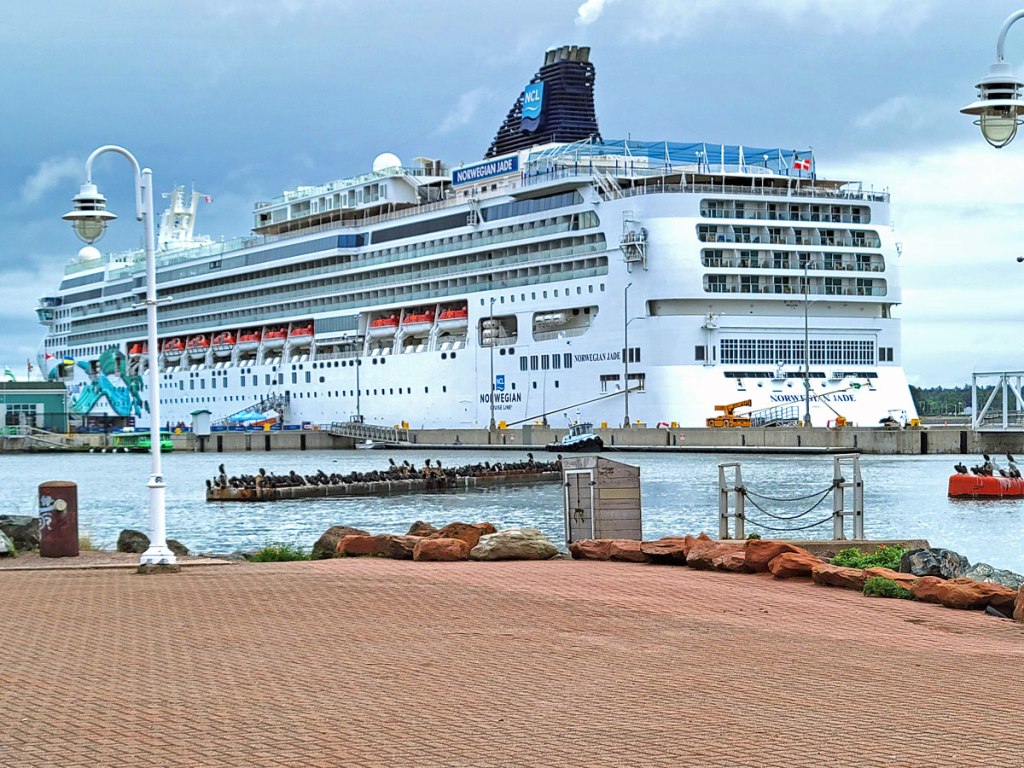
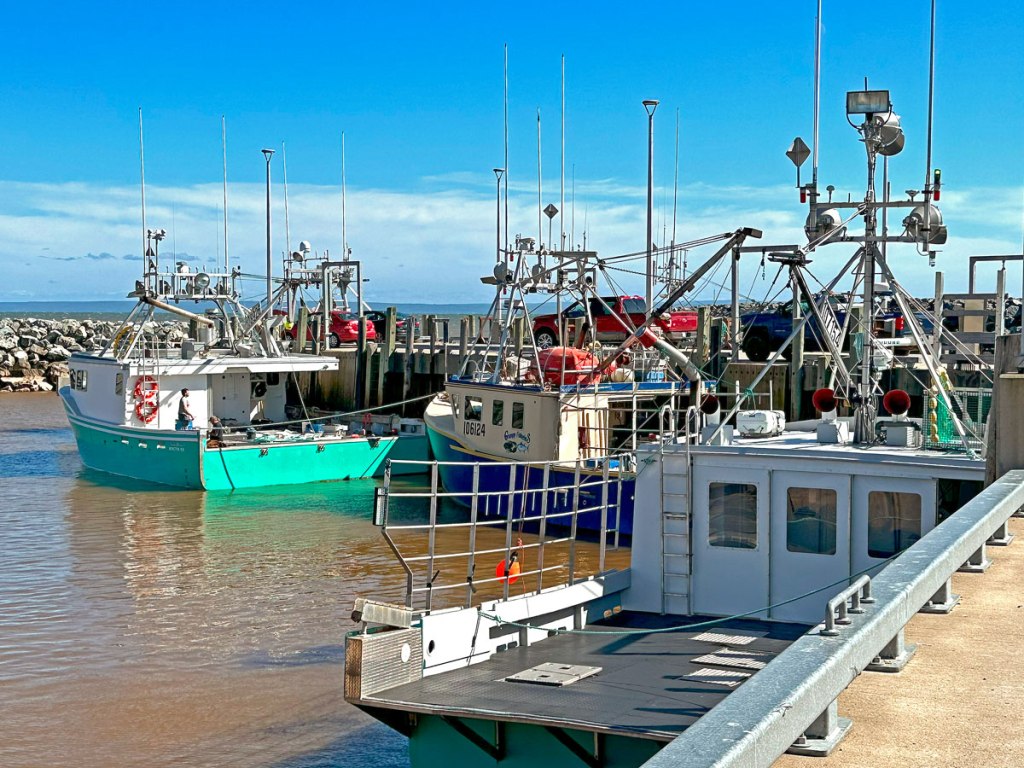
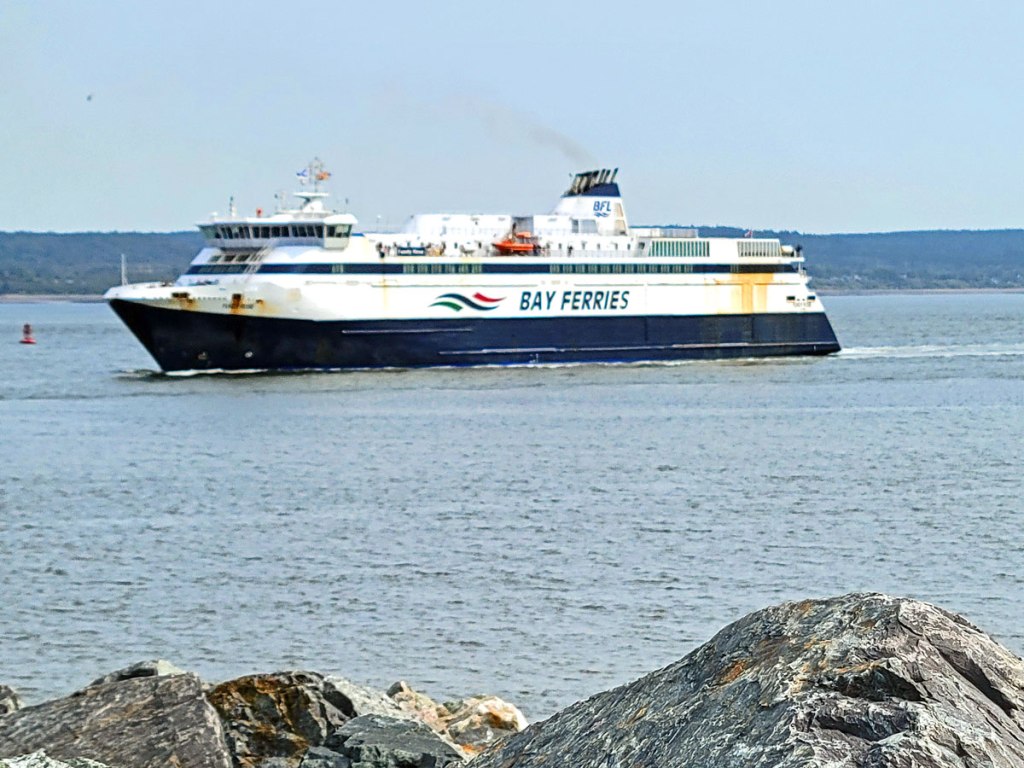
Where There’s Water, There Must Be Boats
Big boats, small boats, old boats, new boats, working boats, pleasure boats, motorized boats, sailboats, human-powered boats and more.
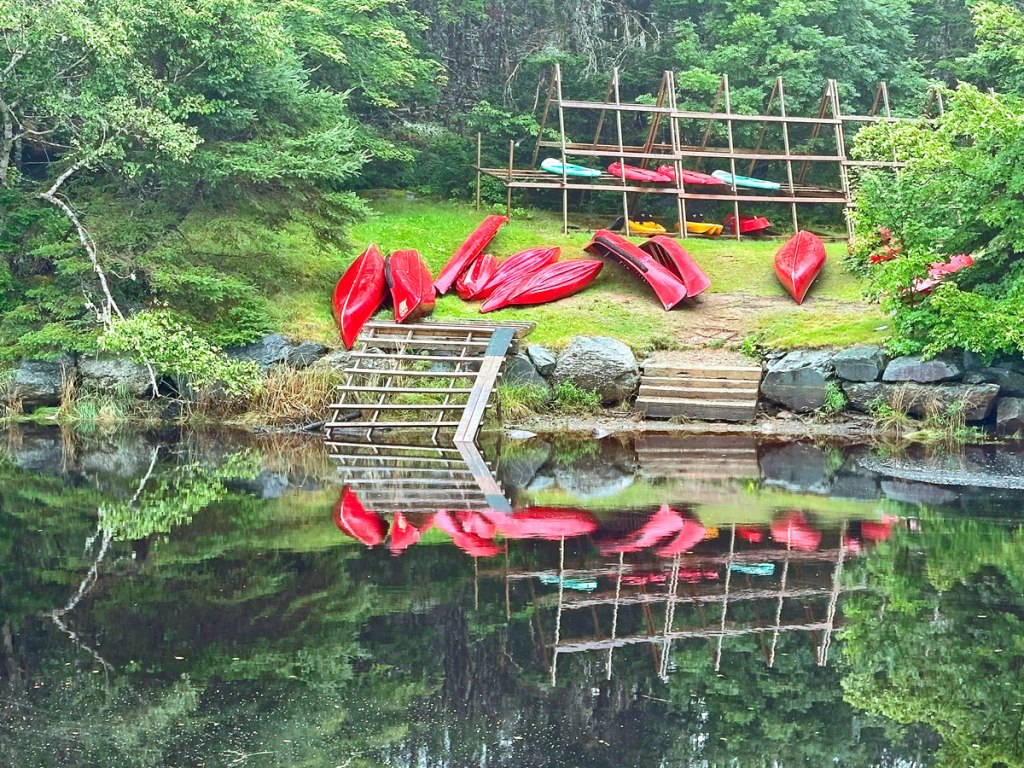
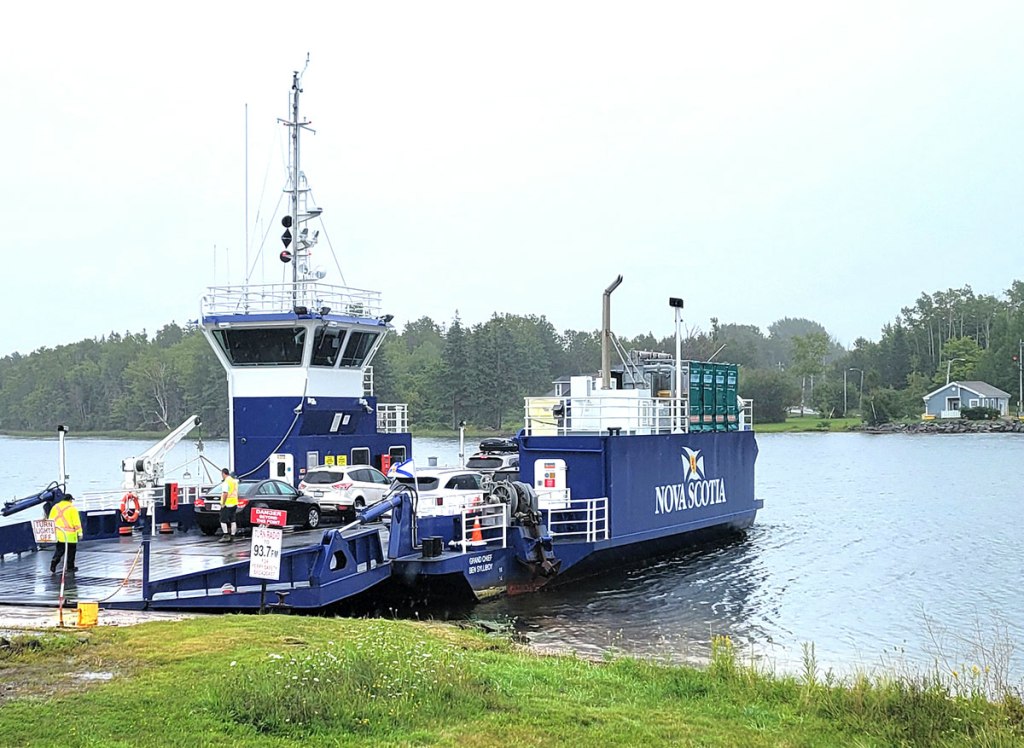

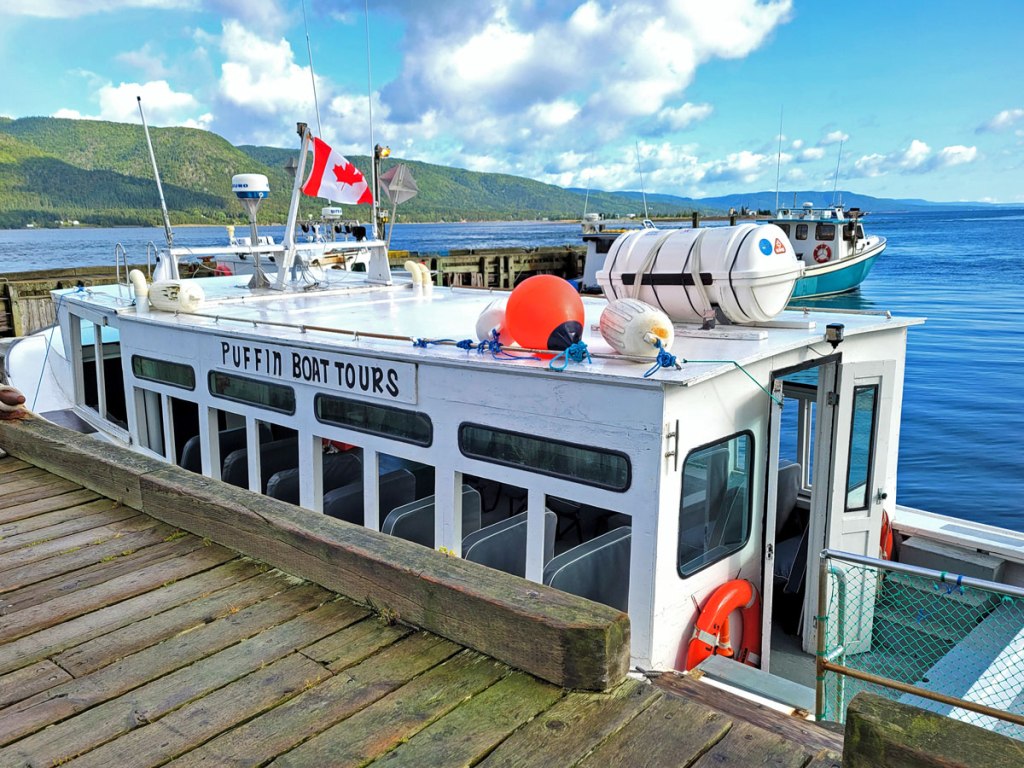
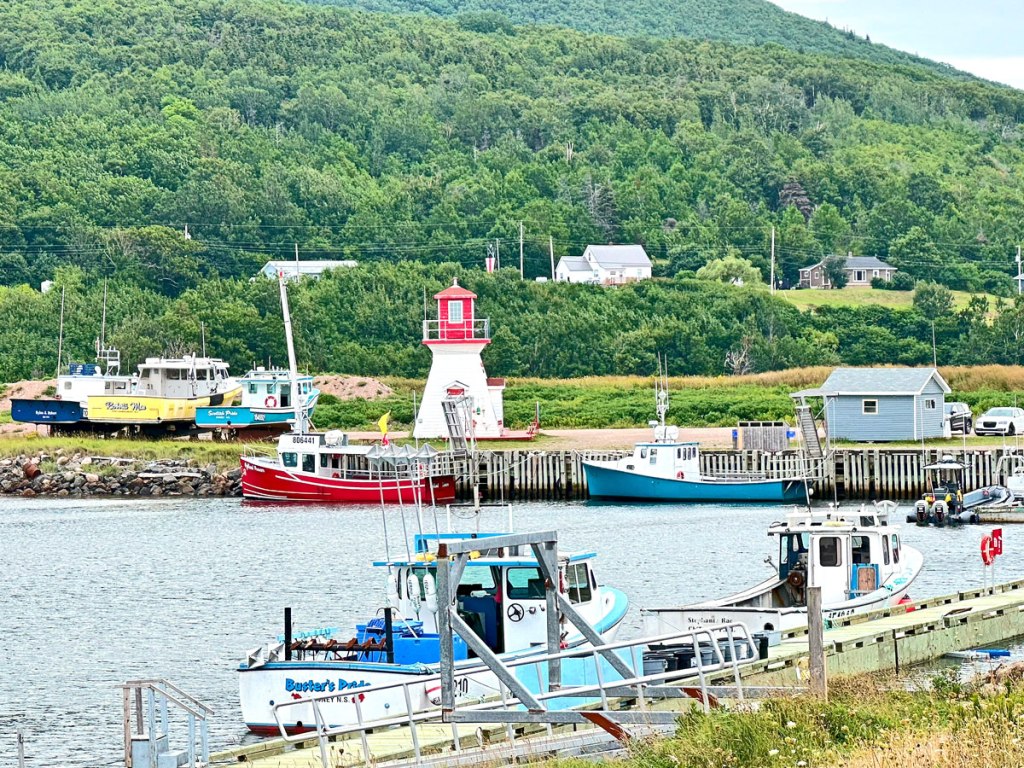



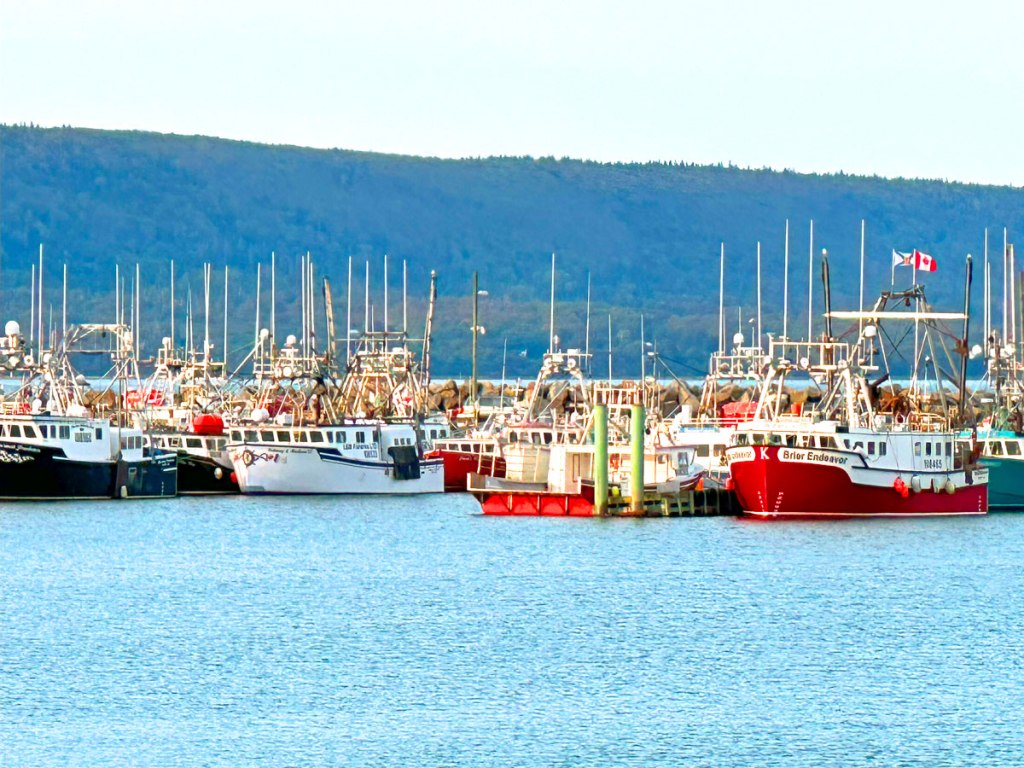
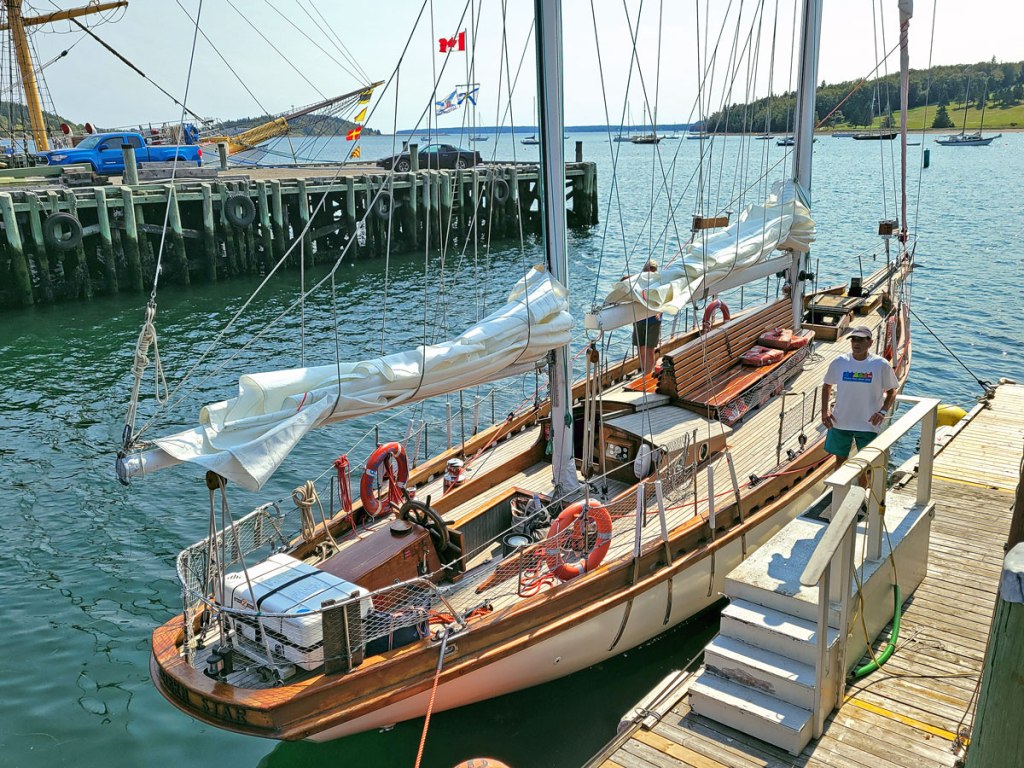
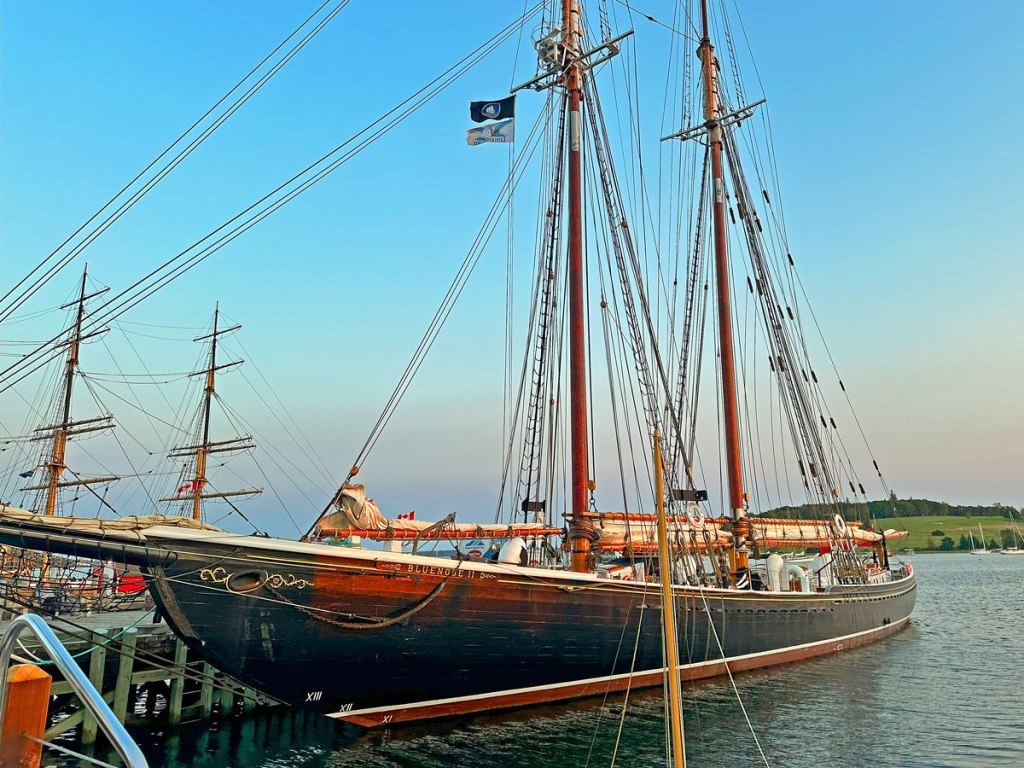
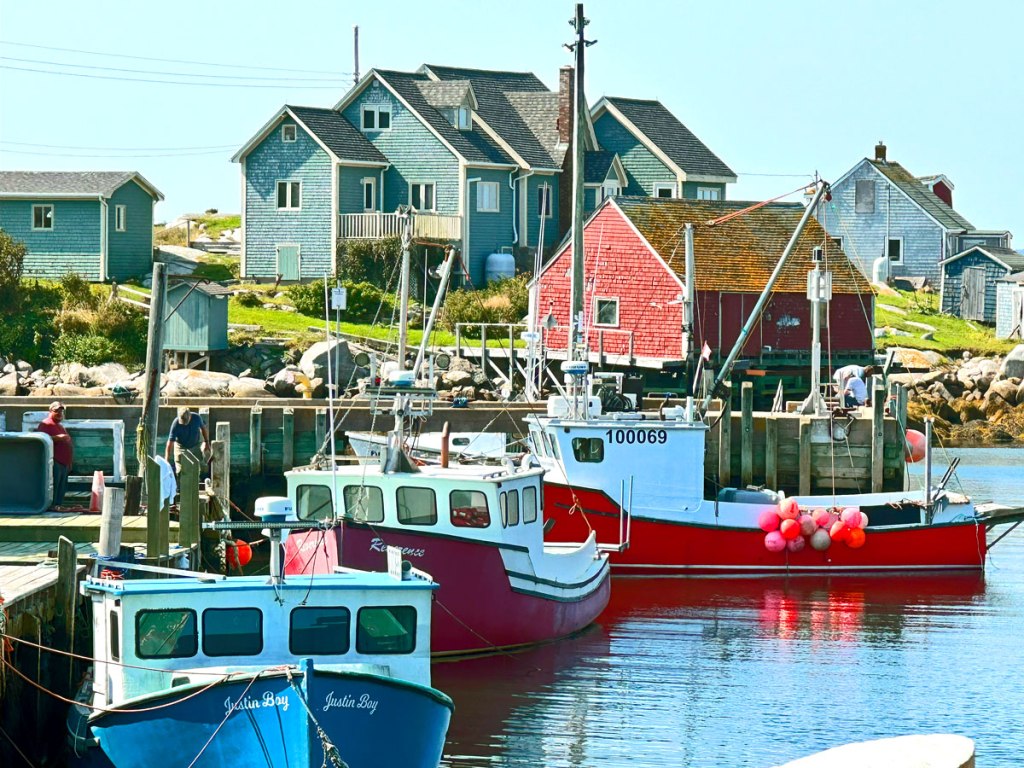
And Plenty of Lighthouses
There are around 300 lighthouses in the Canadian Maritimes, with over half in Nova Scotia. We got a good look at ten. Didn’t realize until just now how much they look alike!
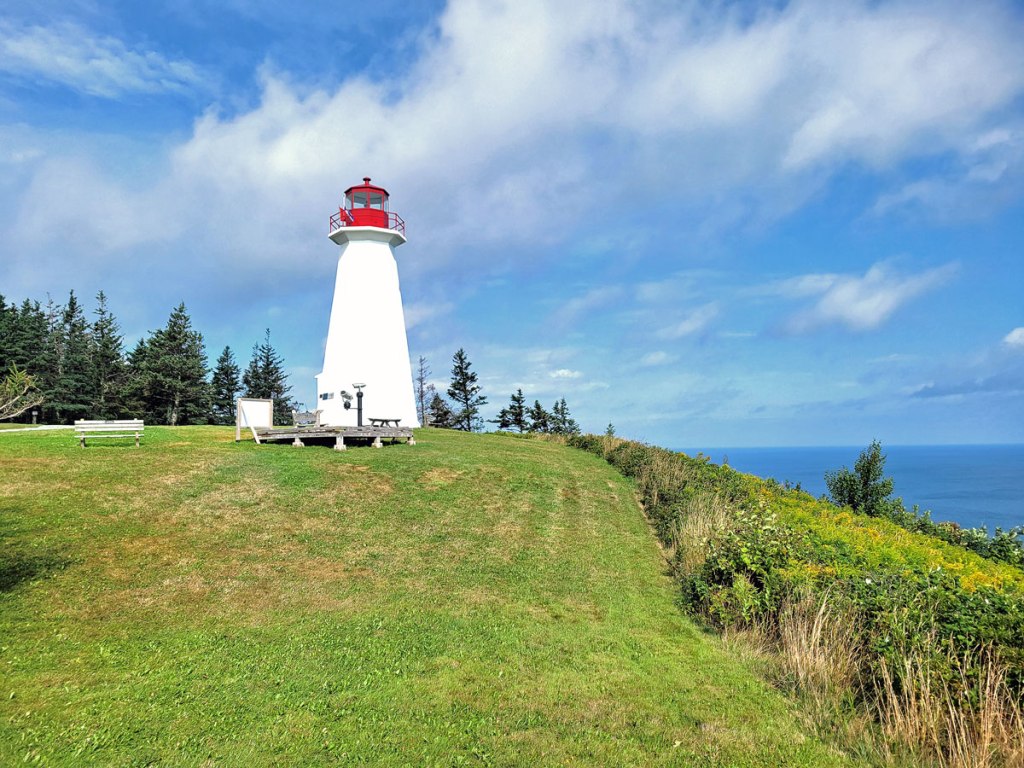


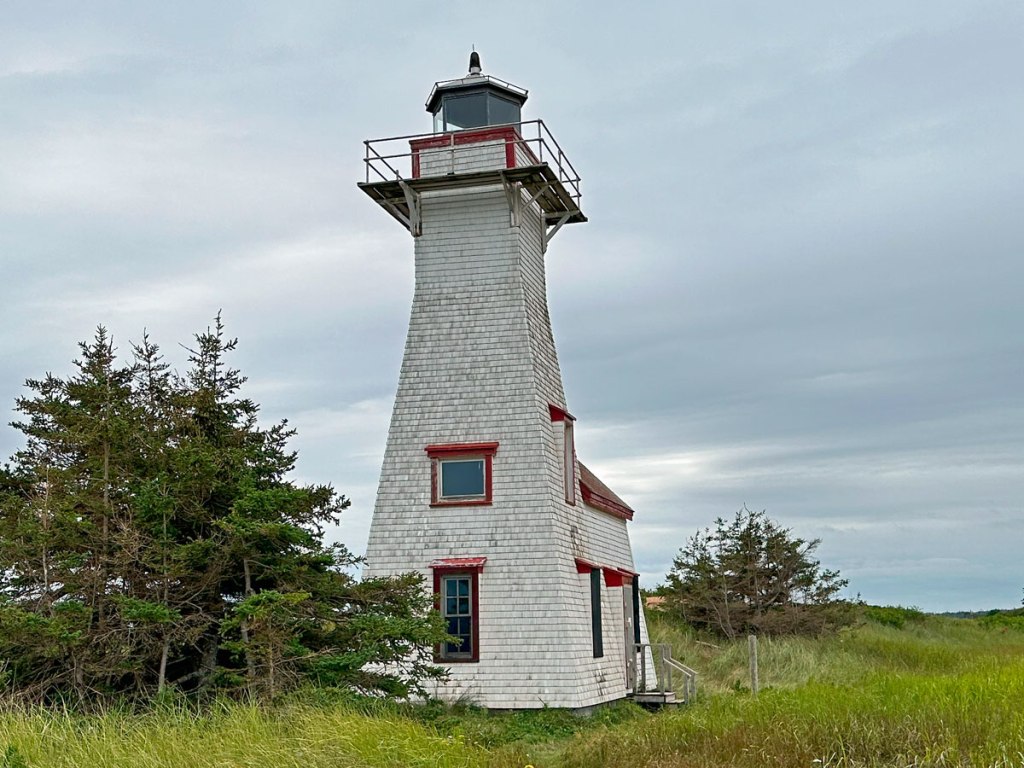
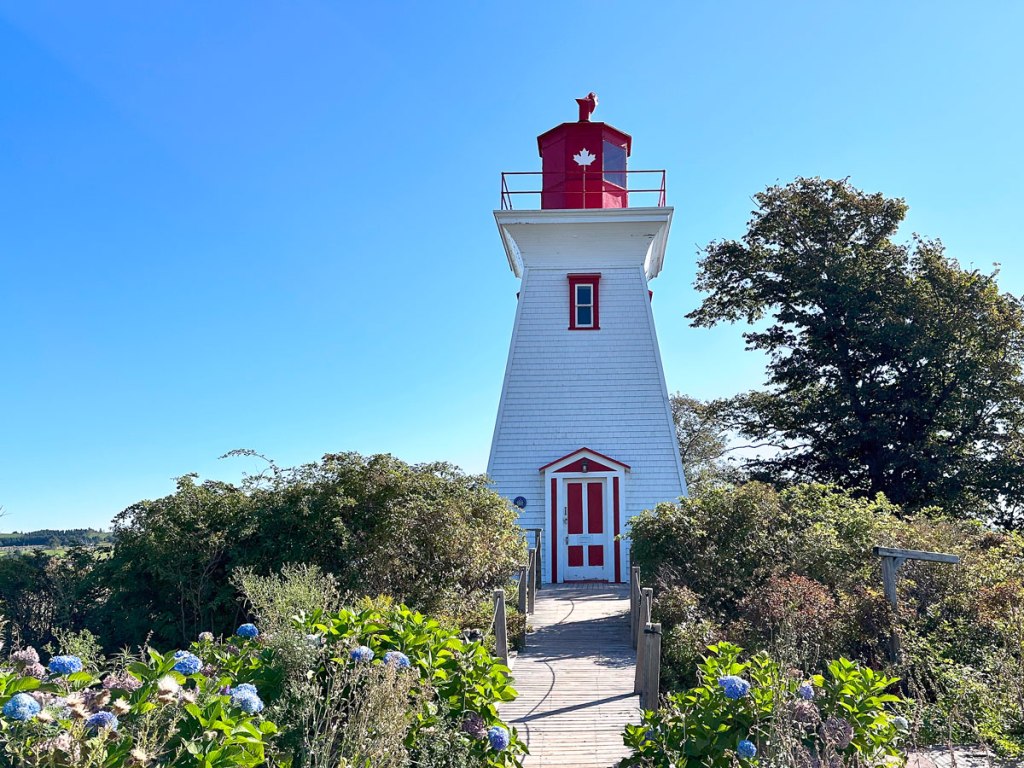
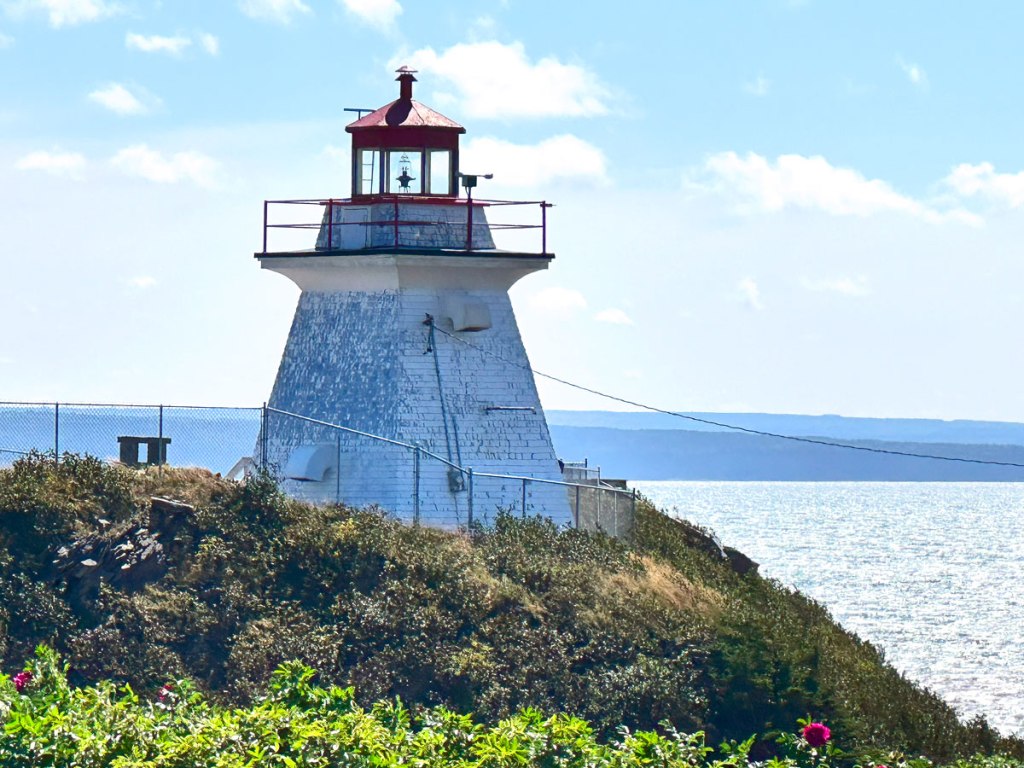
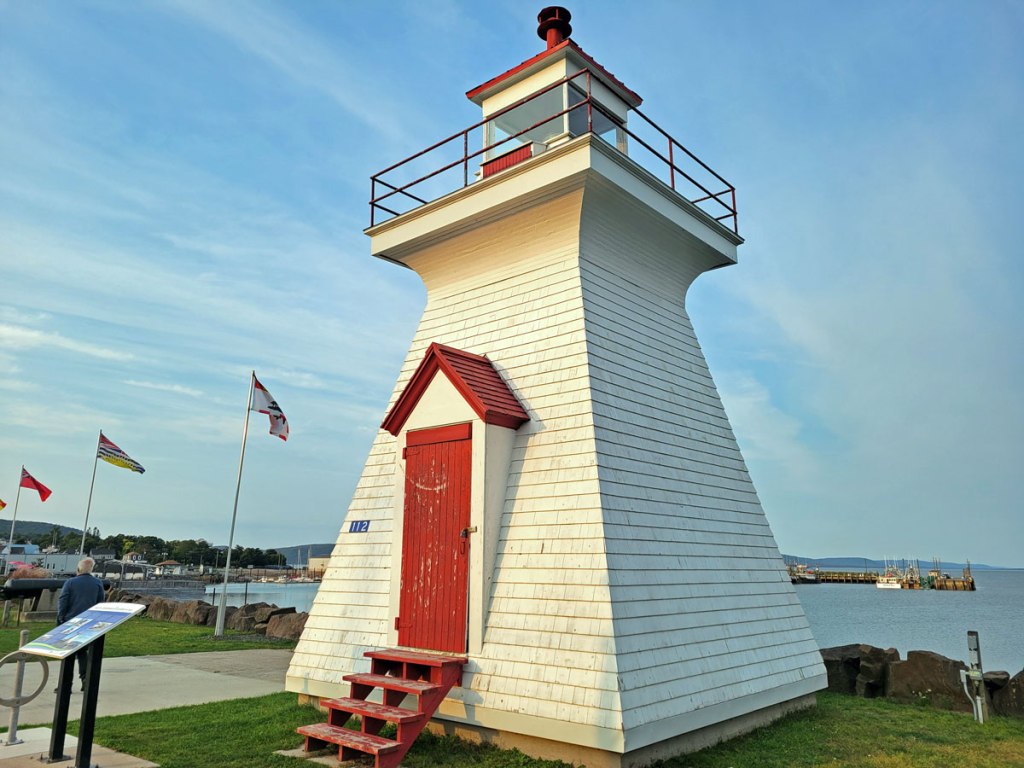
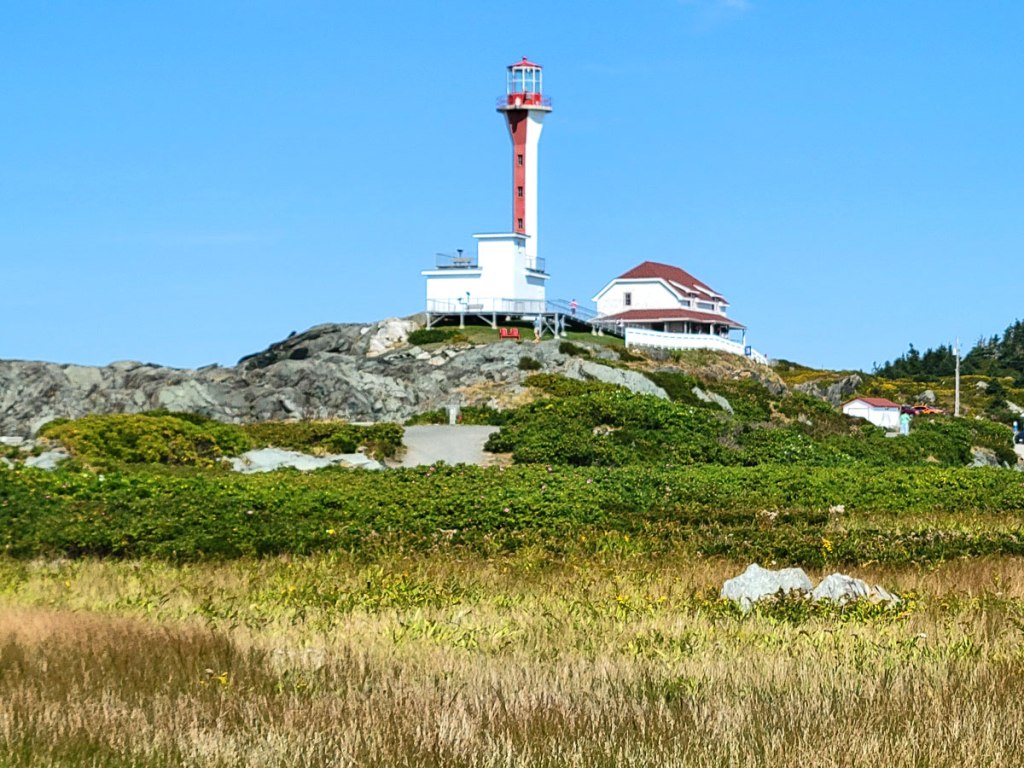

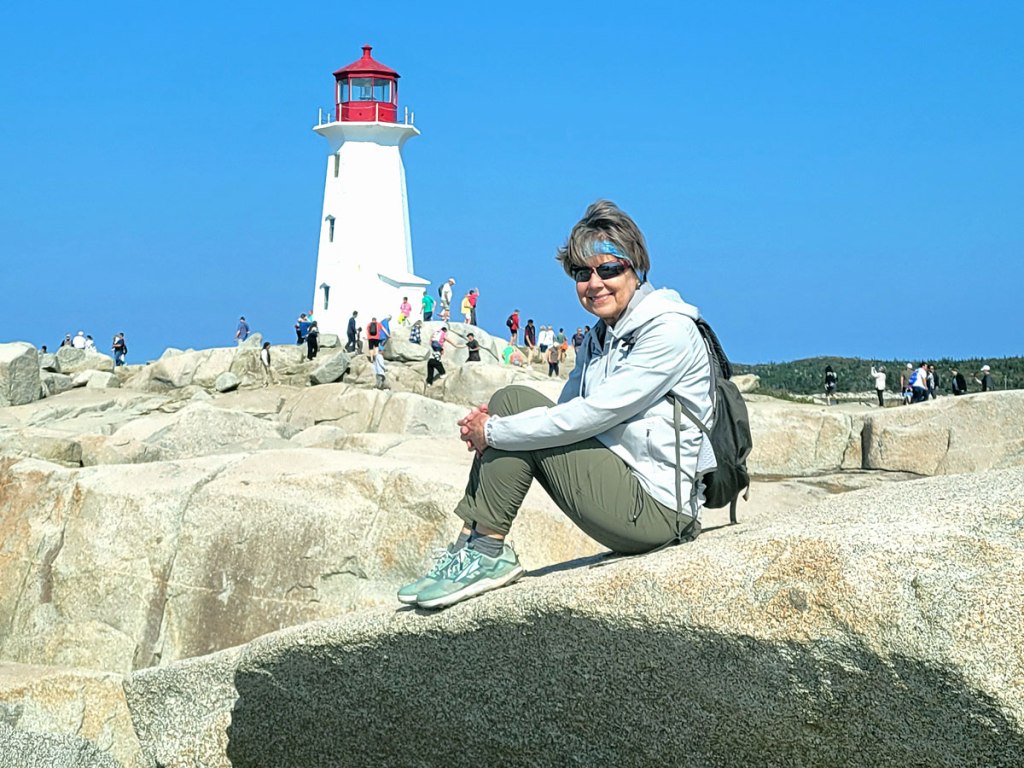
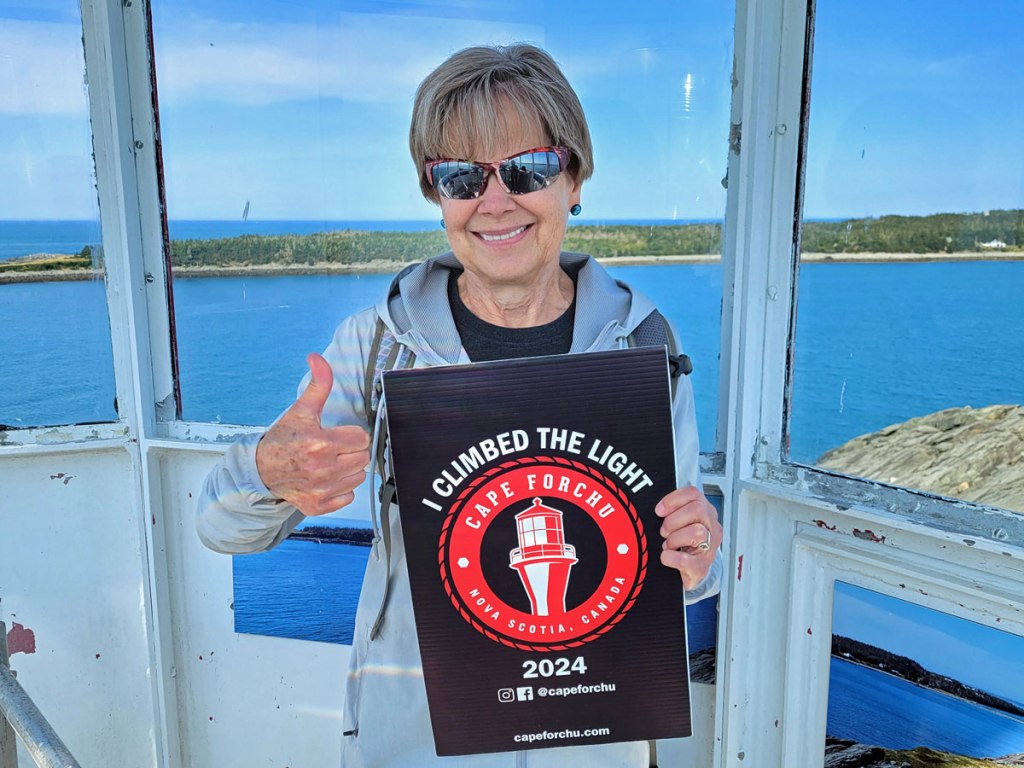
Few are open to the public, but Cape Forchu was an exception.
Fàilte (Welcome) to New Scotland
Experiencing Scottish Gaelic culture was hands down the best part of our vacation – unexpected, engaging, and eye-opening.
During the 18th and 19th centuries, somewhere in the neighborhood of 200,000 Highland Scots left their homeland and relocated to what is now the Canadian Maritimes. The emigrants were fleeing discrimination, oppressive living conditions and economic hardship in search of a better life.
Scottish immigrants replicated their traditional ways in the New World, and those practices and customs not only endured over the centuries but have had a resurgence in recent years thanks to the region’s large Scottish population. The Gaelic language (written and spoken), music, dress, arts and crafts, community/clan activities (such as the Highland Games) and other traditions are pervasive throughout Nova Scotia, especially on Cape Breton Island, and to a lesser extent, on Prince Edward Island and New Brunswick.
My maternal grandfather’s ancestors were Highlanders (Robertson clan) who initially emigrated from Scotland to Australia, and later to the U.S. By the mid-20th century, my family’s Scottish traditions had faded away, but in Canada, I felt a personal connection to those Gaelic roots and soaked up the experiences like a sponge.

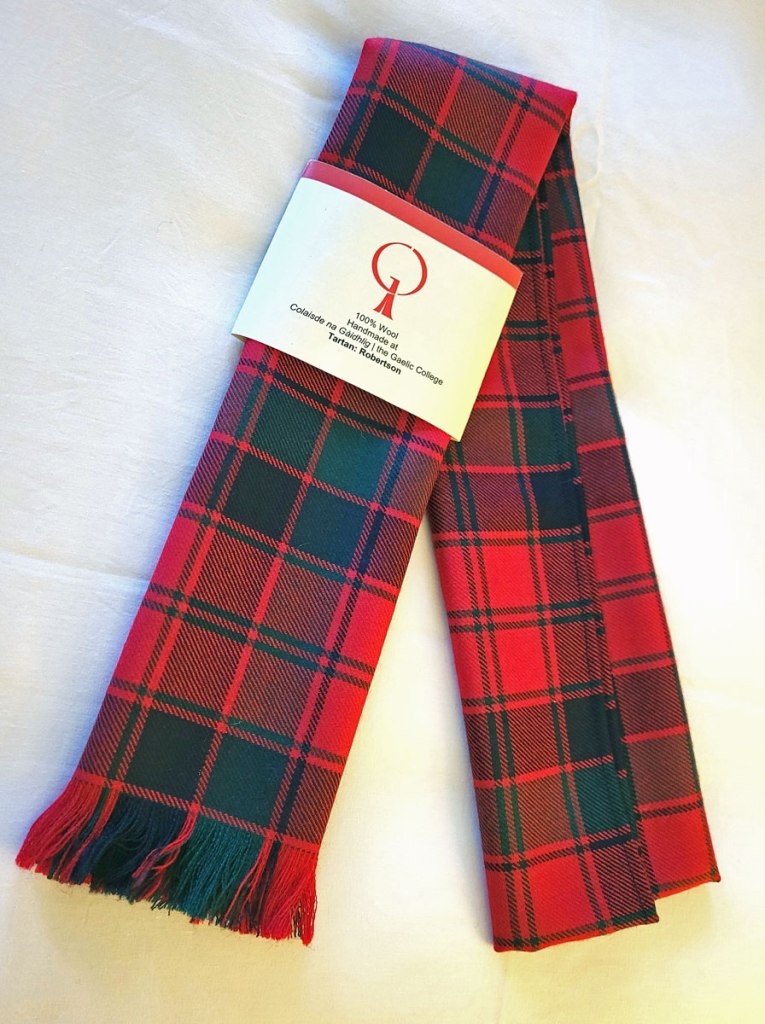
Both Bill and I were mesmerized by current day Gaelic culture. And so much live music! We felt like honored guests being welcomed into people’s homes for a big family dinner.
Here are a few highlights, but you really had to be there, if you know what I mean. Our first encounter with Gaelic history in Nova Scotia was at the small Scottish Museum in Antigonish (an-tuh-guh-NUSH).
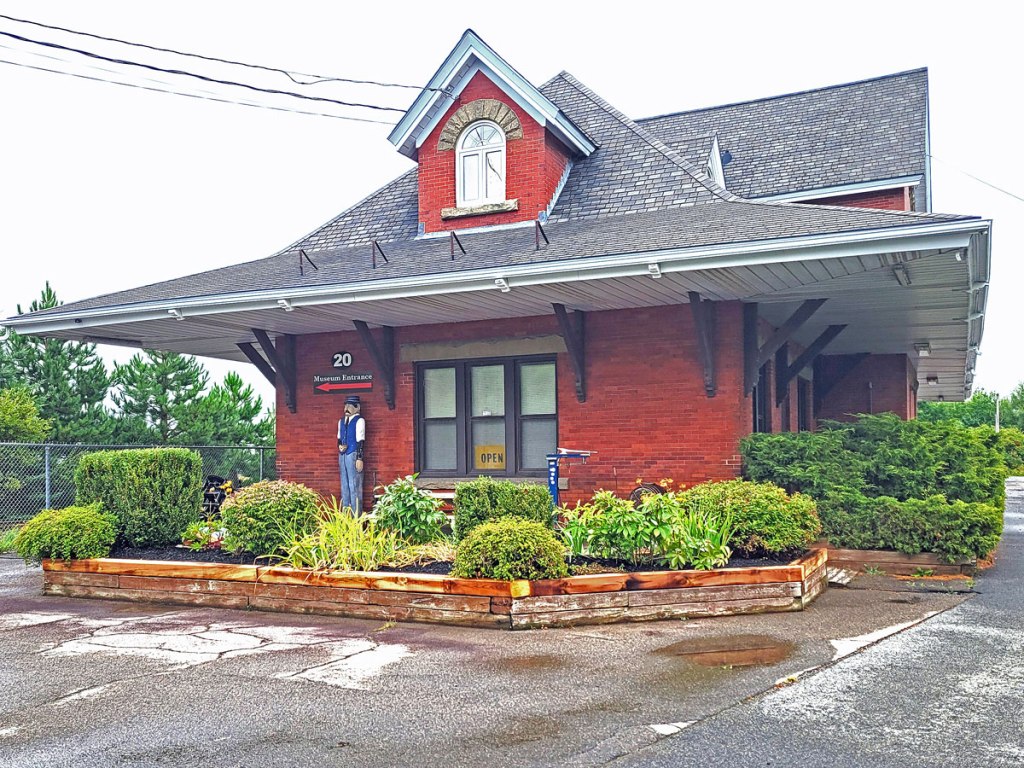

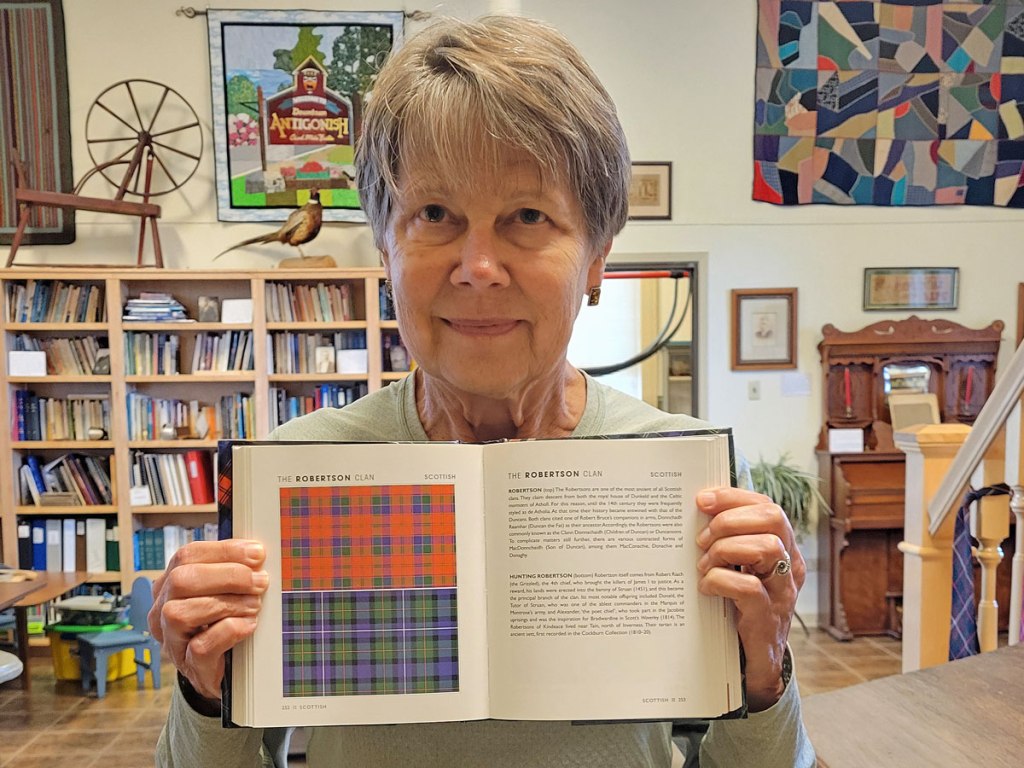
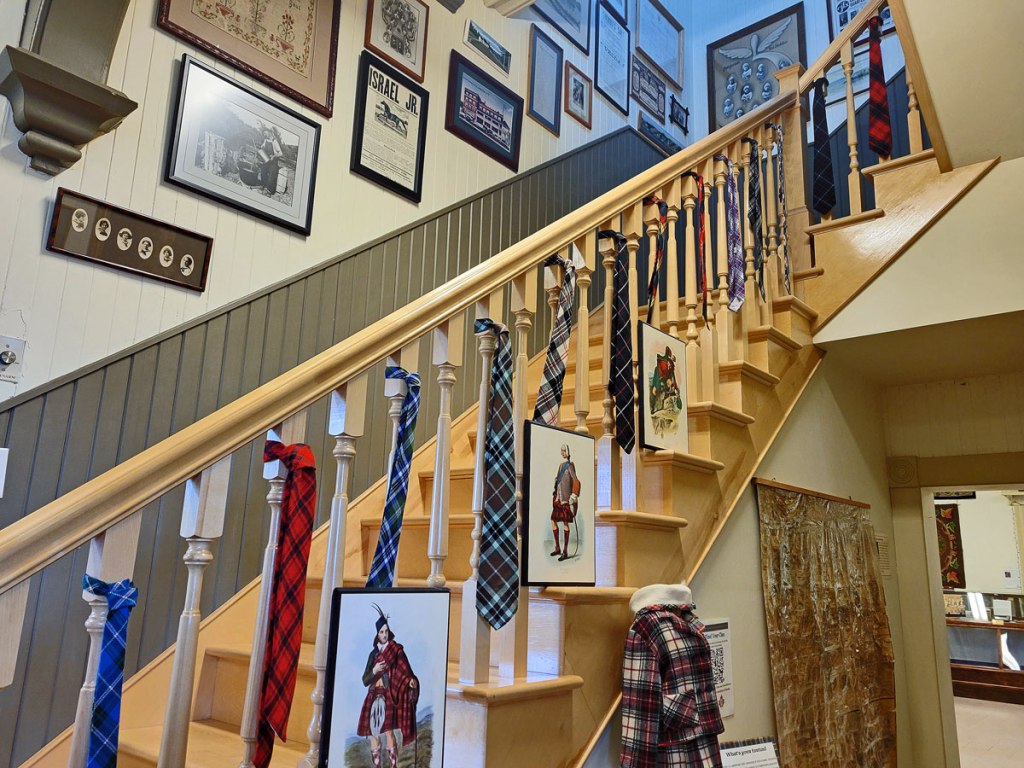

In Sydney NS, we checked out the 55-foot tall Big Fiddle, which celebrates the rich musical heritage of Cape Breton Island and credits the Scots for introducing the fiddle.
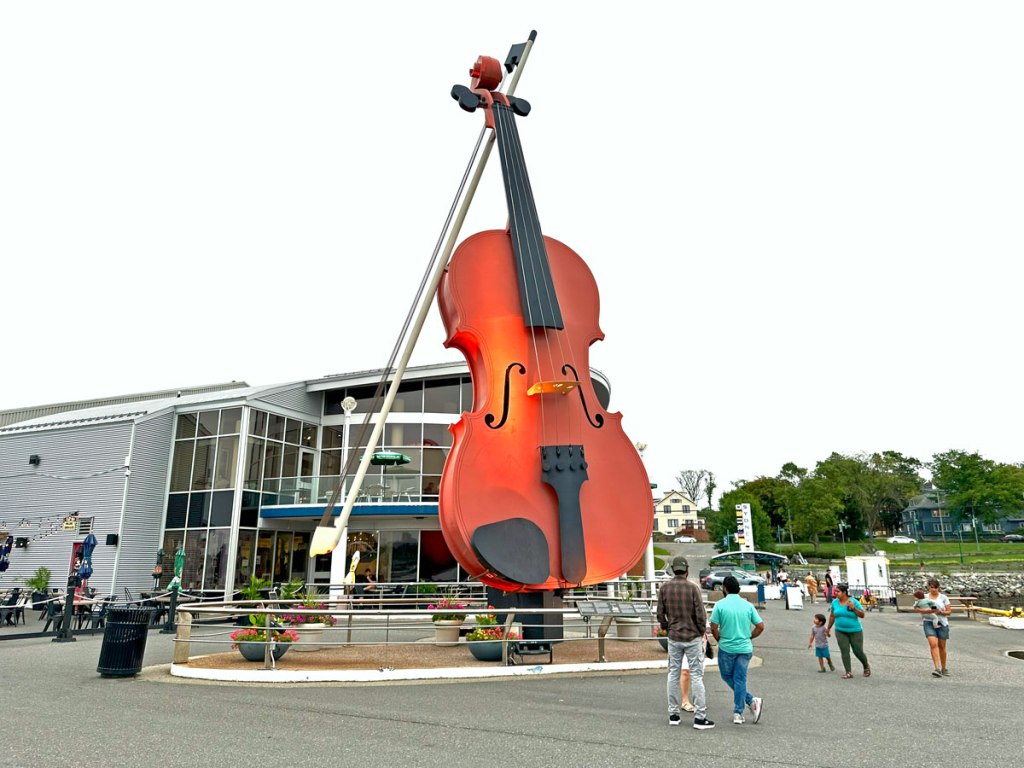
Question: What’s the difference between a fiddle and a violin? Answer: It’s the same instrument, although a fiddler might prefer to play with steel strings vs. synthetic or gut strings used by a classical violinist.
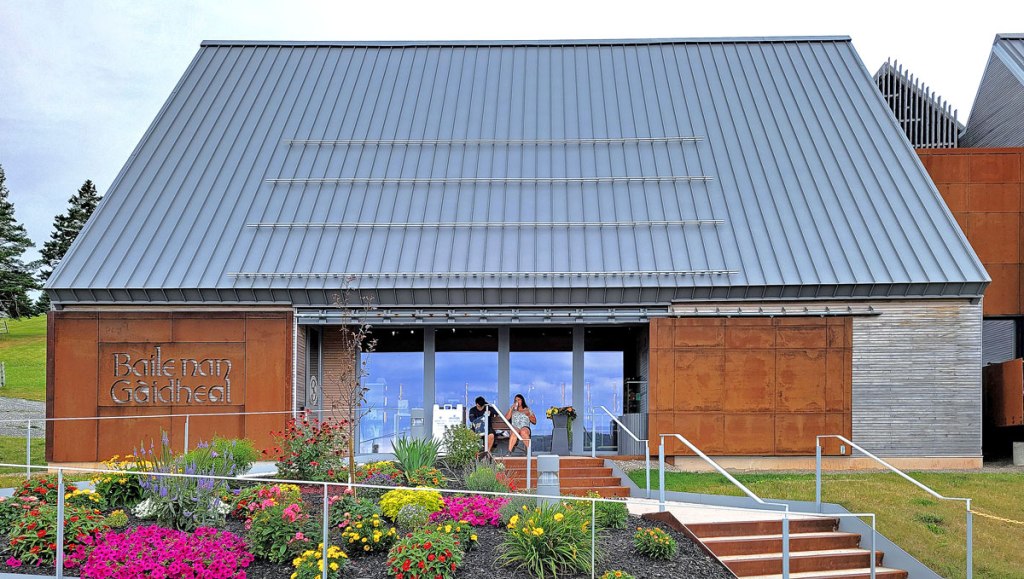
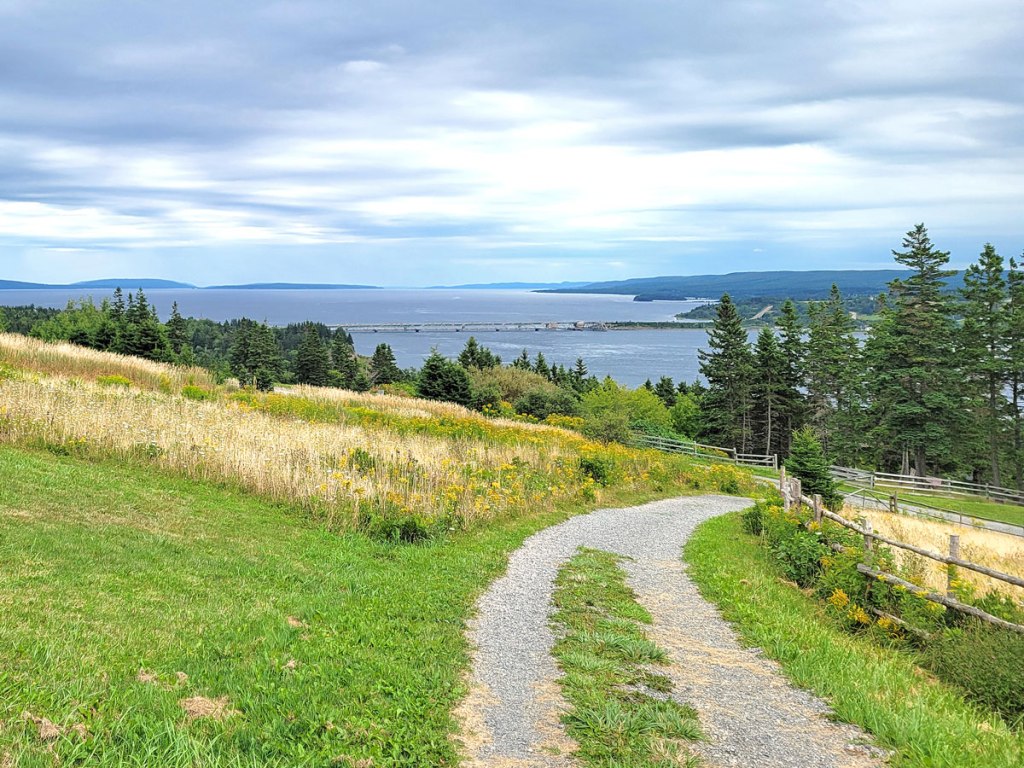
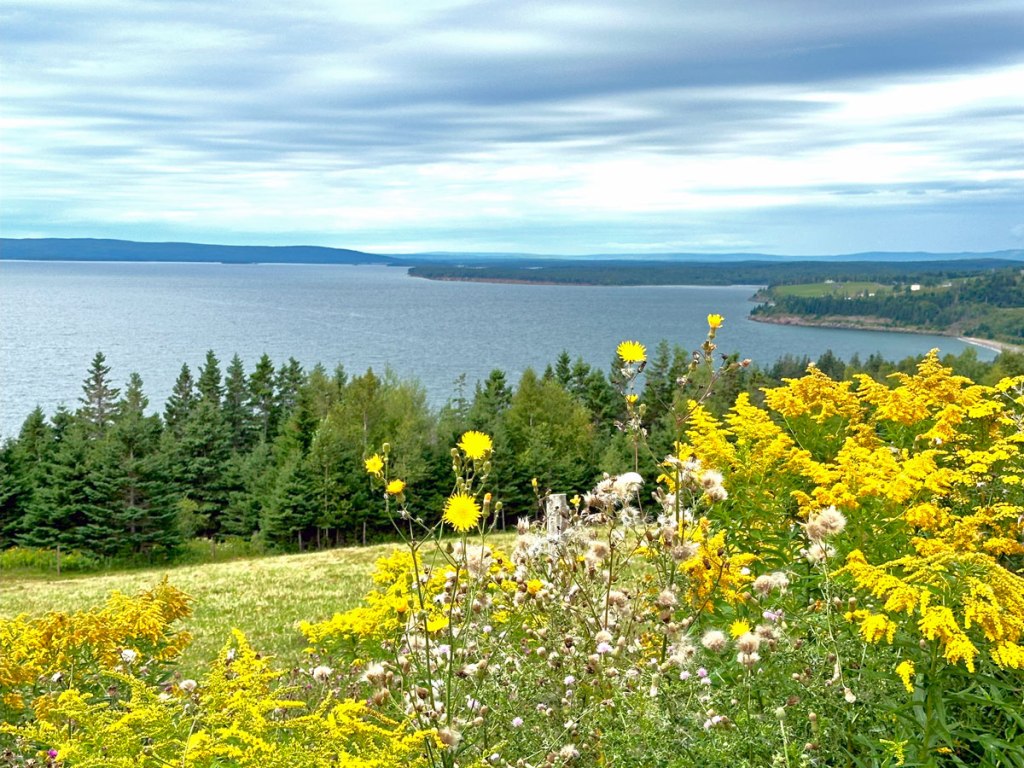
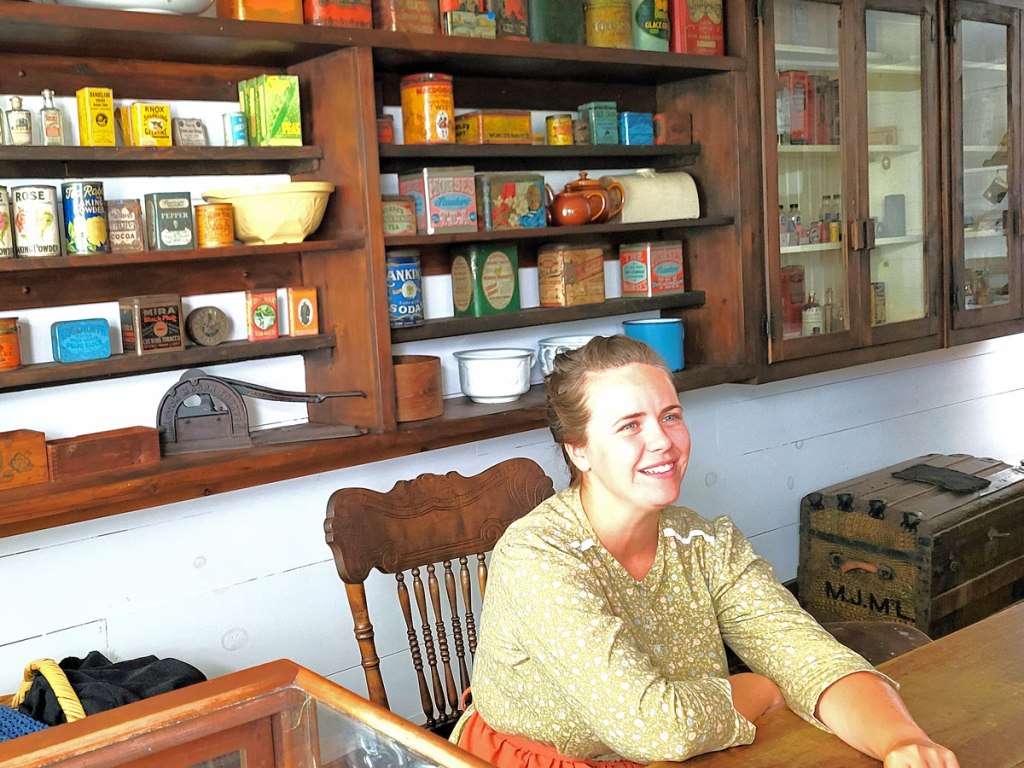
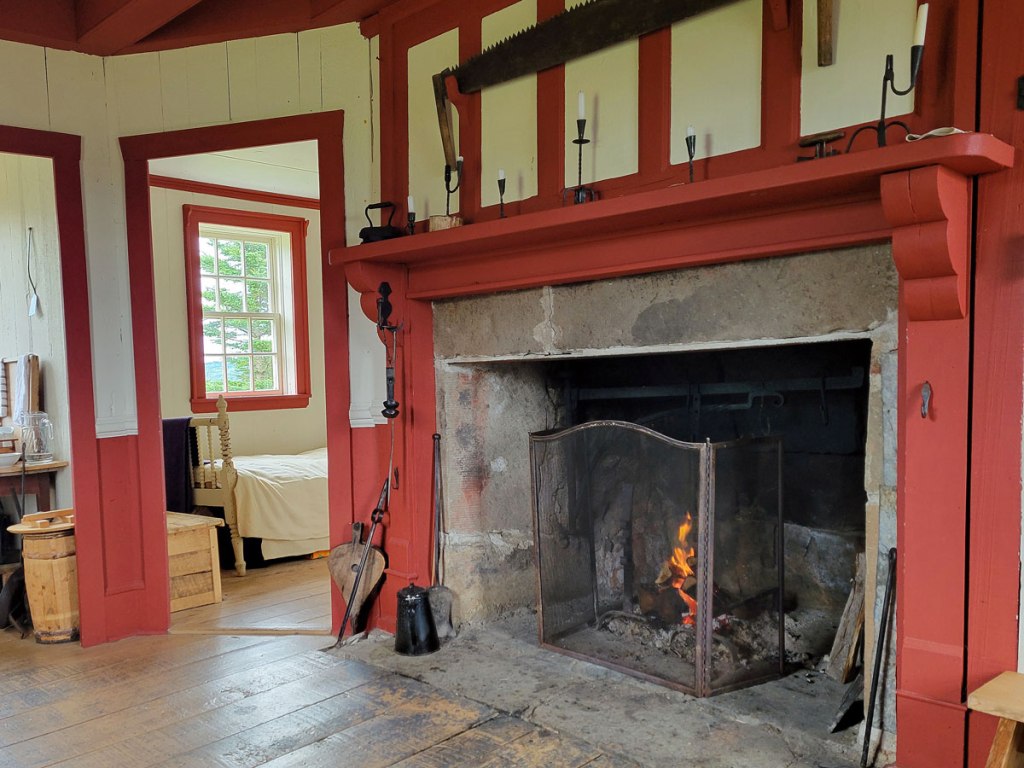
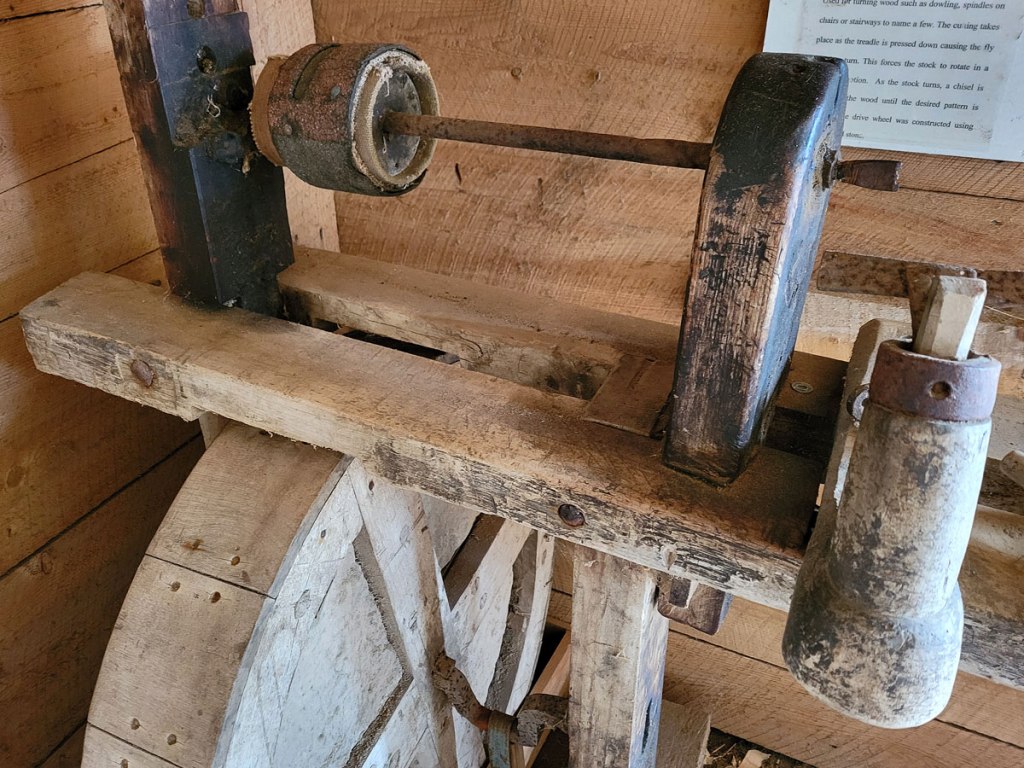
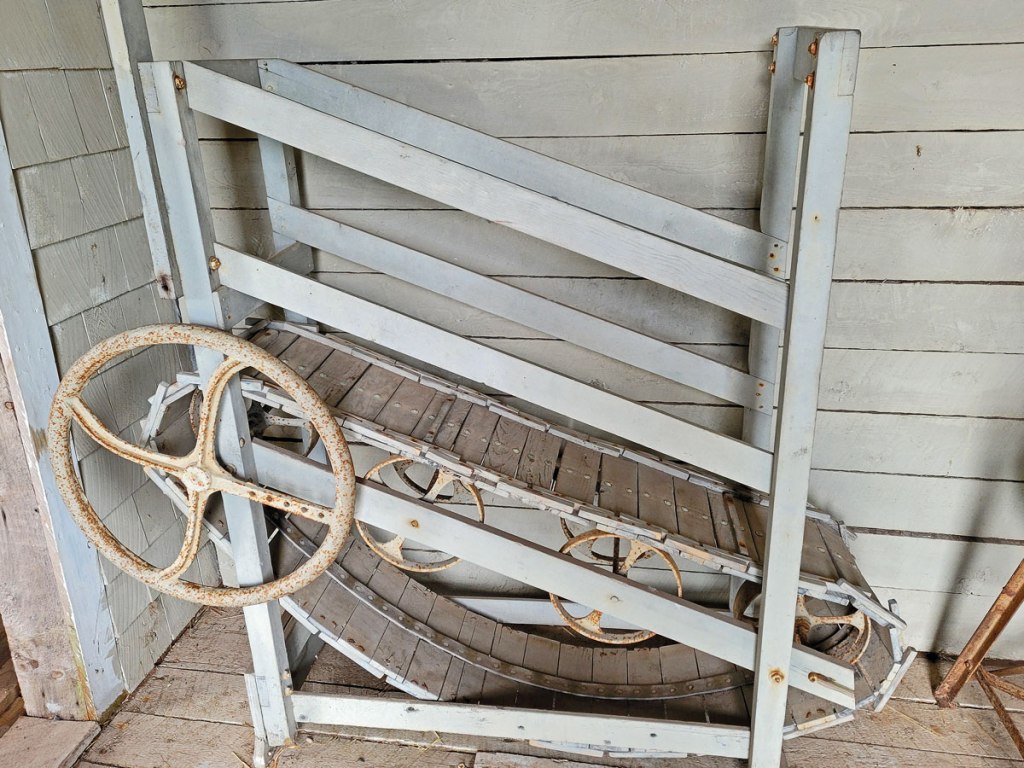
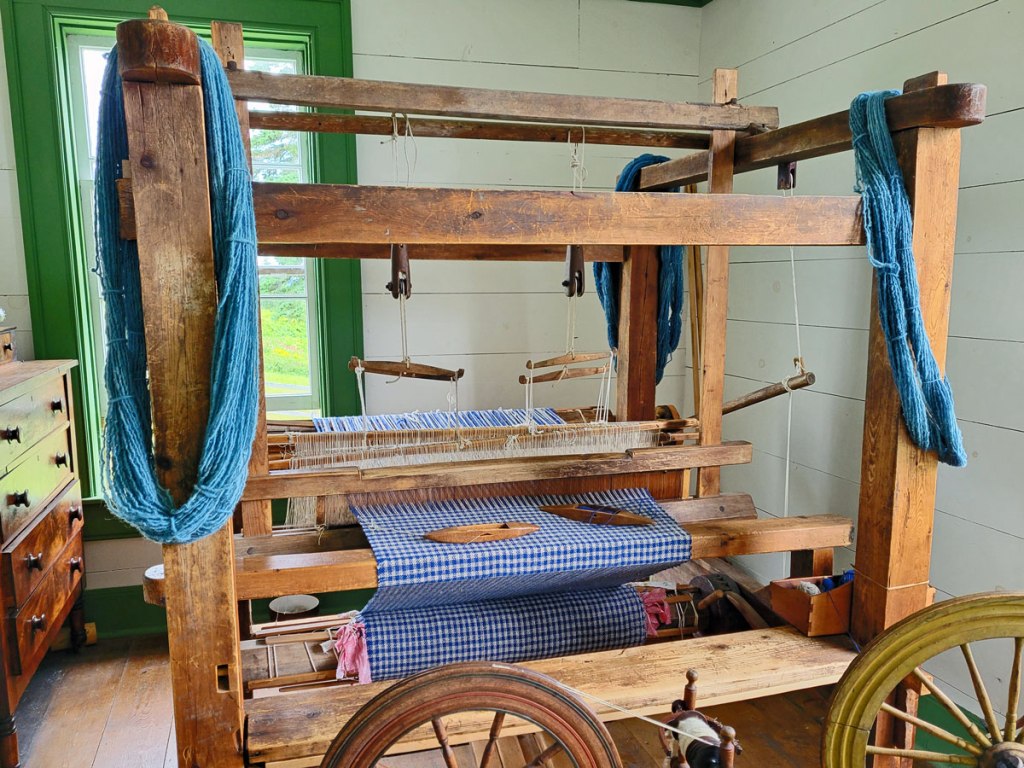
Located a couple of hours down the road from Sydney near Iona NS is the the Scottish Highland Village, which includes 11 historic buildings on 40+ acres overlooking the water. The living history museum features costumed interpreters for visitors to learn about Gaelic history and traditions. We spent several hours on a self-guided tour.


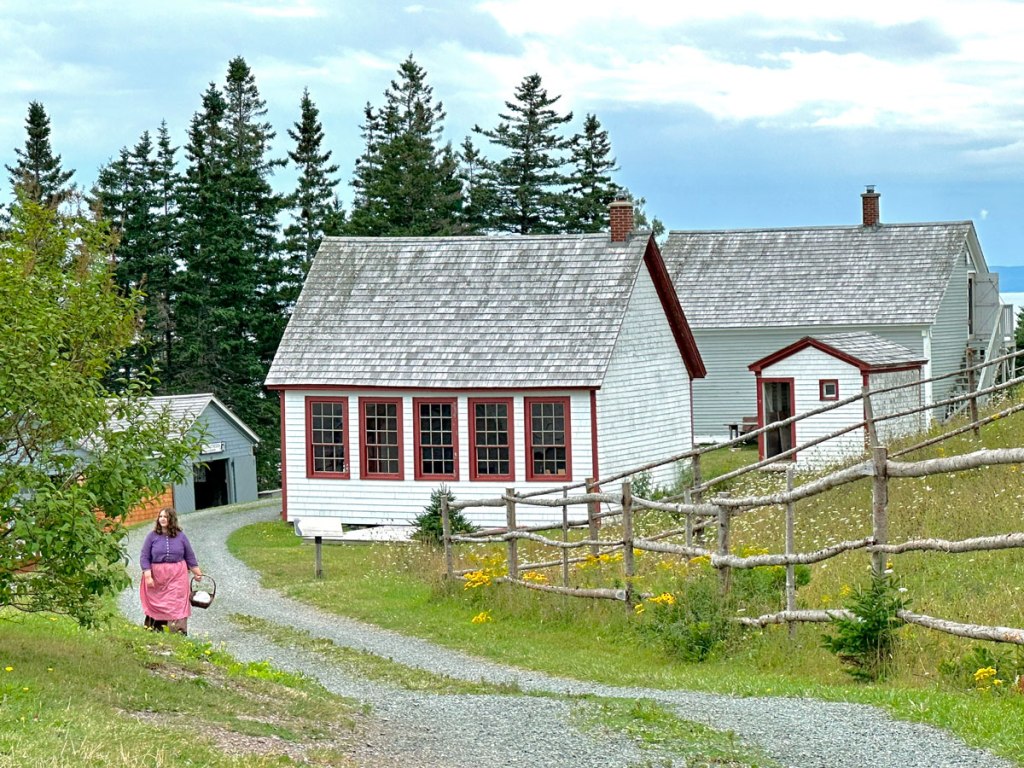

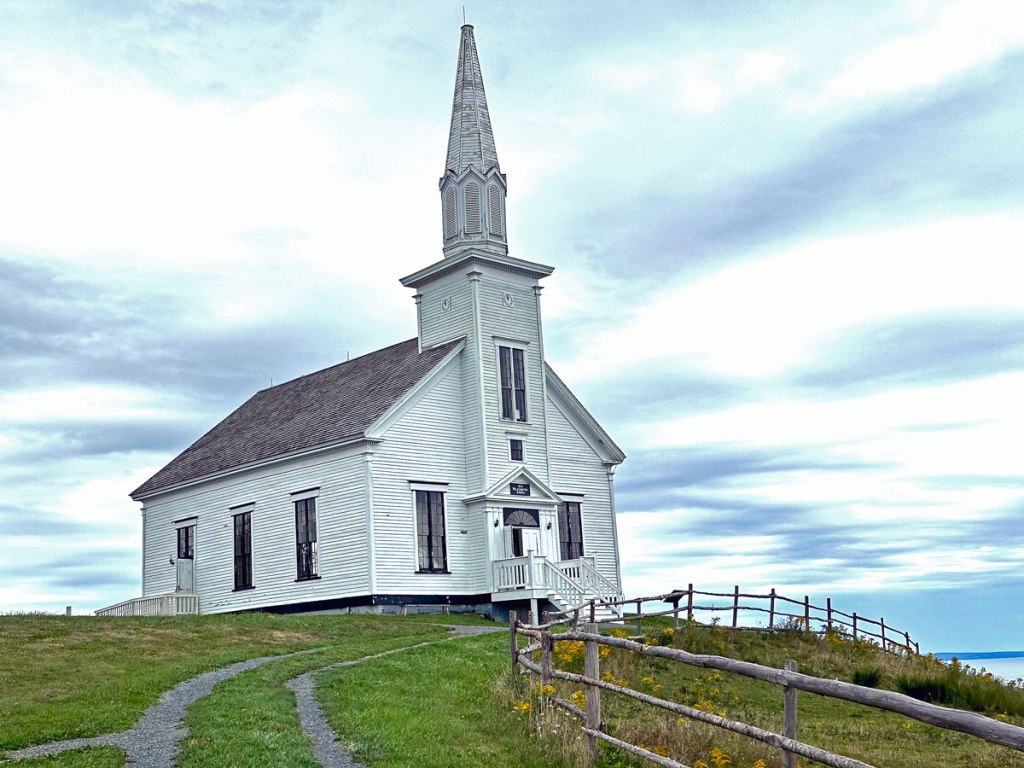
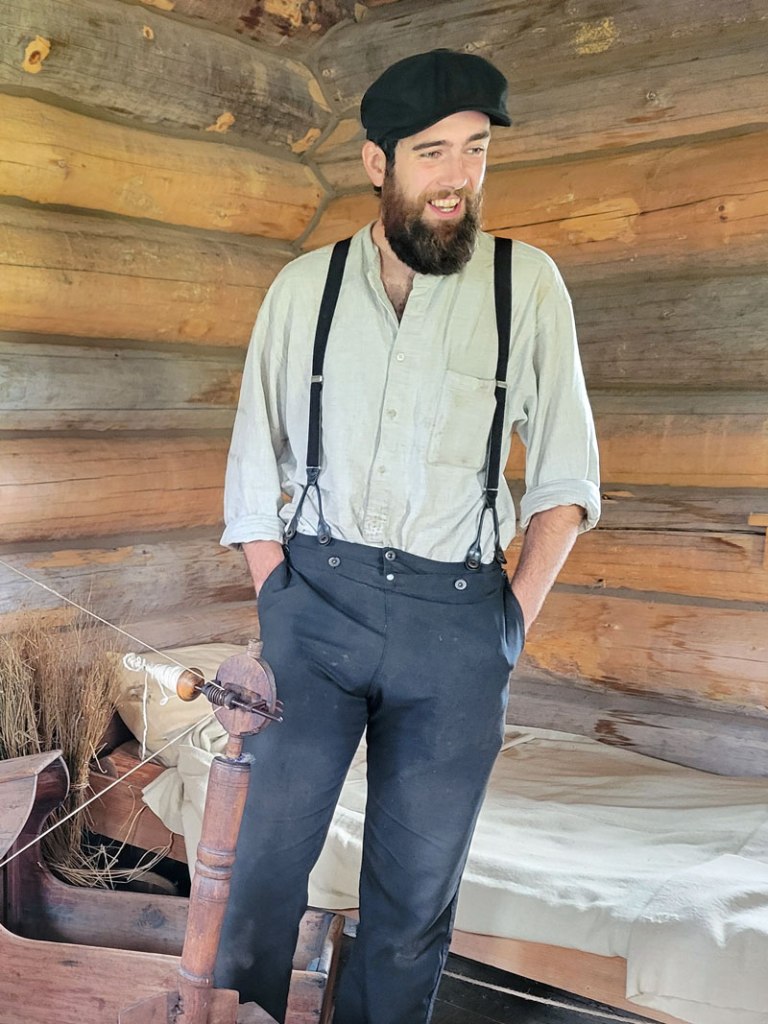


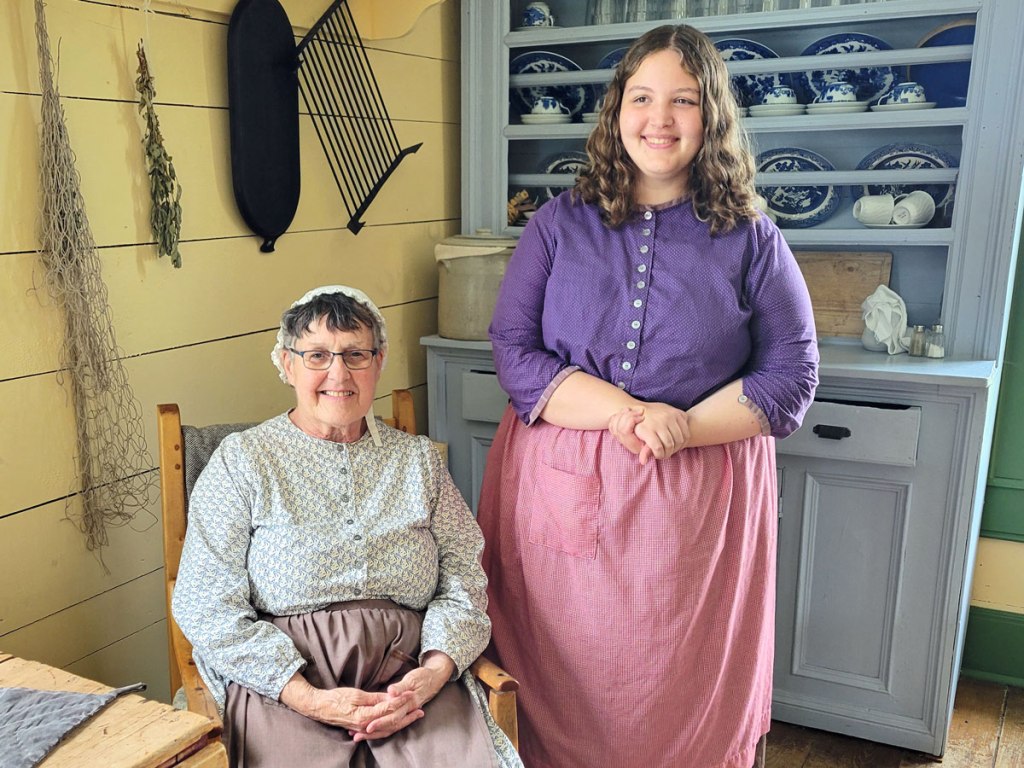






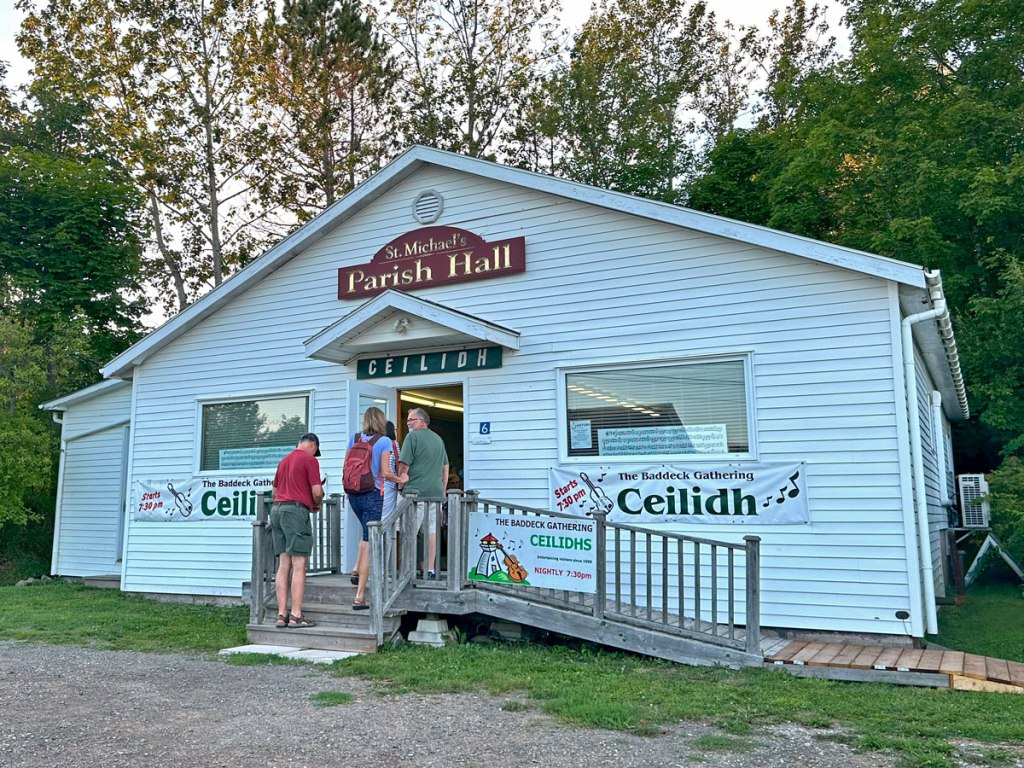
In Baddeck NS, we were introduced to the ceilidh (kay-lee) – a traditional Gaelic gathering of live music, dancing and story-telling. The performers were delightful (local musicians Rachel Davis and Buddy McDonald), and the audience was delighted. It was our favorite experience in Baddeck.

The next stop on our accidental Scottish Gaelic tour was the Colaisde na Gàidhlig, or Gaelic College, in St. Anne’s NS, where students can earn a Bachelor of Arts degree in Gaelic studies or just take a class or two in Gaelic language, step-dancing, weaving, etc.


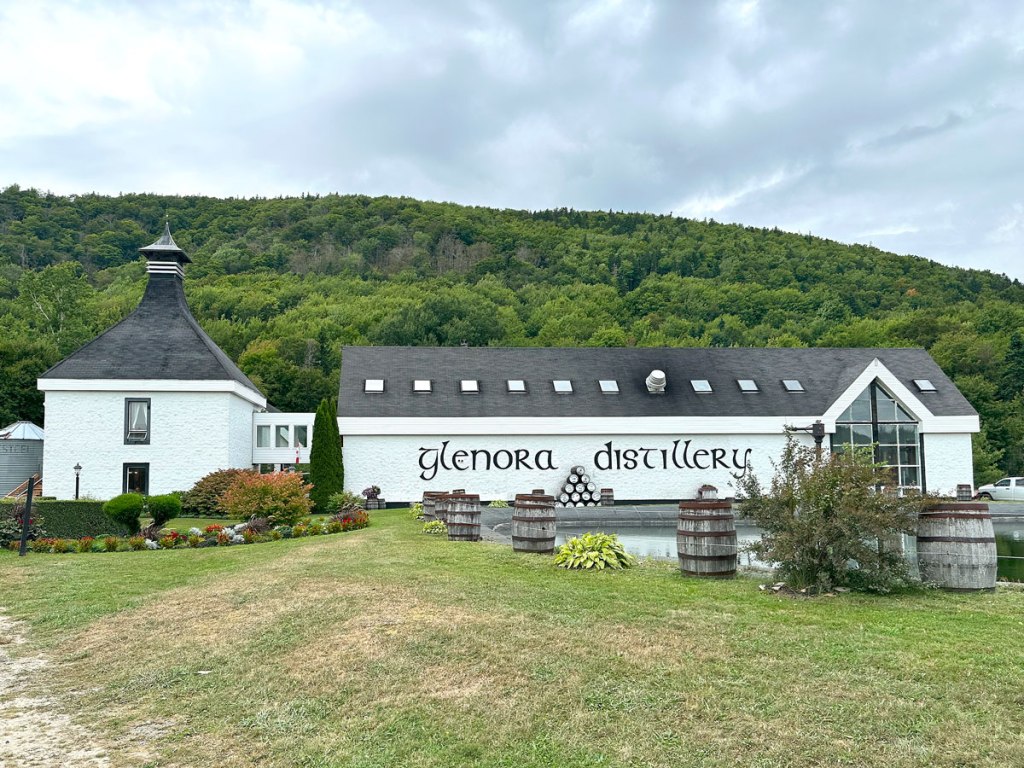
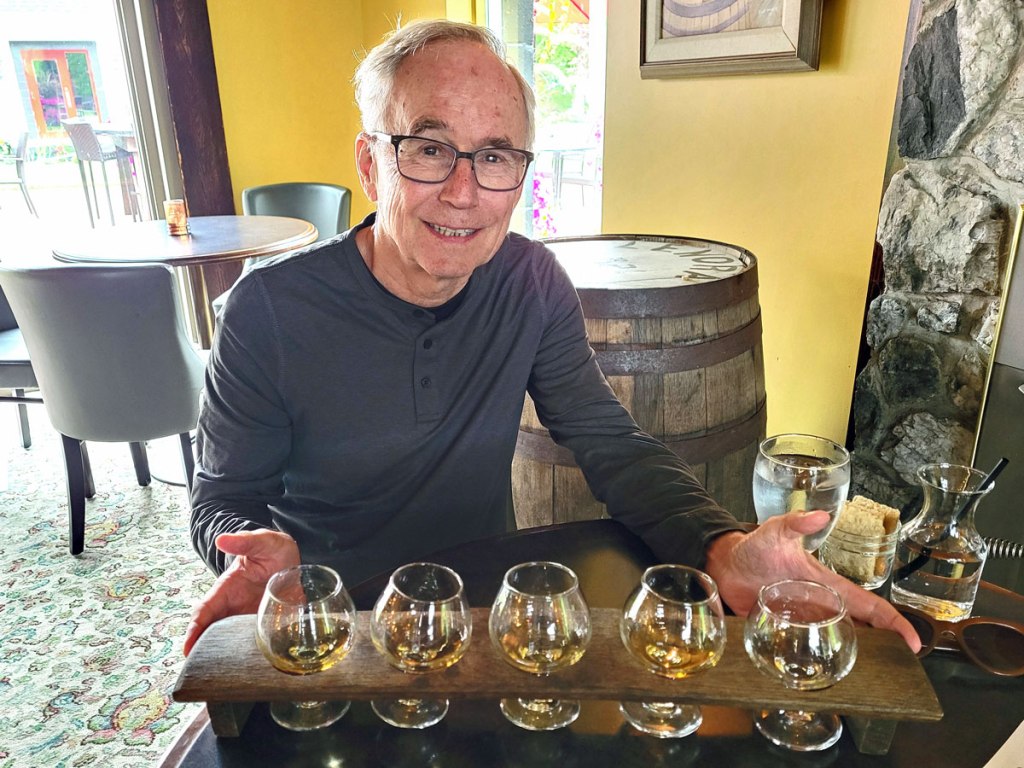
On a somewhat rainy day near Mabou NS, we paid a visit to the Glenora Distillery, which makes single malt beverages that look, smell and taste like Scotch whisky, but since it wasn’t distilled and aged in Scotland, it’s not legally Scotch.
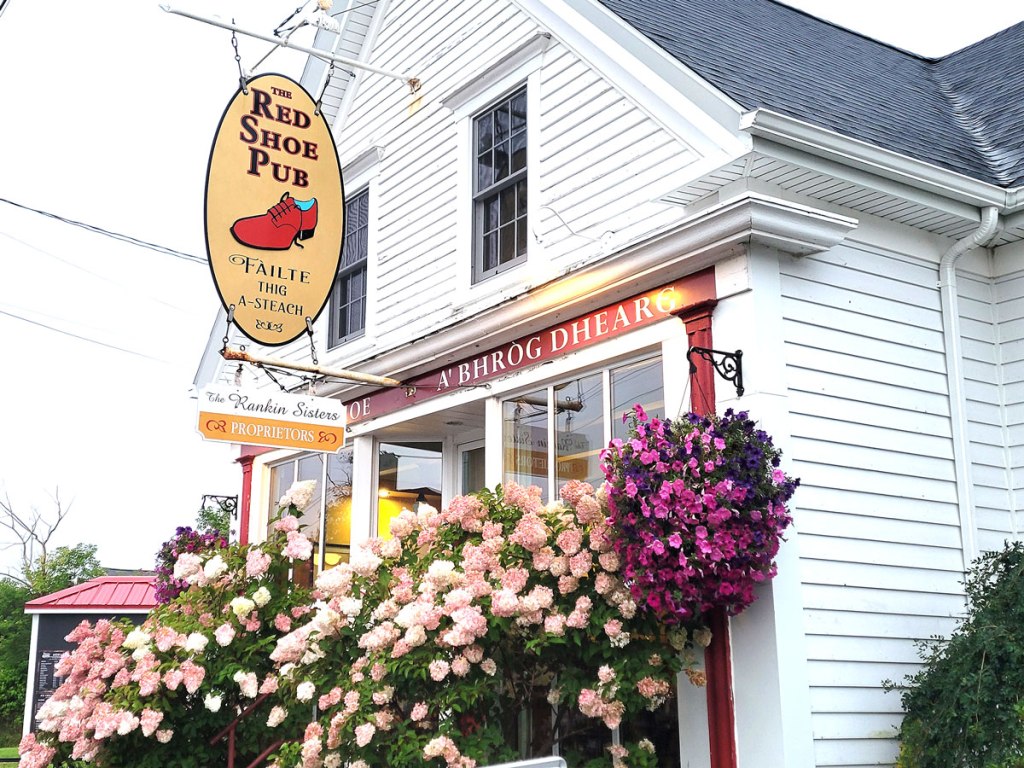
We spent the night in tiny Mabou NS and ate dinner at the only restaurant in town, the Red Shoe Pub. We didn’t expect to be entertained during dinner, but no complaints!
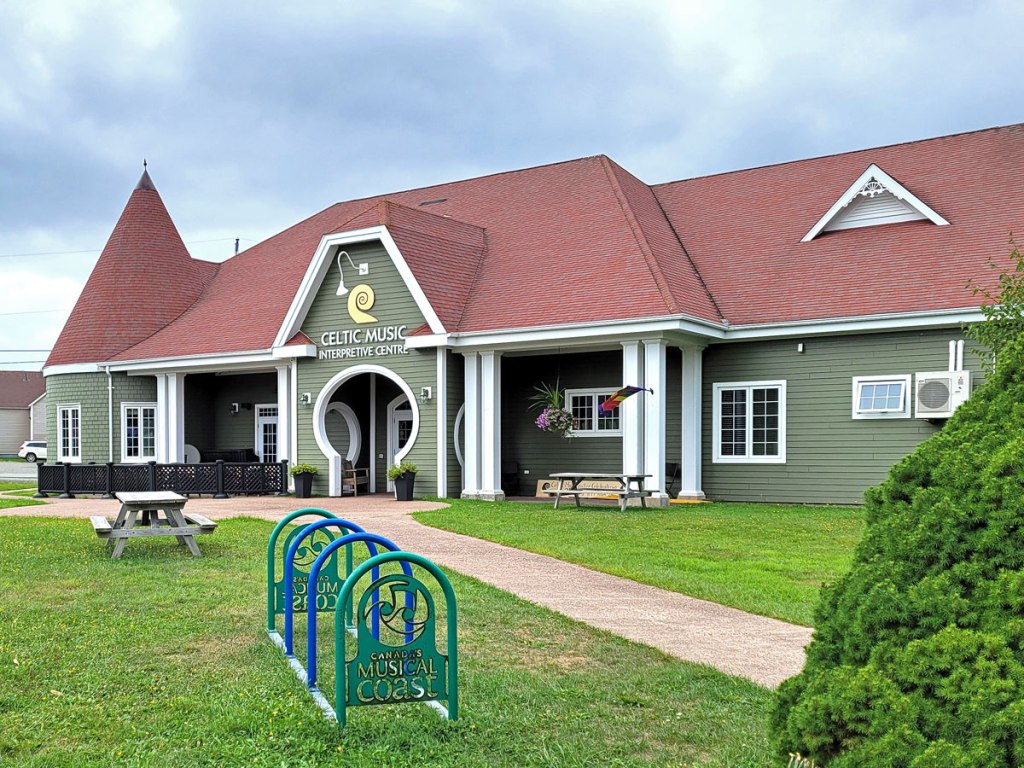
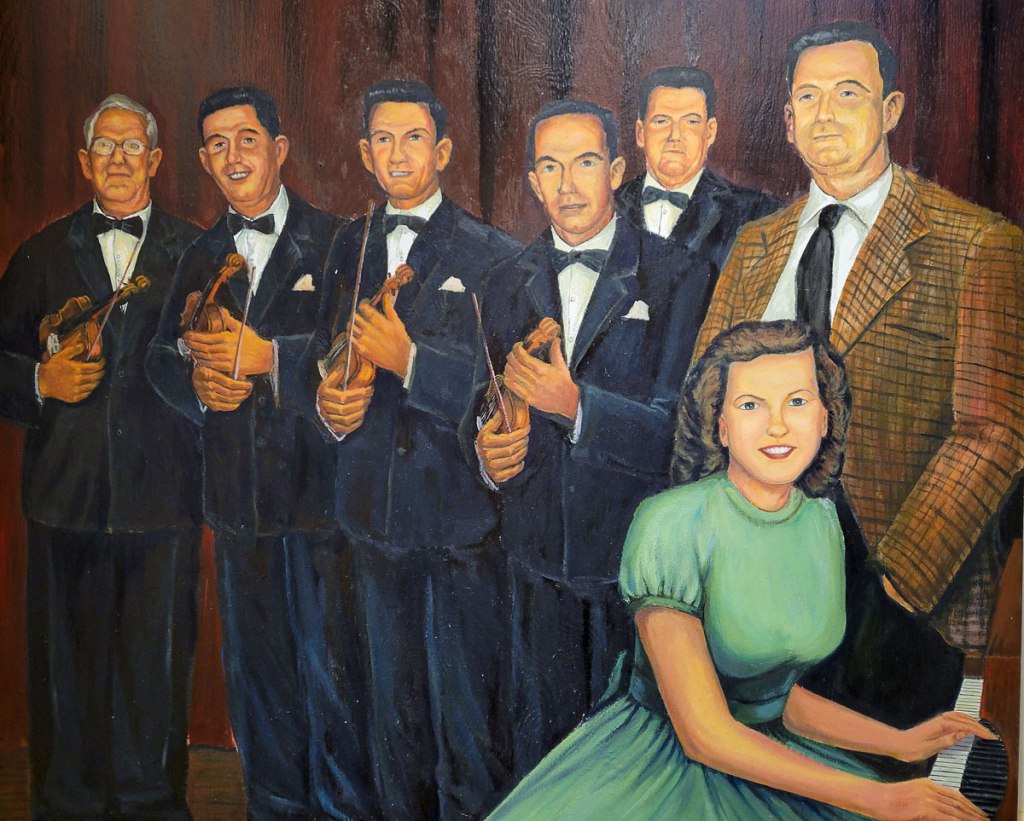
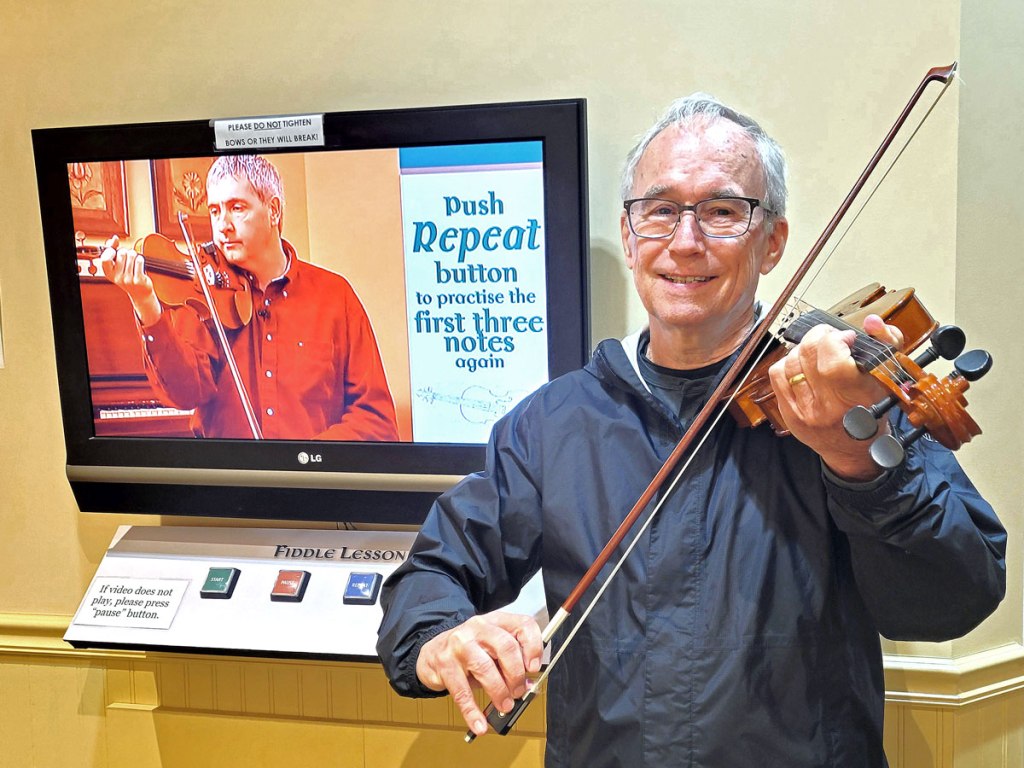
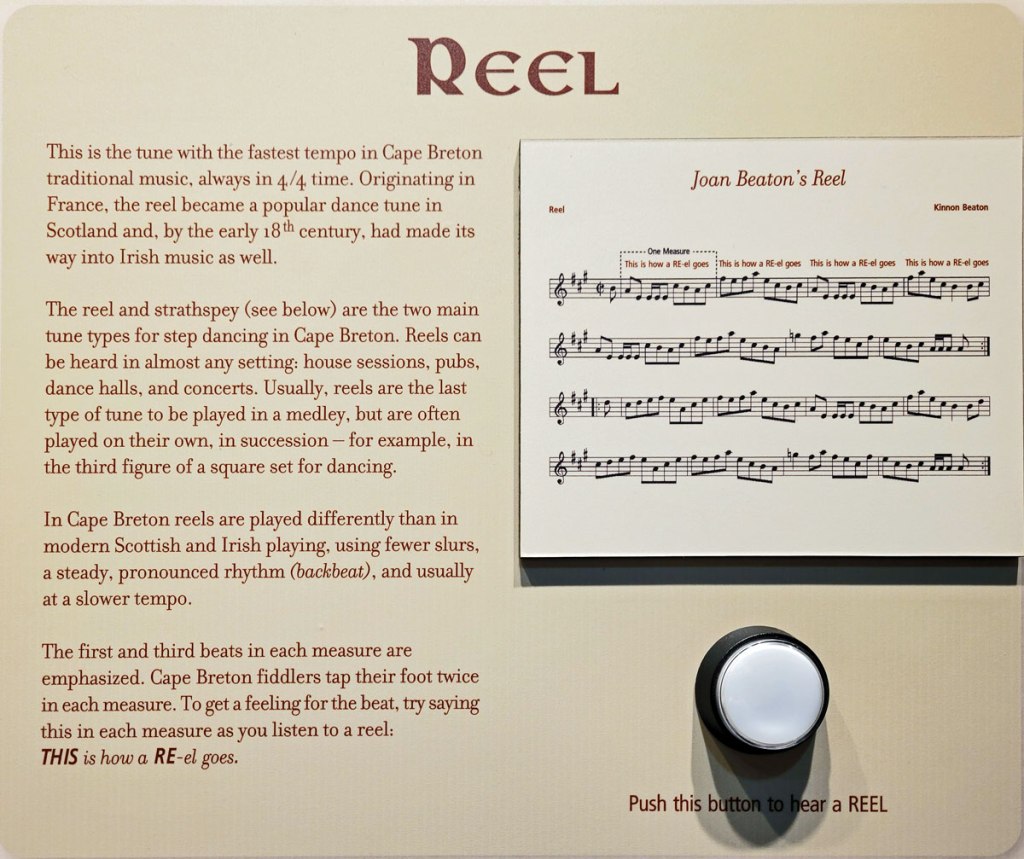
Before we exited Cape Breton Island, we spent a couple of hours at the Celtic Music Interpretive Center in Judique NS, and oh my, we could have spent all day. The exhibits in this small space were superb, with information, instruments, music examples (written and audio) and hands-on learning activities.



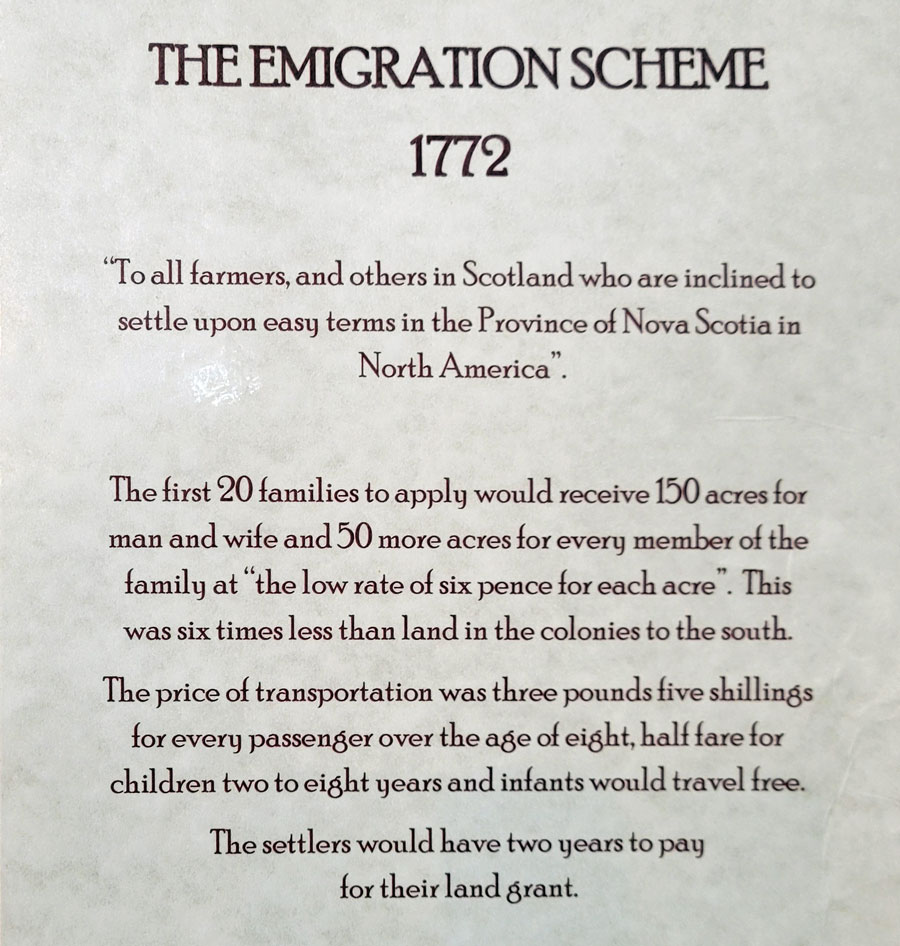
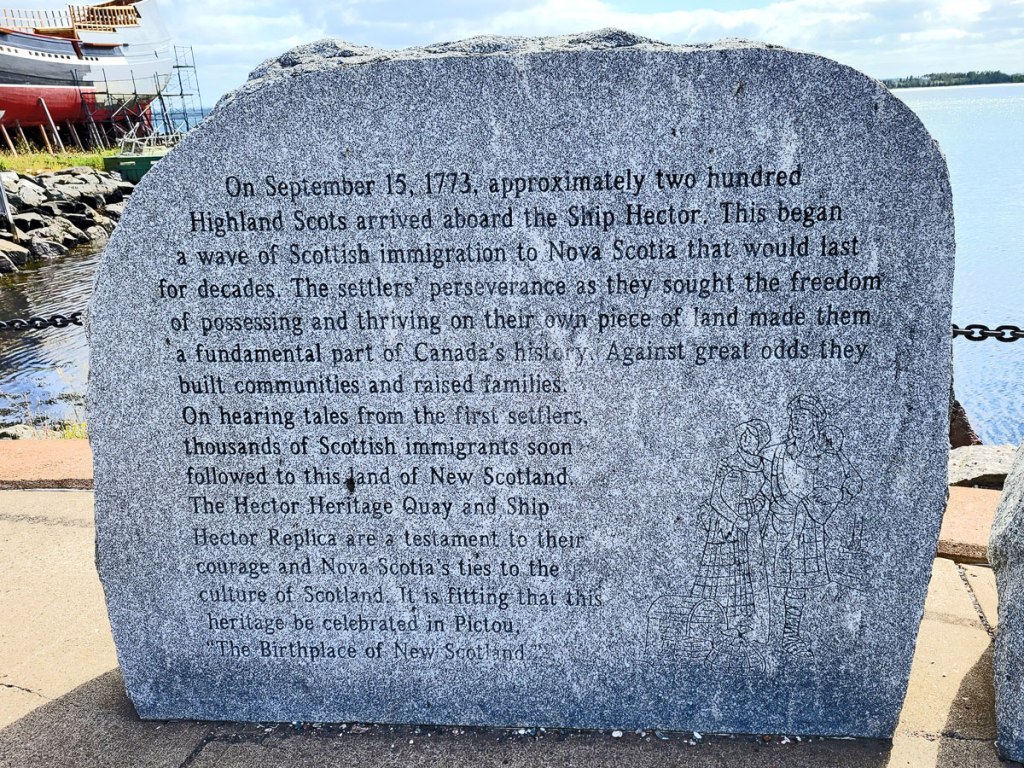
And onward we traveled . . . to Pictou NS, which bills itself as the Birthplace of New Scotland. We picked up more history dating back (and even prior to) 1773, when Ship Hector landed in Pictou with 171 Scottish Highlanders on board.
The voyage was harrowing, and conditions deteriorated further once they landed, as the new arrivals had neither the time nor tools to prepare for the harsh winter conditions that lay ahead. Assisted by the generosity of the Mi’kmaq people, most survived and persevered, and the Scottish Gaelic influx of immigrants in Nova Scotia had officially begun.
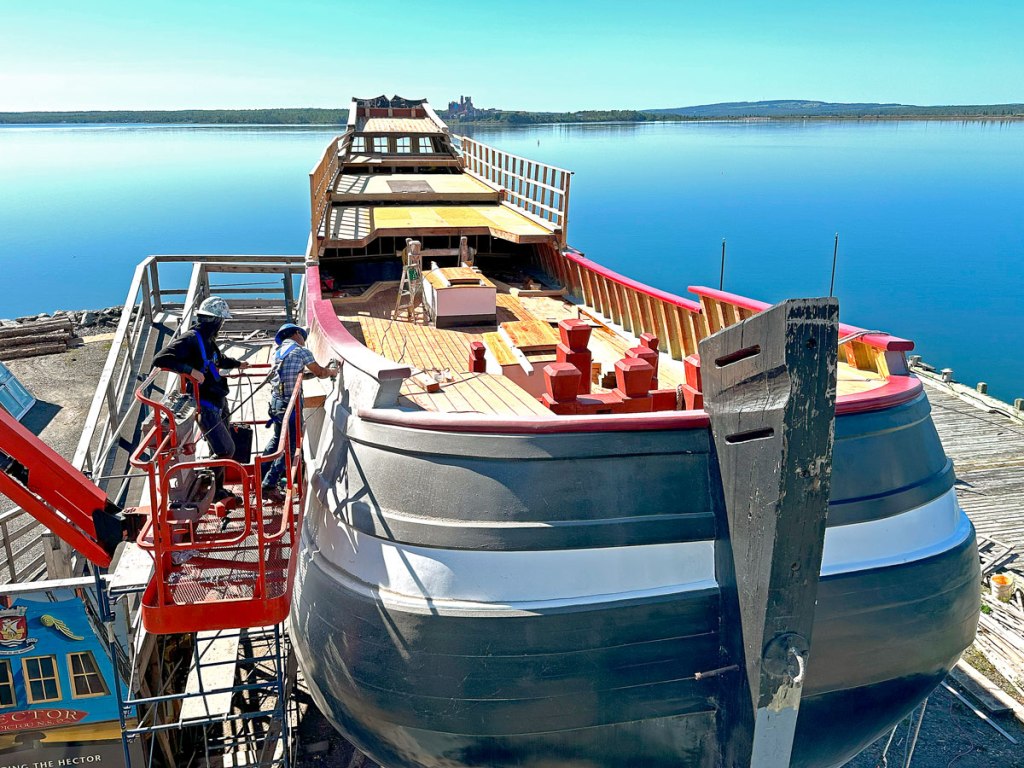
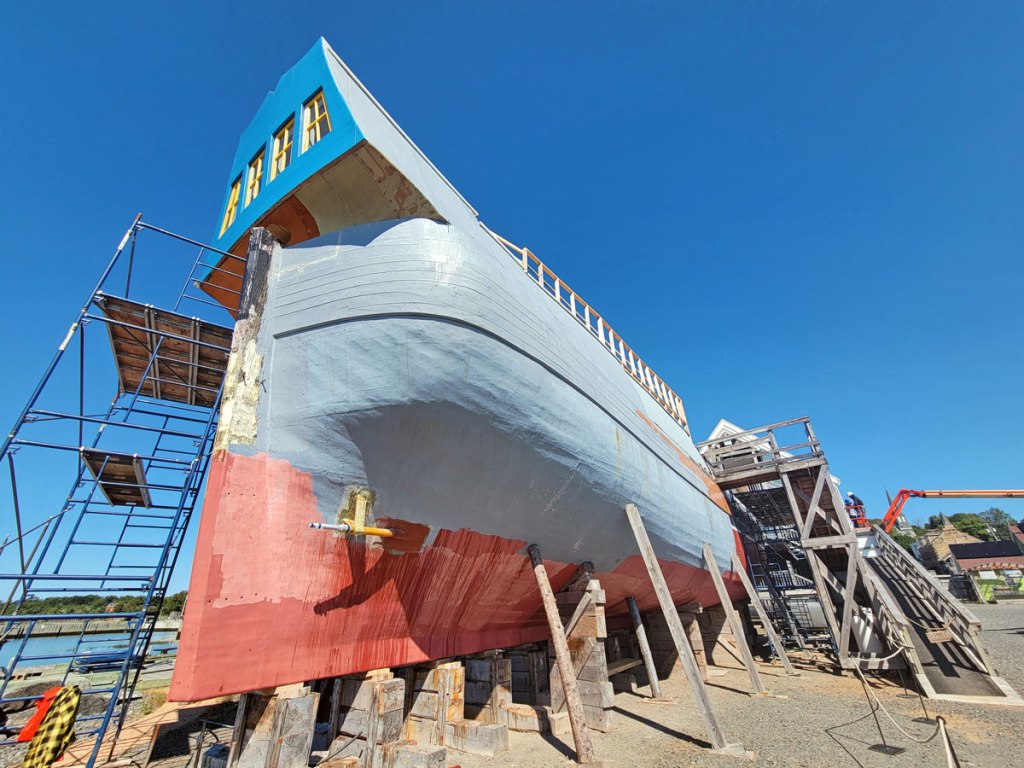
The original Ship Hector is long gone, but a replica built in 2000 is currently undergoing extensive renovation at the Hector Heritage Quay in Pictou. The museum in front of the ship was a treasure trove of information about the 1773 voyage, including a nearly complete list of passengers.

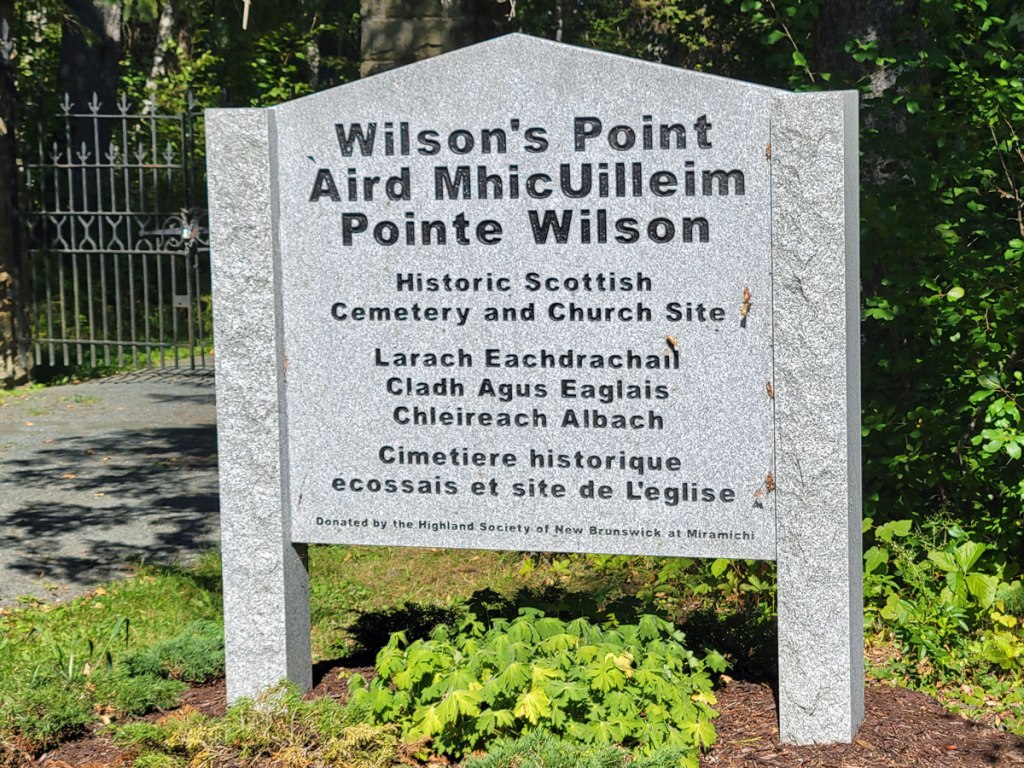
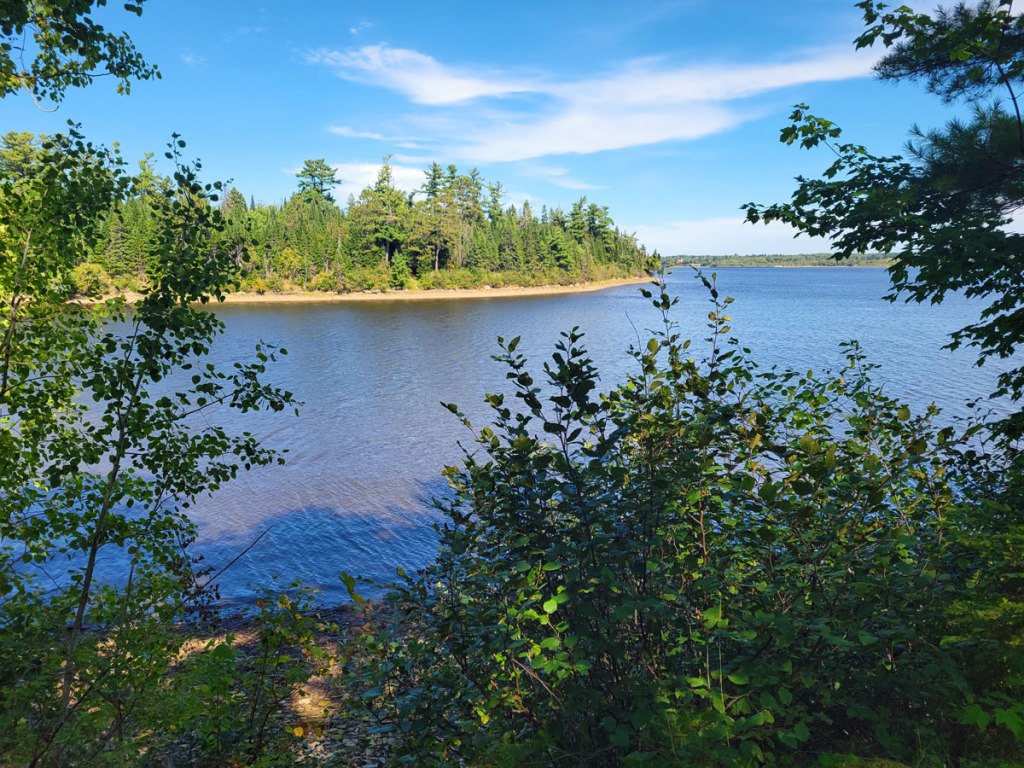
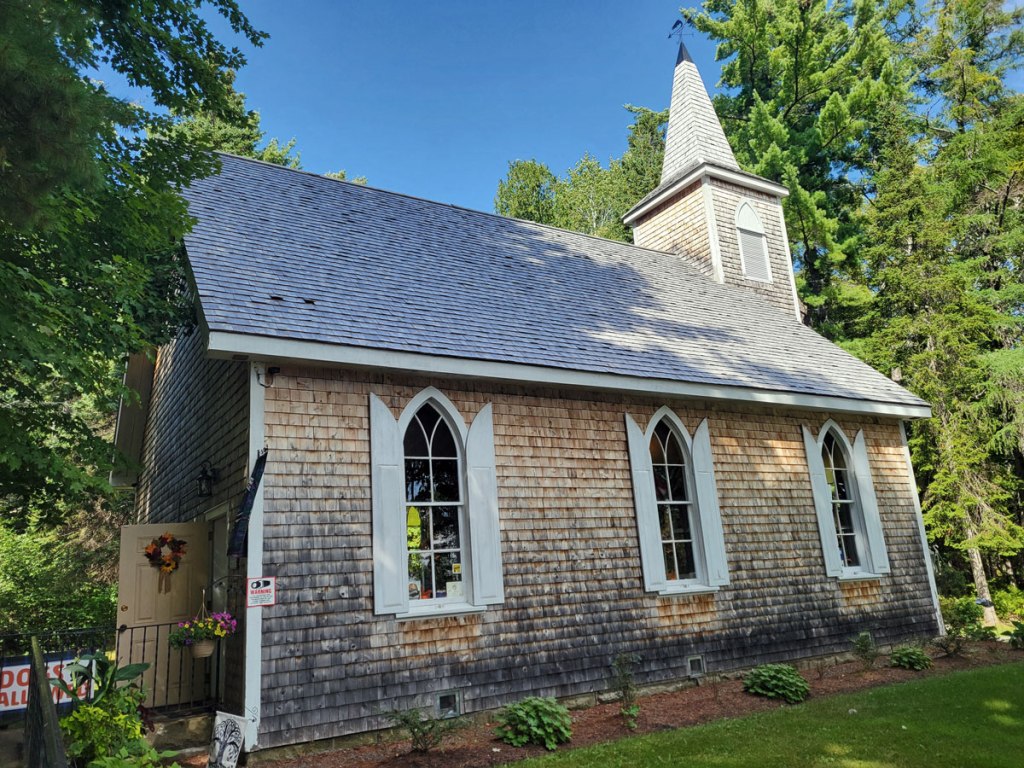
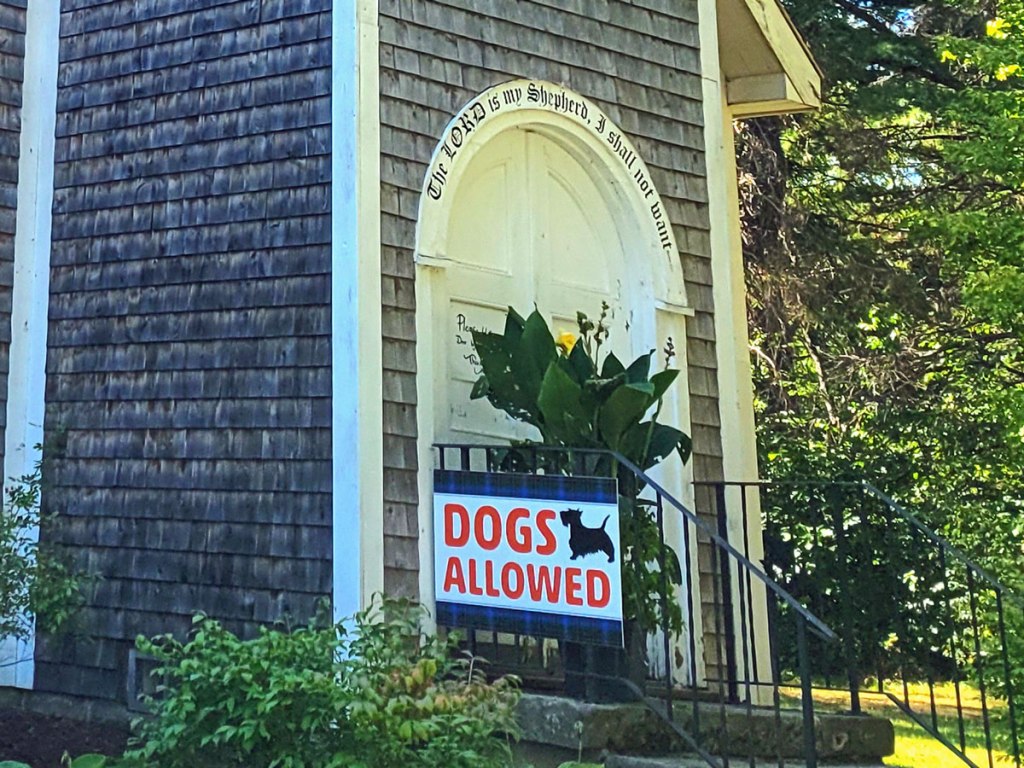
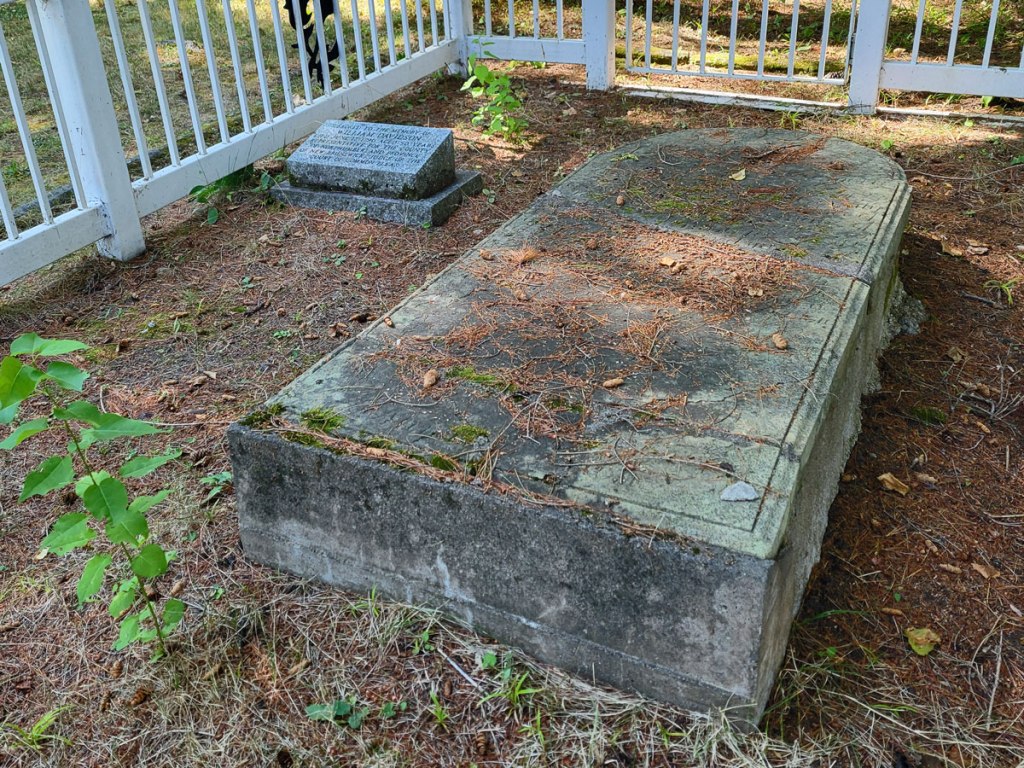
In Derby NB, we visited Wilson’s Point, a Scottish heritage site from the 1760s on the Miramichi River. The highlights included lovely views of the river and Beaubears Island, a replica of the original St. James Presbyterian Church that serves as a visitor center and gift shop, and an historic cemetery with very old headstones. A local group has identified some of the graves and added markers with names and dates adjacent to the originals.

We found bagpipers in Saint John NB.

The video that follows is the final piece of our Scottish Gaelic tutorial, and it was special. Hearing distant bagpipes while eating dinner at Billy’s Seafood, I ran out the front door and watched/listened/recorded the event. We had no clue what the occasion was but learned later it was a tribute to fallen firefighters. We just happened to be there on September 11th.
You have reached the end of the article, and we hope you enjoyed it. Part II is coming soon, with sections on French Acadian culture, hiking experiences and more. As always, thanks for taking a look!
If you would like to receive an email notification when future articles are published, please enter your information below, and hit the subscribe button. No ads or other annoying messages involved.
Discover more from Just Passing Through
Subscribe to get the latest posts sent to your email.



Oh my god! I remember the NB Pipers and that park like it was yesterday – and it wasn’t! Lovely stories. Worth the time to tell it like you want to remember it.
M.
LikeLike
You have an amazing memory! Your Canadian trip all those years ago made quite a lasting impression, just as our experience did for us. Thanks for adding a comment!
LikeLike
Beautiful!! Quite the trip!!
LikeLike
All of our travels are special, but somehow, this one was in a category of its own. Thank you for reading and adding a comment! Hope you are doing well!
LikeLike
What a gorgeous post! So many stunning photos with brilliant clear skies and happy colored boats and buildings. It brings me back to our trip there in the most beautiful ways. Thank you for sharing the adventure! xo
LikeLike
Hi Mary – thanks for your comment. In my final (#4) post about our trip, I said that we experienced awe every single day. Beautiful nature, welcoming people. And now, special memories!
LikeLike